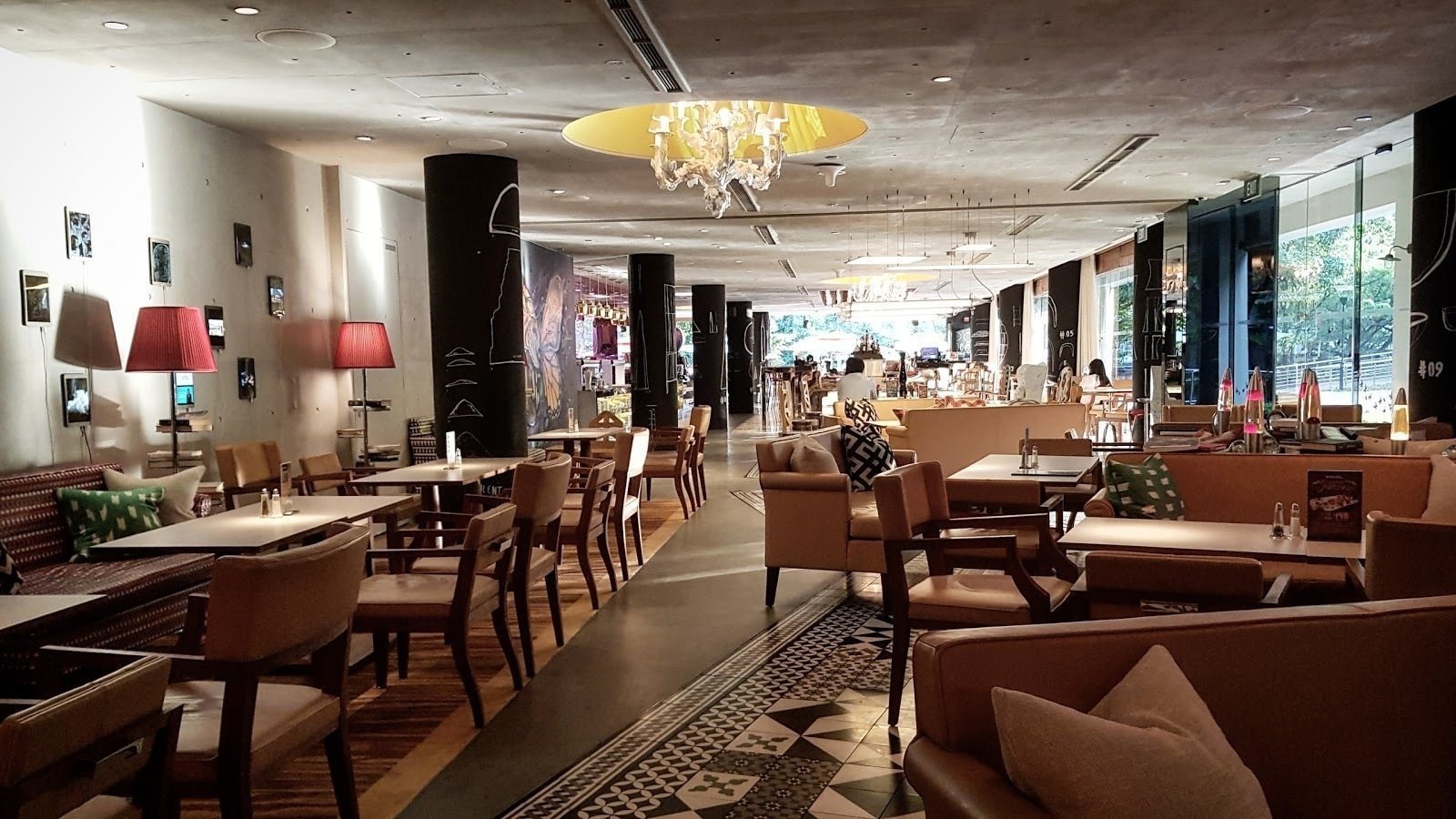
Finding a place that doesn't feel like a sterile hotel lobby or a cramped dive bar is getting harder. You've probably seen the neon signs. You've definitely seen the photos of the swings. Beast and Butterflies isn't just a restaurant with a quirky name; it’s a specific vibe designed by Philippe Starck that tries to bridge the gap between a high-end bistro and a neighborhood hangout. It’s located in M Social hotels, most notably in Singapore and Auckland, and honestly, it’s one of those rare spots that manages to be "Instagrammable" without being soul-crushing.
Most people walk in and immediately notice the floor. It’s covered in 40 different types of Mediterranean tiles. It's loud, visually. But then you sit down in a lava stone tabletop booth and realize the acoustics actually allow for a conversation. That’s the trick. It’s designed for "digital nomads" and travelers, but the food isn’t just an afterthought to the decor.
The Reality of the Beast and Butterflies Menu
The name itself is a bit of a giveaway. "Beast" represents the hearty, bold, and often meaty flavors of the West, while "Butterflies" leans into the delicate, aromatic, and refined profiles of Asian cuisine. It's fusion, but not the confused kind from the 90s.
Take their Crispy Pork Knuckle. It’s a beast. Half a knuckle, oven-roasted until the skin shatters like glass, served with a spicy Thai nam jim sauce. It’s heavy. It’s glorious. On the butterfly side, you’ll find things like Scallop Carpaccio or a refined Laksa that doesn't hold back on the coconut milk. They aren't trying to reinvent the wheel; they’re just putting better tires on it.
The Auckland location, specifically on Customs Street West, leans heavily into the "Pacific Rim" identity. You get the fresh seafood you’d expect from New Zealand, but it’s treated with techniques that feel very much at home in a Singaporean kitchen.
Why the Design Matters More Than You Think
Philippe Starck didn't just pick out some cool chairs. The layout of Beast and Butterflies is intentional. You have long communal tables equipped with power points.
People work there.
They drink there.
They have awkward first dates there.
The lighting is low, the screens embedded in the tables show flickering "art," and the staff doesn't hover. It feels like a third space. In an era where every restaurant wants you to eat and get out in 45 minutes to flip the table, this place encourages lingering. That’s a bold business move in the 2020s.
Borderless Cuisine is a Tough Sell
Let’s be real for a second. "Fusion" is often a red flag for "we don't know what we're doing." But Beast and Butterflies avoids the trap by staying grounded in local ingredients. In Singapore, the focus is often on elevated street food flavors—think Lobster Porridge that feels like a warm hug but costs significantly more than the hawker center version.
In Auckland, the focus shifts. You’re looking at New Zealand lamb and Ora King salmon. The "Butterfly" element here is often a ginger soy glaze or a lemongrass infusion. It works because they aren't forcing the fusion. If a dish doesn't need a kaffir lime leaf, they don't put one on it just to match the brand.
The Bar Scene and the Social Battery
The drinks at Beast and Butterflies are usually where the "Butterfly" side wins. The cocktail list is heavy on florals, bitters, and botanical gins. They do a lot of signatures that utilize Asian spirits or infusions—pandan, hibiscus, and even chili.
It’s a great spot for a "pre-game" drink if you’re heading out, but honestly, many people just end up staying. The outdoor terrace areas (especially in Auckland overlooking the water) are prime real estate. If you can snag a seat during golden hour, the "Beast" part of the name starts to make sense as you tear into some sliders while the sun goes down.
Is it expensive?
Sorta.
It’s "premium casual." You’re paying for the design and the prime location as much as the ribeye. But compared to some of the stuffier fine-dining options in the same neighborhoods, it feels accessible. You can wear sneakers. You can also wear a suit. Nobody cares.
Navigating the Misconceptions
One thing most people get wrong is thinking this is just a "hotel restaurant." It’s technically attached to M Social, yes, but it functions as a standalone destination.
The biggest complaint you'll usually hear is about the "sensory overload." If you’re looking for a quiet, minimalist Japanese Zen garden vibe, this is not your place. There are screens, there are patterns, there is music, and there are people talking loudly over cocktails. It’s high energy.
- Check the Happy Hour: Both the Singapore and Auckland spots usually have solid deals on house pours and specific snacks. This is the best way to test the waters without dropping $150 on dinner.
- Order the Signature Dishes: Don't go there and order a Caesar salad. Get the Pork Knuckle or the Laksa. Go for the things they are known for.
- The Seating Matters: If you’re working, ask for the communal tables. If you’re on a date, aim for the booths near the back where the lighting is a bit more forgiving.
What to Do Next
If you’re planning a visit to Beast and Butterflies, don't just show up on a Friday night and expect a prime table by the window. Book ahead.
Start by looking at the specific menu for the city you’re in, as they change seasonally and geographically. If you’re in Singapore, make sure to walk through the Robertson Quay area afterward; it’s one of the best strolls in the city. If you’re in Auckland, use the restaurant as a base before exploring the Viaduct Basin.
Focus on the "Small Plates" first. It’s the best way to experience the "Butterfly" side of the menu before committing to a "Beast" of a main course. Try the Tequila Cured Salmon if it’s on the menu—it’s a perfect example of how they mix cultures without making it weird.
Practical Takeaways:
- Target Audience: Perfect for those who want a high-energy environment with reliable, high-quality fusion food.
- Best Time to Visit: Mid-week for a more relaxed "digital nomad" vibe, or Friday night for the full social experience.
- Must-Try: Any dish that highlights the Southeast Asian influence on Western proteins.
- The Vibe: Philippe Starck maximalism meets high-end comfort food.
Beast and Butterflies remains a staple because it doesn't take itself too seriously while still delivering serious flavors. It’s a relief in a world of boring beige dining rooms.