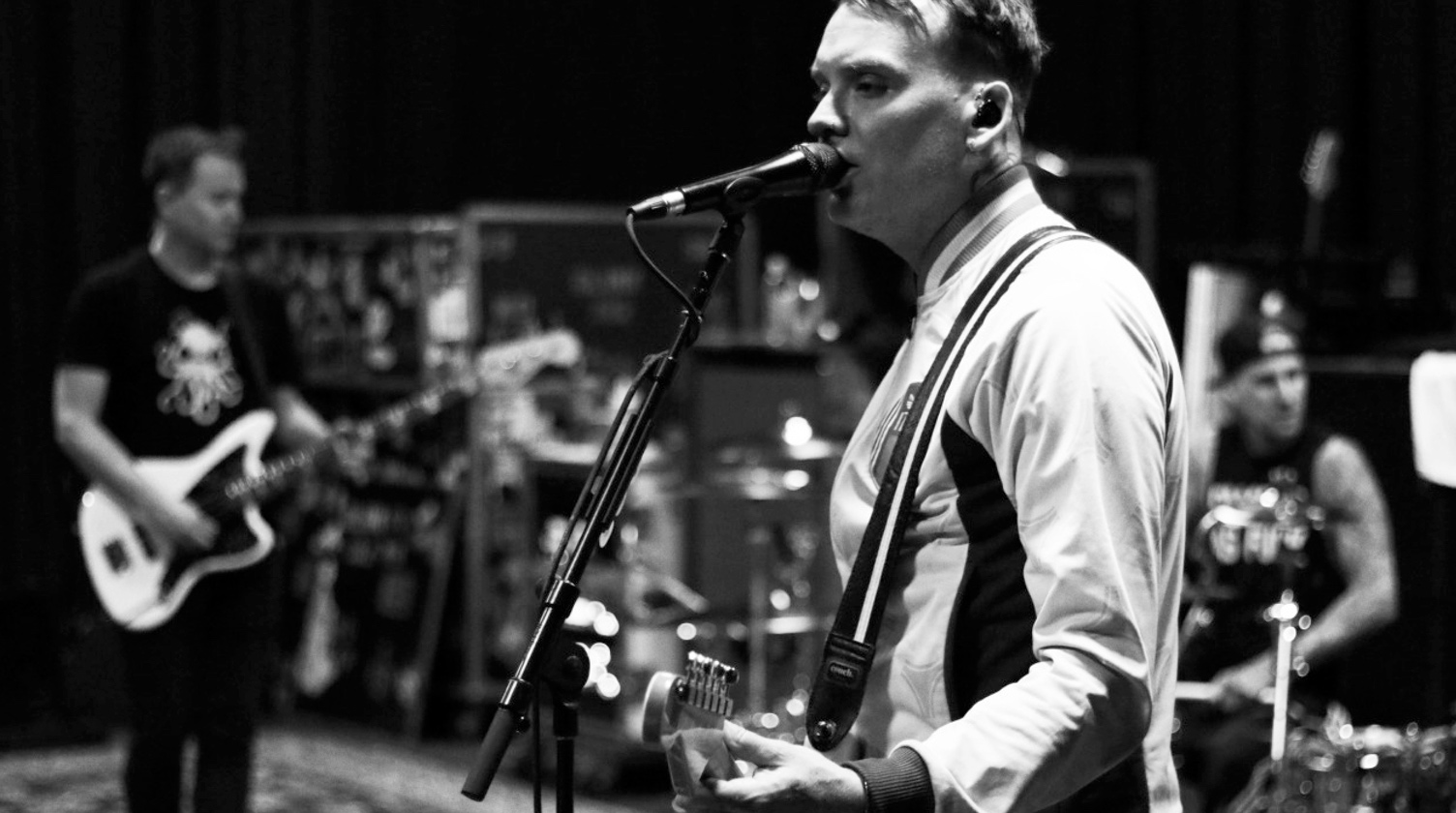
When Tom DeLonge effectively ghosted his bandmates in early 2015, the world didn’t just lose a guitarist. It lost the specific, nasal-heavy alchemy that defined millennial pop-punk. But for Mark Hoppus and Travis Barker, there wasn't time to mourn. They had a festival slot at Musink and a legacy to protect. They needed someone who could play, someone who wasn't a stranger, and someone who wouldn't just be a "karaoke" version of Tom.
Enter Matt Skiba.
He was the logical choice, yet the most controversial one possible. Blink-182 with Matt Skiba wasn't just a lineup change; it was a fundamental shift in the band's DNA that lasted seven years. Most fans look back at this era as a "placeholder" period. They’re wrong. It was a rescue mission that actually worked.
The Day the "New" Blink-182 Became Real
Initially, Matt Skiba was just "filling in." You probably remember the headlines—it felt temporary. But the chemistry in the rehearsal room was apparently so immediate that the "feat. Matt Skiba" tag was dropped almost instantly. By the time they hit the studio with producer John Feldmann, they weren't trying to find a replacement. They were trying to find a new identity.
Honestly, the pressure on Skiba was insane. He was stepping into the shoes of a guy who wasn’t just a musician, but a cultural icon of the genre. Skiba brought a darker, more gothic edge from his years fronting Alkaline Trio. If you listen closely to those first few recordings, you can hear him trying to balance his own sinister lyrical style with the sunny, bratty expectations of a Blink record.
Why California Changed Everything
In 2016, California dropped. It didn't just do "okay." It debuted at number one on the Billboard 200. That was the band's first number one in 15 years. People often forget that. While purists were screaming on Reddit, the general public was eating it up.
"Bored to Death" became a massive radio hit. It proved that the brand was bigger than any one member. Skiba’s harmonies with Mark Hoppus were tighter than anything the band had done in a decade. There was a sense of professionalism that had been missing. No more sloppy live shows where the guitarist was too busy talking about aliens to hit the right chords. Skiba was a pro. He was on time. He was there.
The Sound of Two Different Bands
The biggest misconception about the Skiba years is that the band tried to sound like Alkaline Trio. They didn't. If anything, they tried too hard to sound like classic Blink-182.
- The Feldmann Factor: John Feldmann (Goldfinger) pushed the band into a super-polished, "woah-oh" heavy direction.
- Matt’s Subtlety: Skiba actually held back. He later admitted he didn't want to "intrude" on the Blink sound.
- Lyrical Shifts: The dick jokes mostly vanished, replaced by a sort of suburban malaise and nostalgia for San Diego.
If you go back and listen to the song "6/8" from the California Deluxe edition, or "Darkside" from Nine, you see the potential of what Blink-182 with Matt Skiba could have been if they had let him off the leash. Those tracks are aggressive and moody. They feel like a natural evolution of the Untitled (2003) era.
Nine: The Experimental peak
By 2019, the band released Nine. It’s a weird record. It’s colorful, it’s electronic-heavy, and it’s deeply sad in places. This was the moment where the band finally felt like a trio again, rather than two guys and a guest. "Remember to Forget Me" and "On Some Emo Shit" showed a level of maturity that the Tom-led era often struggled to reach because of the constant "joker" persona.
How It All Ended (And Why It Wasn't "Dirty")
When the news broke in 2022 that Tom was back, the internet exploded. But it left a lot of people wondering: what happened to Matt?
The ending was sort of a quiet fizzle. Skiba found out the reunion was happening through the grapevine before getting an official text, but he handled it with absolute class. There was no public feud. No "he said, she said" drama in the press.
"Everything is where it should be," Skiba told Mark Hoppus during an interview on Apple Music in 2024. "These guys found their way back to each other and it's what fans want."
Mark Hoppus has been vocal about the fact that Matt Skiba literally "saved the boat." If Matt hadn't stepped in, Blink-182 likely would have stayed in "indefinite hiatus" forever. The momentum he provided is the only reason the band was still relevant enough for a massive 2023 world tour to even exist.
The Legacy of the Skiba Era
You don't have to love California or Nine. You don't have to prefer Skiba over DeLonge. But you do have to respect the work. Skiba didn't just fill a seat; he kept the lights on for a generation of fans who weren't old enough to remember Enema of the State in 1999.
Actionable Insight for Fans:
If you haven't revisited the Skiba era since Tom's return, go back and listen to the California Deluxe tracks specifically. Songs like "Last Train Home" and "6/8" are the closest we ever got to seeing the "dark" version of this lineup. It’s a fascinating look at what happens when three legends try to reinvent the wheel under the heaviest scrutiny imaginable.
Keep an eye on Alkaline Trio’s newer material, like Blood, Hair, and Eyeballs. You can hear the influence of his time in Blink—the bigger choruses and the refined production—bleeding into his main project. It was a fair trade. He gave Blink a future, and Blink gave him a stadium-sized perspective on songwriting.
Check out the 2016 Bored to Death music video and compare it to the 2023 One More Time video. The contrast tells the whole story: one was about survival, the other was about coming home. Both were necessary.