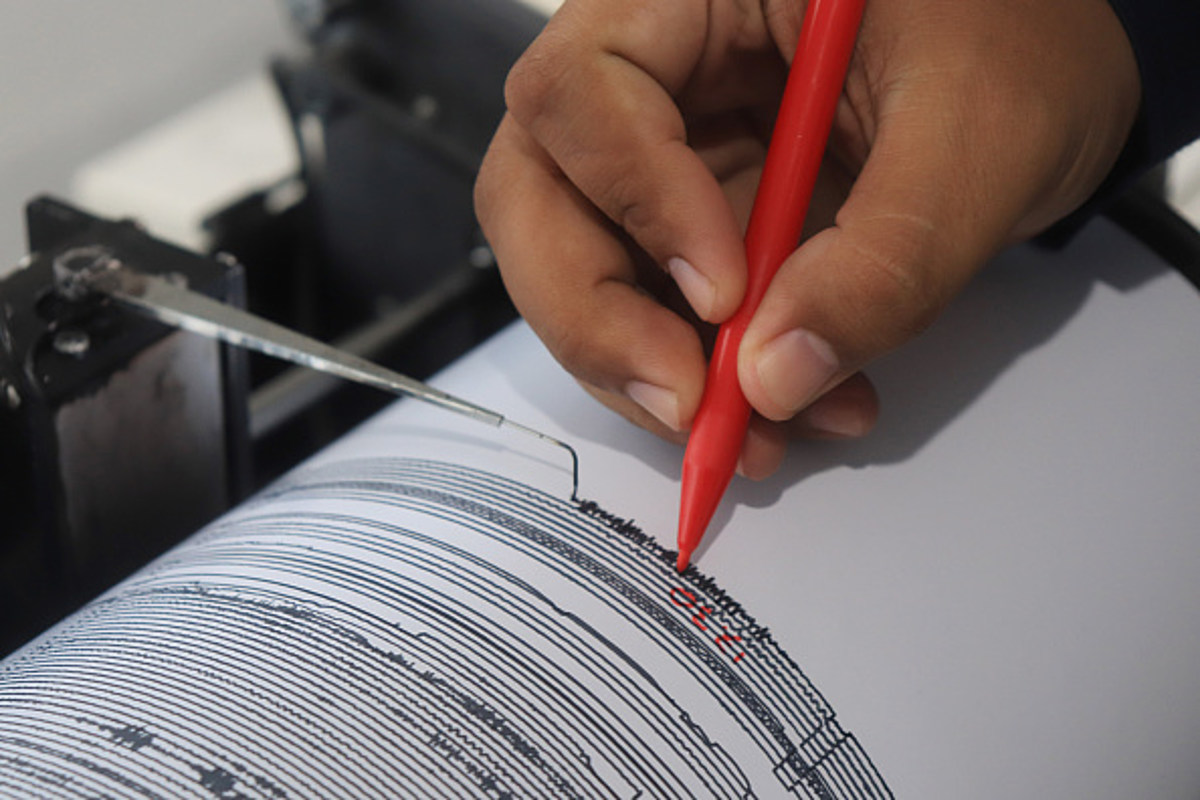
It was 6:15 a.m. on a Monday morning in February when the floorboards started screaming. For most people in Western New York, that time of day usually involves hitting the snooze button or stumbling toward a coffee pot. Instead, thousands of people in Erie County were jolted awake by a sound that many described as a freight train slamming into their front porch.
The buffalo new york earthquake of February 6, 2023, wasn't a massive, city-leveling disaster. It didn't topple skyscrapers or split the Skyway in half. But for a region that prides itself on surviving 7-foot snow drifts and "Snowvember" blizzards, a 3.8 magnitude quake was a bizarre, rattling wake-up call that nobody saw coming.
Honestly, it felt surreal. One minute it's quiet; the next, your pictures are crooked and the dog is losing its mind.
The Morning the Ground Moved in West Seneca
The epicenter was pinpointed just outside of West Seneca, a suburb usually known for its quiet neighborhoods and proximity to the city. While the U.S. Geological Survey (USGS) officially clocked it at a 3.8, Earthquakes Canada initially had it a bit higher at 4.2. Regardless of the number, the depth was the kicker. It happened only about 3 kilometers (roughly 1.8 miles) underground.
When a quake is that shallow, you feel it. Big time.
Over 3,000 people filed "Did You Feel It?" reports with the USGS within the first hour. It wasn't just Buffalo, either. The tremors reached as far north as Niagara Falls and even across the border into St. Catharines and Toronto. Down in Orchard Park and out toward Batavia, the reports were the same: a sudden, violent thud followed by a few seconds of vibrating.
Erie County Executive Mark Poloncarz summed up the collective vibe perfectly on Twitter (now X) that morning. He said it felt like a car had literally hit his house. He wasn't the only one who thought that. Local police stations were flooded with calls from residents convinced a vehicle had jumped the curb or a boiler had exploded in their basement.
Why Buffalo? The Science of the "Springy" Earth
Most people think you need to be in California or Japan to worry about fault lines. We don't have the San Andreas here. However, Western New York sits on some very old, very grumpy basement faults. Specifically, the Clarendon-Linden fault system is the big player in this part of the state. It’s a series of ancient cracks in the Earth's crust that date back hundreds of millions of years.
But there’s a weirder reason why we get the occasional buffalo new york earthquake. It’s called post-glacial rebound.
Basically, about 20,000 years ago, Buffalo was buried under two miles of ice. That ice was incredibly heavy—heavy enough to actually push the Earth's crust down into the mantle. Think of it like sitting on a memory foam mattress. When the glaciers melted, the weight was gone, but the "mattress" didn't pop back up instantly. The ground is still slowly, painfully springing back into its original shape.
As the crust rises, it puts stress on those old fault lines. Every once in a while, the rock can't take the tension anymore and snaps. That snap is what woke you up.
Is This the "Big One" for Western New York?
Short answer: No.
Longer answer: It’s complicated, but still mostly no.
Geologists like Jeff Over from SUNY Geneseo and Gary Solar from Buffalo State have been quick to point out that while a 3.8 is the strongest quake the region has seen in about 40 years (matching a 1999 event), it’s still "small" in the grand scheme of things. To put it in perspective, the devastating 7.8 magnitude earthquake that hit Turkey and Syria on the exact same day was about 10,000 times stronger in terms of ground shaking.
That was a tragic coincidence, by the way. The USGS confirmed there was absolutely no geological link between the disaster in the Middle East and the rattling in West Seneca.
Could we get a bigger one? History says maybe, but don't hold your breath. The largest recorded earthquake in the region happened back in 1929 near Attica, New York. That one was a 4.9 magnitude and actually did some damage—toppling chimneys and cracking masonry. But a 7.0 or 8.0? The faults here just aren't long enough or active enough to generate that kind of energy.
What to Do When the 716 Starts Shaking
Since we spend 99% of our time preparing for lake-effect snow, earthquake readiness usually isn't on the Buffalo "to-do" list. But if the buffalo new york earthquake taught us anything, it's that the ground isn't as solid as we think.
If it happens again, forget what you saw in old movies. Do not run outside. Most injuries in earthquakes happen when people try to move or get hit by falling debris outside of buildings.
- Drop, Cover, and Hold On. Get under a sturdy table. If you're in bed, stay there and cover your head with a pillow.
- Check your utilities. After the West Seneca quake, crews spent the day checking bridges and gas lines. If you smell gas in your home after a shake, turn it off and get out.
- Secure the "tippy" stuff. You don't need to bolt everything to the wall like they do in San Francisco, but if you have a heavy bookshelf or a giant TV on a flimsy stand, maybe think about a wall anchor.
Western New York is still one of the safest places in the country when it comes to natural disasters. We don't get many hurricanes, and we’re far from "Tornado Alley." We just happen to live on a planet that likes to stretch its back every few decades.
If you felt the floor move, you weren't crazy. It was just the Earth's crust reminding us it's still there, slowly rising back up from the Ice Age, one tiny rattle at a time.
Actionable Steps for Buffalo Residents:
- Inspect your foundation: If you felt significant shaking, do a quick walk-around of your basement to check for new stair-step cracks in the cinder blocks.
- Update your emergency kit: You probably already have one for blizzards. Add a pair of sturdy shoes next to your bed; if a quake happens at night, you don't want to step on broken glass from a fallen picture frame.
- Report future activity: If you feel a tremor, go to the USGS "Did You Feel It?" website. Your data helps seismologists map these hidden fault lines more accurately, which keeps everyone safer in the long run.