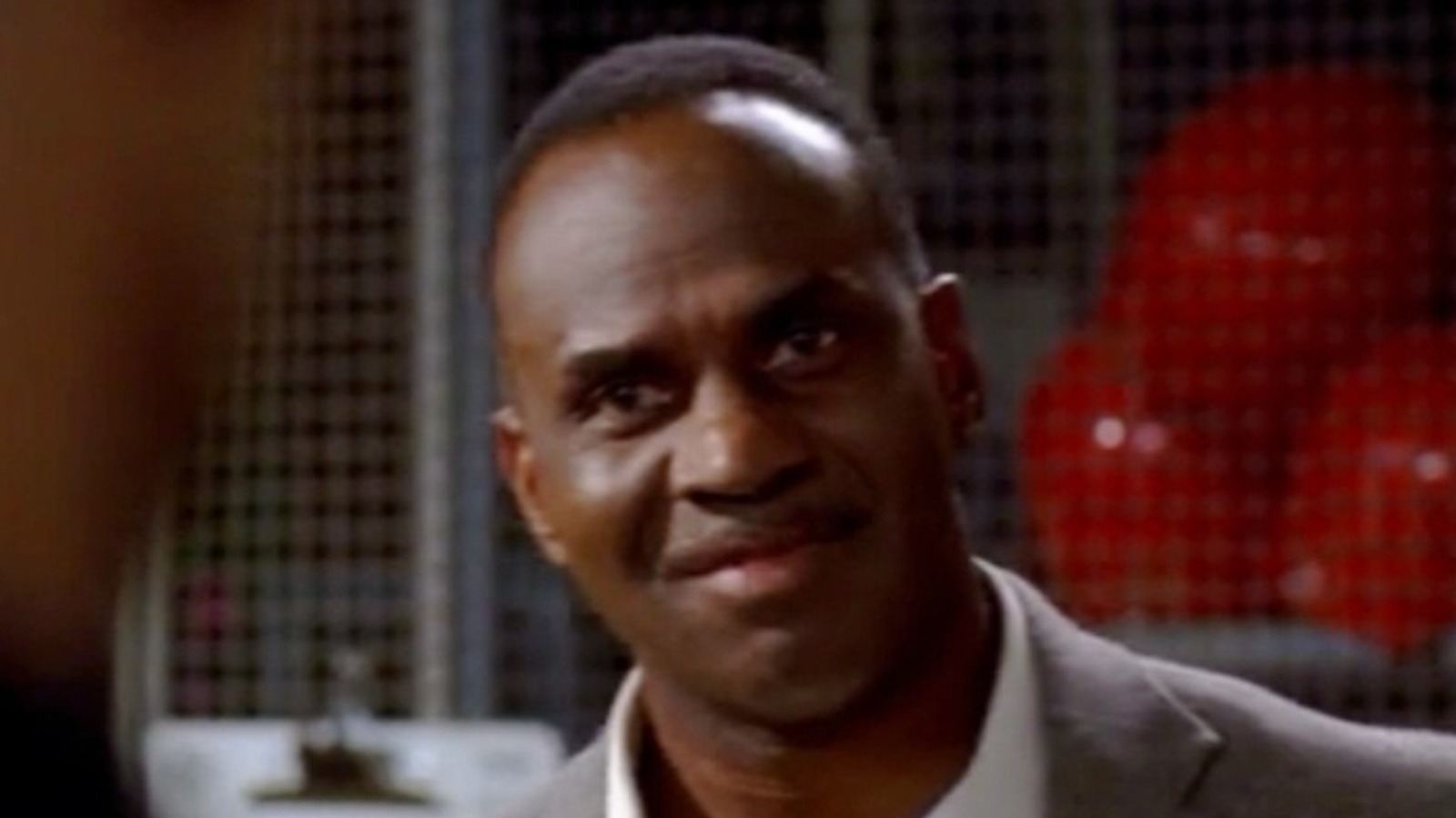
Honestly, if you ask any die-hard fan of Criminal Minds which episode truly wrecked them, they aren't going to talk about the flashy serial killers with the elaborate traps or the creepy masks. They'll talk about a guy in a suit. A community leader. A mentor. They'll talk about Carl Buford.
It’s been years since the show first aired "Profiler, Profiled" (Season 2, Episode 12), but the shadow Buford cast over the series—and specifically over Derek Morgan—remains one of the most visceral examples of how the show handled real-world trauma. Most procedural dramas use guest villains as disposable plot points. Buford was different. He wasn't just a monster; he was a mirror into a side of Derek Morgan that we hadn't seen before, stripping away the "tough guy" exterior of the BAU’s most physical agent.
The Man Behind the Mask
When we first meet the character of Carl Buford, played with a chilling, understated power by Julius Tennon (who, fun fact, is the husband of Viola Davis), he isn't presented as a threat. He’s a pillar of the community in Chicago. He’s the guy who runs the youth center. He’s the man who "saved" a young, fatherless Derek Morgan from a life of crime after Derek’s father, a cop, was killed in front of him.
That's the setup. It's a classic mentor-protege narrative. But Criminal Minds flips it on its head.
The reality was far darker. Buford was a prolific pedophile and serial killer who used his position of power to groom vulnerable boys. He provided them with a safe haven, sports equipment, and a father figure, only to exploit them behind closed doors. For Derek, this trauma was buried so deep that it took a murder accusation and a trip back to his old neighborhood for the truth to start leaking out.
Why "Profiler, Profiled" Changed Everything
The brilliance—if you can call it that—of the Carl Buford storyline is how it weaponizes the audience's perception of Derek Morgan. Up until this point, Shemar Moore’s character was the muscle. He was the one kicking down doors. Seeing him reduced to a state of near-paralysis when confronted by Buford was a shock to the system.
The episode doesn't just show us a crime; it shows us the psychology of grooming.
Buford's power wasn't in his physical strength. It was in his ability to make his victims feel like they owed him their lives. He told them he was the only one who cared. He told them that if they spoke up, they’d be the ones in trouble. When Morgan finally confronts him in that interrogation room, the power dynamic is still skewed. Buford isn't scared. He’s smug. He’s still trying to play the "I made you" card.
It's one of the few times in the show where the "unsub" (unidentified subject) doesn't feel like a caricature. He feels like someone who could live on your block.
The Reality of the Buford Case
Is Carl Buford based on a real person? Not one specific individual, usually.
The writers of Criminal Minds often pulled from real-life FBI case files, and the "community leader turned predator" is a tragic archetype that exists in every city. Think of the scandals involving youth coaches or religious leaders. The show took that real-world horror and personified it in Buford.
What really sticks with people is the statistical reality the show touched on. Predators like Buford don't just pick any kid. They pick the "at-risk" ones—the ones whose fathers are gone, whose mothers are working three jobs, the ones who won't be believed. By targeting the boys who needed him most, Buford ensured his own protection for decades.
Key Moments in the Buford Arc:
- The Arrest: Morgan realizes Buford is still active and has moved on to a new generation of boys. This is the catalyst that finally breaks Morgan’s silence.
- The Confrontation: The scene in the jail where Morgan tells Buford, "I was a kid. You were a man," is arguably the most important piece of dialogue in the character’s history.
- The Return: In Season 8 ("The Restoration"), Buford makes another appearance. Even from behind bars, his influence lingers. We learn more about the depth of his crimes and the other victims who weren't as "successful" as Derek.
The Long-Term Impact on Derek Morgan
Most shows would have "fixed" Morgan in the next episode. But Criminal Minds actually let this scar stay. It explained why Morgan was so protective of victims. It explained his relationship with Penelope Garcia—he needed that light and humor to offset the darkness he’d been carrying since he was ten years old.
The Buford storyline also humanized the FBI. It showed that even the people who hunt monsters were once victims of them. It moved the show away from being a "case of the week" procedural and turned it into a character study.
What Most People Get Wrong About This Storyline
A lot of fans think Buford was just a "one-off" villain. In reality, he is the most significant antagonist in the entire series for Derek Morgan's development. More than the Reaper was to Hotch, in a way. Because Buford didn't just kill people Morgan loved; he tried to kill Morgan's soul.
Also, it's worth noting that the show didn't shy away from the racial and socio-economic aspects of the case. They showed a Chicago neighborhood that felt neglected by the system, which is exactly why someone like Buford could thrive there. He was the only "resource" available.
Actionable Takeaways for Fans and True Crime Enthusiasts
If you're revisiting these episodes or looking into the psychology behind characters like Buford, here are a few things to keep in mind:
- Watch for the "Grooming" Signs: The episode is actually used in some educational contexts to illustrate the stages of grooming—isolation, gift-giving, and the creation of a "special" bond.
- The Importance of the "Backstory" Episode: If you’re a writer or a creator, look at how "Profiler, Profiled" uses a character's past to explain their present-day quirks. It’s a masterclass in retconning a character's history effectively.
- Support Real-World Organizations: The show often highlighted the need for youth mentorship. Organizations like Big Brothers Big Sisters of America offer the kind of positive mentorship that the fictional Buford perverted.
- Check Out "The Restoration": Don't just stop at the Season 2 episode. To see the full resolution of this arc, you have to watch the Season 8 follow-up. It provides a much darker, more realistic look at the "survivor" aspect of the story.
Buford eventually died in prison (killed by another inmate in Season 8), but his presence didn't leave the show until Shemar Moore himself exited the series. It’s a testament to the writing and Tennon's performance that a character with so little screen time could define an entire decade of a show.
Basically, Carl Buford represents the scariest kind of monster: the one who smiles at you and tells you you're special. That's why we're still talking about him.
To better understand the psychological profile of predators like this, you can research the FBI’s Behavioral Science Unit archives on "Power-Assertive" versus "Power-Reassurance" offenders. Buford is a textbook case of a predator who uses social status as a primary weapon of control.
Next, you could look into the real-life Chicago cases that inspired the gritty setting of Morgan’s childhood, which adds an even deeper layer of realism to the scripts written by Edward Allen Bernero, a former Chicago cop himself.