You’re driving north from Santa Fe, winding through the high desert where the Sangre de Cristo Mountains start to look less like a backdrop and more like a wall. The air gets thinner. The piñon trees get scrubbier. Then, you hit it—El Santuario de Chimayó. It’s not some massive cathedral with gilded spires and marble floors. It’s an adobe church, small and earthy, tucked into a valley that feels like it’s frozen in the 1800s. But people don't just come for the architecture. They come for the Chimayo New Mexico holy dirt.
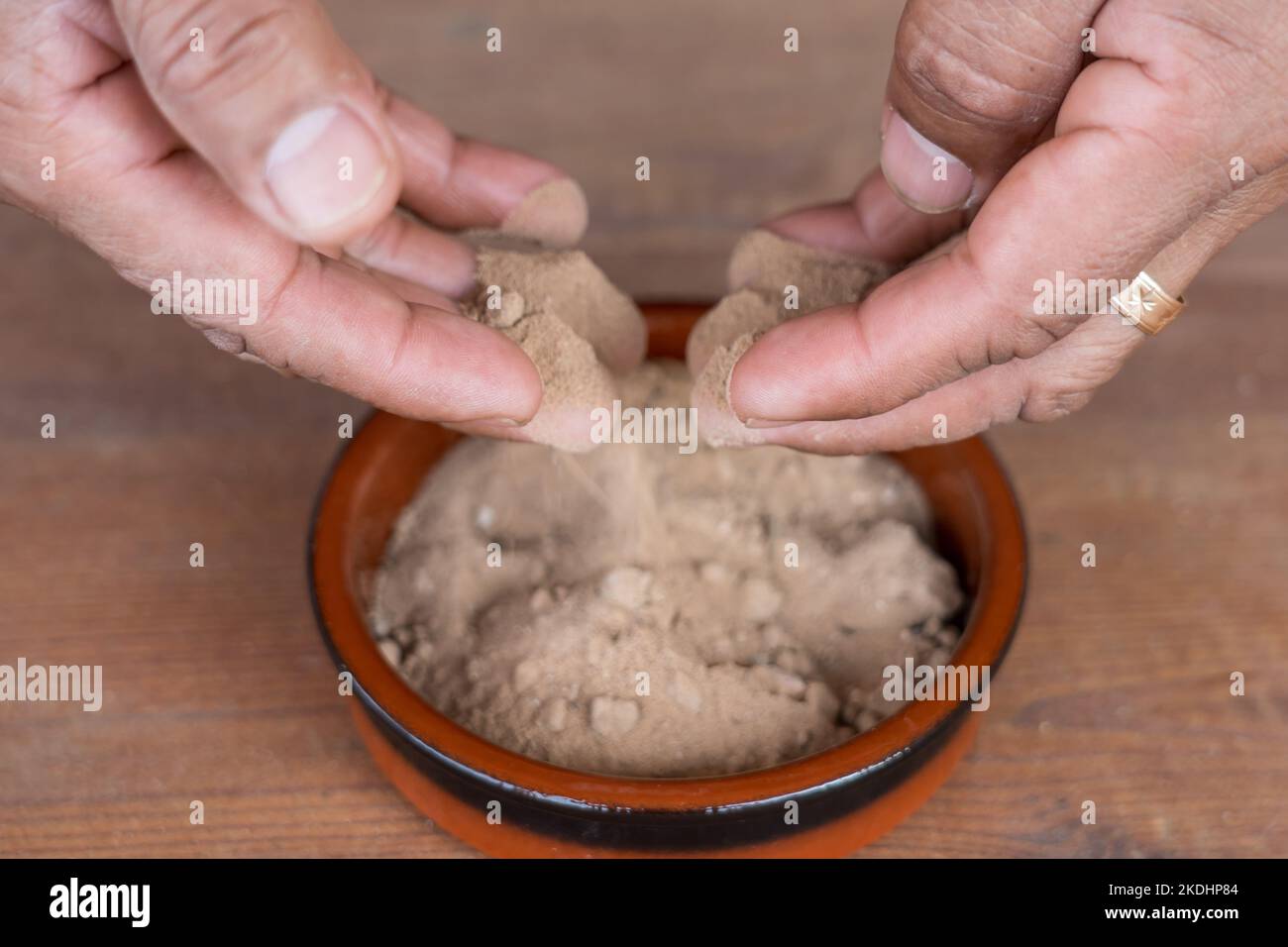
It's in a tiny, cramped room called El Pocito. There’s a hole in the floor. People kneel, reach in, and grab a handful of earth. They rub it on their knees, their foreheads, or tuck it into little plastic baggies to take home to sick relatives. To an outsider, it looks like regular dirt. To the 300,000 pilgrims who show up every year, it’s a direct line to a miracle.
What is the actual story behind the dirt?
Most people think the legend started with the church, but the land was sacred long before the Spanish arrived. The Tewa people knew this spot as Tsimajó. They believed the earth here had healing properties because of a hot spring that once bubbled up and then dried, leaving behind "blessed" mud. Fast forward to the early 19th century. Specifically, 1810.
A local friar named Bernardo Abeyta was performing penance on the hills when he saw a light shining from the ground near the Santa Cruz River. He dug with his bare hands. He found a crucifix—the "Black Christ" of Esquipulas. He took it to a nearby church. It disappeared. He found it back in the hole. This happened three times. Eventually, everyone took the hint: the crucifix wanted to stay there. So, Abeyta built a small chapel over the spot.
That spot is where the hole is today.
Honestly, the room next to the dirt pit is more telling than the pit itself. It’s filled with discarded crutches, braces, and "thank you" notes written on notebook paper. You see photos of soldiers, ultrasound pictures, and tiny baby shoes pinned to the walls. It’s heavy. You can feel the collective hope of a century of people who had nowhere else to turn but a hole in the ground.
Is the Chimayo New Mexico holy dirt "real" or just a placebo?
Look, if you’re looking for a peer-reviewed double-blind study on the mineral content of the dirt vs. healing rates, you’re missing the point. The Archdiocese of Santa Fe makes it pretty clear: the dirt isn't magic. It's a "sacramental." Basically, it’s a physical reminder of faith.
Does the dirt run out?
Yes. Constantly.
If it were just the original soil from 1810, the church would be sitting on a massive sinkhole by now. The priests actually refill the pit with dirt from the surrounding hillsides. They bless it. Is it still "holy"? For the guy who walked 100 miles from Albuquerque on his blisters during Holy Week, the answer is a resounding yes. The physical act of the pilgrimage—the romeria—is often more significant than the chemistry of the soil.
The Science and the Skepticism
Geologically, northern New Mexico is fascinating. The soil is rich in minerals, but nothing suggests it has pharmaceutical properties. Yet, doctors in the region have stories. They’ll tell you about patients who used "remedios" alongside modern medicine. It’s a cultural synthesis. You have Spanish Catholic traditions layered directly on top of Puebloan beliefs. You can’t separate them.
Visiting El Santuario: What nobody tells you
If you’re planning to go, don't expect a quiet, meditative experience if you show up during Easter. It’s a madhouse. Thousands of people walk the roadsides.
- The "Room of Miracles": This is the room with the crutches. It’s small. If you’re claustrophobic, take a breath before you go in.
- The Dirt Etiquette: Bring your own container. A small pill bottle or a Ziploc bag works. Don't take a bucket; that’s just rude.
- The Food: This is crucial. You aren't just here for the spirit; you’re here for the chile. Chimayó is famous for a specific heirloom chile that grows only in this valley. It’s sweet, smoky, and has a kick that’ll wake up your soul faster than the holy water will.
The Walk of Faith
The most intense way to experience the Chimayo New Mexico holy dirt is to see the pilgrims on Good Friday. Some carry heavy wooden crosses for miles. Others walk barefoot. You’ll see lowriders parked along the road, families grilling, and a sense of community that feels intensely local yet welcoming. It is one of the few places in the United States where you feel like you’ve stepped into another country—or another century.
Common Misconceptions
People often get the "Holy Child" mixed up with the "Holy Dirt." In a separate building nearby, there’s a statue of Santo Niño de Atocha. Legend says he wanders the valley at night helping people, and in doing so, he wears out his shoes. People bring him tiny pairs of baby shoes as offerings. It’s a separate tradition, but it’s all part of the Chimayó ecosystem of "expecting the impossible."
Another mistake? Thinking you have to be Catholic to go. You don't. You’ll see hippies from Taos, bikers from Texas, and tourists from Japan. The dirt doesn't ask for your baptismal certificate.
How to get there and what to do next
Chimayó is about 40 minutes from Santa Fe and 1 hour 15 minutes from Albuquerque. The drive through Nambé is beautiful.
- Stop at the Rio Grande Overlook on the way. It puts the scale of this landscape in perspective.
- Respect the "No Photos" signs. Inside the chapel, it's a place of prayer. The locals take this seriously.
- Check out the weavers. Chimayó is world-famous for weaving. The Ortega and Trujillo families have been doing this for generations. Their shops are within walking distance of the church.
- Buy the chile. Look for "Chimayó Heirloom" labels. If it doesn't say that, it's probably just generic Hatch chile (which is fine, but not the local treasure).
When you leave, you’ll likely have a small bag of dirt in your pocket. You might feel a little silly. You might feel a profound sense of peace. Either way, you’ve participated in a tradition that predates the United States. That’s the real miracle—that in a world of high-speed internet and artificial intelligence, people still find a reason to kneel in the dust.
Actionable Steps for your Pilgrimage
- Timing: Visit on a Tuesday or Wednesday morning if you want solitude. Avoid Holy Week unless you want the full-scale cultural immersion.
- Preparation: Bring water and sunscreen. High altitude dehydration is no joke.
- Donations: The church doesn't charge for the dirt, but they rely on donations to keep the site open. Toss a few bucks in the box.
- The "Heirloom" Hunt: Visit the Leona's Restaurante near the sanctuary for some of the best local flavors. It’s tiny and authentic.
Whether you're there for a miracle or just a history lesson, the valley of Chimayó stays with you. It's the smell of burning cedar, the taste of red chile, and the cool touch of adobe walls that have stood for two hundred years. The dirt is just the beginning.