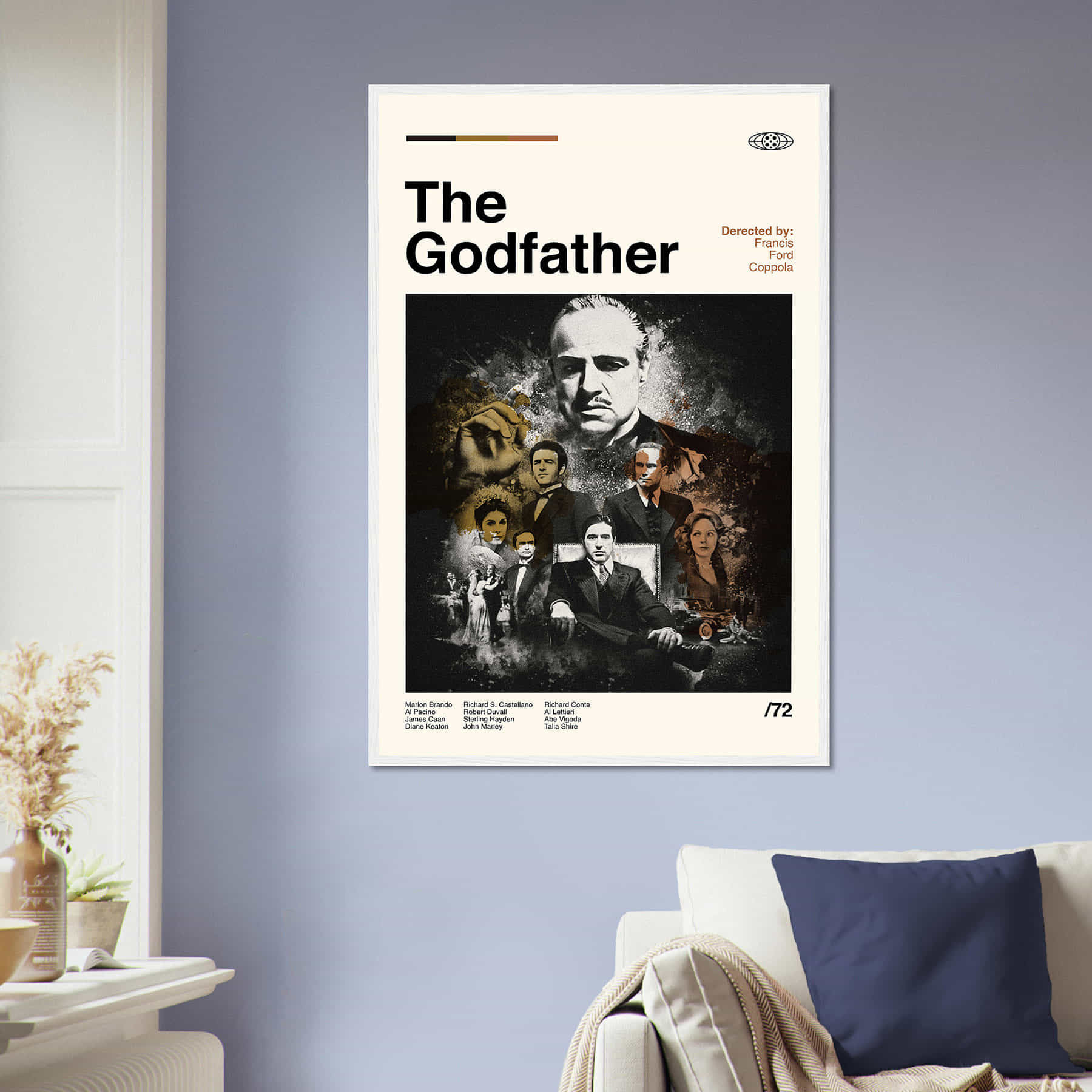
We like to imagine Francis Ford Coppola as this untouchable titan, a man who walked into Paramount Pictures in 1971 and dictated a masterpiece through sheer force of will. That is a total myth. Honestly, the reality was a nightmare. Coppola was twenty-nine, broke, and the studio’s third or fourth choice for the job. They basically hired him because he was Italian-American and they figured he’d be a cheap, easy-to-boss-around director who could provide some "ethnic authenticity" while they churned out a quickie mob flick.
They were wrong.
The making of Francis Ford Coppola’s The Godfather wasn’t a smooth production; it was a war. Every single iconic element we talk about today—Marlon Brando’s performance, Al Pacino’s casting, the dark lighting, even the 1940s setting—was something Coppola had to fight for until he was nearly fired. Multiple times.
The Battle Over Brando and the "Runt"
Paramount hated the idea of Marlon Brando. By 1971, Brando was considered box-office poison. He was "difficult." He was "washed up." The studio head, Charles Bluhdorn, famously told Coppola that Brando would never appear in a Paramount picture. They wanted Laurence Olivier or Ernest Borgnine.
So, what did Coppola do? He tricked them.
He went to Brando’s house and told him they were doing a "makeup test." He didn't call it an audition because you don't ask Marlon Brando to audition. Brando, ever the genius, stuffed Kleenex in his cheeks to look like a bulldog, slicked his hair back with shoe polish, and transformed into Vito Corleone right there in his living room. When Coppola showed the footage to the executives, they didn't even recognize him. They were floored.
Then came the "Pacino problem."
Robert Evans, the legendary (and loud) head of production at Paramount, wanted a "man's man" for Michael Corleone. He wanted Robert Redford or Ryan O’Neal. He literally called Al Pacino "that runt." Coppola saw something else. He saw a face that belonged in Sicily. He saw the "quiet intensity" that Mario Puzo had written about in the novel. The studio was so convinced Pacino was a mistake that they kept "stand-in" directors on the set, ready to fire Coppola the second he tripped up.
Why the Lighting Was a Scandal
If you watch the movie today, the shadows are part of the soul. Gordon Willis, the cinematographer, earned the nickname "The Prince of Darkness" for a reason. But back then? The studio executives were panicking. They’d get the daily footage back and scream that the movie was "too dark." They thought people wouldn't be able to see what was happening.
Coppola and Willis weren't just being moody. They were trying to show the duality of the Corleone family—the bright, sunny exterior of the wedding vs. the pitch-black deals happening in the office. It was revolutionary. It also almost got them both sacked.
The studio also wanted to save money by setting the movie in the 1970s and shooting it in Kansas City. Can you imagine The Godfather with hippies and bell-bottoms? Coppola stood his ground. He insisted on post-WWII New York. He knew that the story wasn't just about crime; it was about the death of the American Dream in the wake of the war.
The Secret Ingredient: Family Dinners
To get the performances he needed, Coppola didn't just give notes. He staged massive, improvised Italian dinners. He made the cast sit down as the Corleones. Brando sat at the head of the table. Caan, Pacino, and Cazale were the brothers. Talia Shire (Coppola's sister, another casting choice the studio fought) was the sister.
They couldn't break character.
This is why the chemistry feels so lived-in. When Sonny hits Michael or Vito corrects Fredo, it doesn't feel like "acting." It feels like a family that has been eating together for twenty years.
What Most People Miss About the Ending
The famous baptism sequence is often studied in film schools as a masterclass in "parallel editing." You see Michael standing as a godfather to his sister's child, renouncing Satan, while his men are out murdering every rival boss in the city.
Most people see this as a cool action montage. It’s actually much darker. It’s the moment Michael Corleone loses his soul. He’s not just "taking care of business." He is becoming the very thing he told Kay he would never be. Coppola shot 500,000 feet of footage for this film. He spent months in the editing room, cutting it down from a massive four-hour epic into the tight, three-hour masterpiece we have now.
Actionable Insights for Your Next Rewatch
If you want to truly appreciate the genius of Francis Ford Coppola’s The Godfather, don't just watch the plot. Watch the transitions.
- Look at the shadows: Notice how you rarely see Vito Corleone's eyes clearly. It makes him feel like a god or a ghost.
- Listen to the silence: This movie isn't wall-to-wall dialogue. Some of the most powerful moments, like the horse head reveal, rely on the "space between the notes."
- Watch the hands: Brando used his hands constantly—gesturing, petting the cat, playing with an orange. It was all improvised to make the character feel human.
The movie changed everything. It was the first "modern blockbuster" that was also high art. It broke the star system. It made the "numbered sequel" a prestige thing rather than a cheap cash-in. But most importantly, it proved that a young director with zero power could win a war against a giant studio if his vision was strong enough.
To get the full experience, find the "Coppola Restoration" version. It cleans up the grain while preserving those deep, ink-black shadows that the studio hated so much in 1972. You should also check out Coppola's The Godfather Notebook, which is basically a 700-page reproduction of his personal binder. It shows every single note he made while reading the book, proving that "luck" had nothing to do with it—it was all in the preparation.