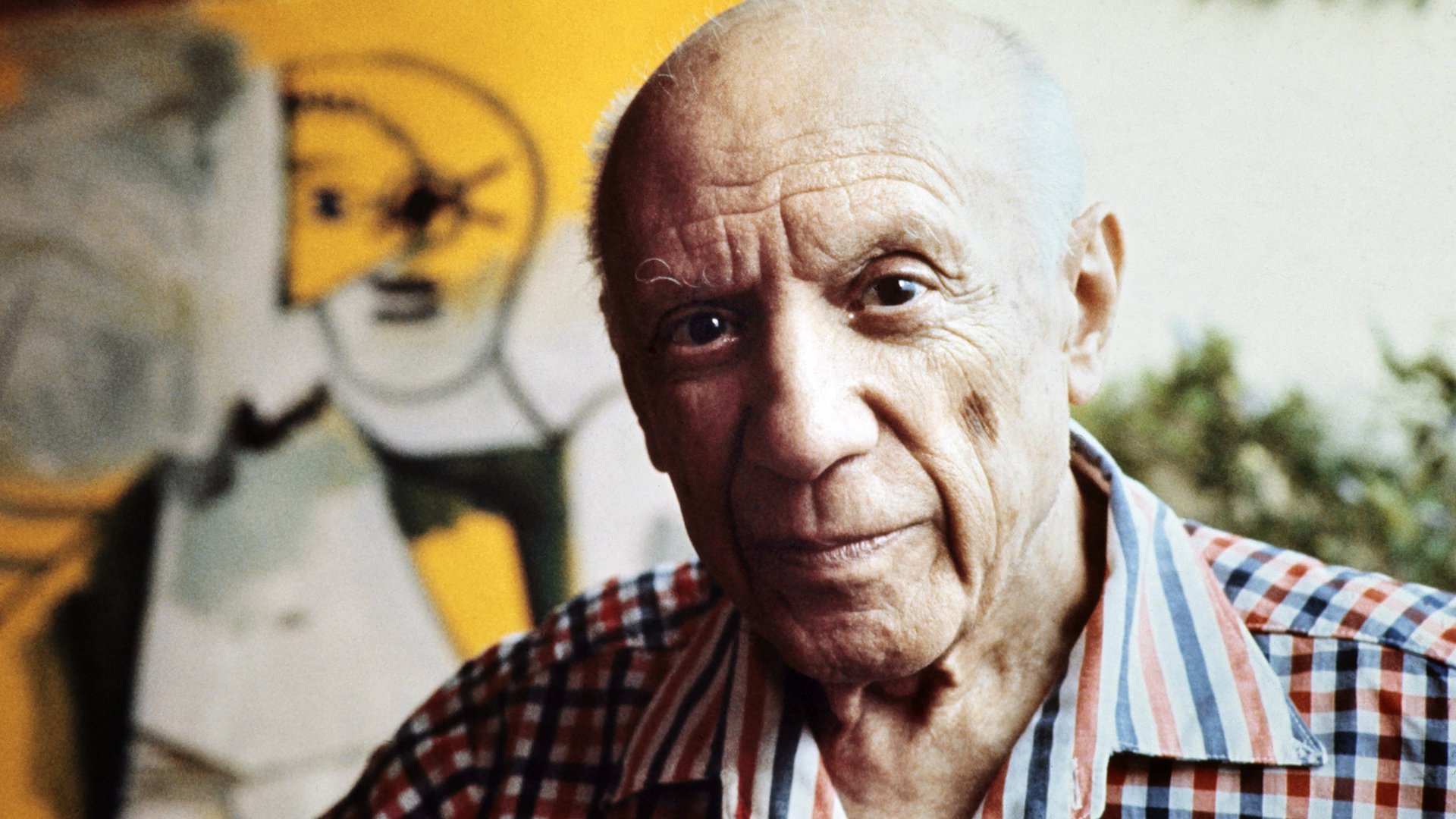
National Geographic took a massive gamble when they decided to follow up their hit Albert Einstein season with a look at the most prolific, complicated, and—honestly—occasionally infuriating artist of the 20th century. Genius Picasso Season 1 isn't just a highlight reel of famous paintings. It’s a messy, non-linear explosion of ego and paint. If you’ve ever looked at Les Demoiselles d'Avignon and wondered what kind of brain produces that level of distortion, this series tries to show you the wiring behind the canvas.
Antonio Banderas was born for this. Literally. He grew up in Málaga, just blocks from where Pablo Picasso was born. You can feel that connection in the performance. It isn't a caricature; it's an interpretation of a man who thought he was a god and often acted like a monster.
The Dual Timeline Trick
The show jumps around. A lot.
Some people find the jumping timelines in Genius Picasso Season 1 a bit dizzying, but it serves a purpose. We see Alex Rich playing the younger, hungry "Pablito" in Montmartre, starving and burning his own sketches just to keep the room warm. Then, we pivot to Banderas as the white-haired titan of the art world, navigating the Nazi occupation of Paris and his own decaying relationships.
It’s about the contrast.
You see the idealistic kid who wants to change how people see the world, and then you see the older man who has succeeded so thoroughly that he’s become a prisoner of his own fame. The show doesn't shy away from the fact that Picasso was, frankly, exhausting to be around. He treated women like muses until he treated them like furniture. The series highlights this through his relationships with Fernande Olivier, Olga Khokhlova, Marie-Thérèse Walter, Dora Maar, and Françoise Gilot.
Each woman represents a "period" in his life, much like his Blue or Rose periods. But the show makes sure they aren't just footnotes. Clémence Poésy’s portrayal of Françoise Gilot is a standout because she’s the only one who really stands up to him. She was the one who walked away. That’s a huge beat in the narrative because it’s the only time Picasso loses his grip on his "subject."
Guernica and the Politics of Paint
One of the best stretches of the season covers the creation of Guernica. It's 1937. The Spanish Civil War is tearing his homeland apart.
Before this, Picasso wasn't exactly a political activist. He was an ego-activist. But the bombing of the Basque town changed something. The series does a fantastic job showing the scale of that canvas. It’s huge. It’s overwhelming. When the Nazi officer famously asks Picasso, "Did you do this?" and he replies, "No, you did," the show lets that moment breathe. It’s one of those historical anecdotes that feels like a movie line, but the context the show provides—the tension of occupied Paris—makes it feel earned.
Painting wasn't just art for him during the war; it was defiance. He stayed in Paris when he could have fled to the States. He stayed when the Gestapo was knocking on doors. Genius Picasso Season 1 manages to make the act of mixing grey paint feel as high-stakes as a spy thriller.
The Problem With Being a Genius
Let’s be real. Picasso was a jerk.
The show doesn't clean him up for the cameras. There’s a scene where he’s ignoring his children, or another where he’s gaslighting Dora Maar, the brilliant photographer who documented the making of Guernica. The series forces the viewer to grapple with a hard question: Do we forgive the man because the art is so good?
Showrunner Ken Biller and the writing team don't give you an easy answer. They show the collateral damage. His son, Paulo, is depicted as a man crushed by the weight of his father’s shadow. The wives and mistresses often ended up in institutionalized or worse. It’s a heavy watch at times. But that’s the reality of the "genius" trope that National Geographic is exploring. It’s not just about talent; it’s about the obsession that consumes everyone in its orbit.
Visuals That Match the Subject
The cinematography deserves a shout-out. It’s gorgeous.
The palette shifts. In the early episodes, the colors are muted, leaning into those "Blue Period" tones of melancholy and poverty. As Picasso finds success, the screen practically vibrates with color. The production design captures the chaos of his studios—La Bateau-Lavoir and later his villa in the South of France—which were famously cluttered with everything from goat bones to unfinished masterpieces.
If you’re watching for the "Easter eggs," you’ll see the inspirations for famous works scattered in the background of scenes. A certain hat, a specific bowl of fruit, the way light hits a window—it’s all there.
Why This Version of Picasso Still Matters
There have been plenty of biopics about Picasso. Surviving Picasso with Anthony Hopkins comes to mind. But Genius Picasso Season 1 feels more expansive because it has ten hours to kill. It can spend forty minutes on a single argument about Cubism with Georges Braque.
It treats the audience like they’re smart enough to care about art theory while also delivering the "prestige TV" drama people crave. It’s basically a soap opera where the characters happen to be the most influential thinkers of the 1900s. You get cameos from Henri Matisse, Gertrude Stein, and Jean Cocteau. It’s a who’s-who of the Parisian avant-garde.
The show reminds us that Cubism wasn't just a "style." It was a radical act of destruction. Picasso and Braque were literally tearing apart the perspective that had dominated art since the Renaissance. The show captures that "punk rock" energy of the early 20th century.
Common Misconceptions the Show Addresses
A lot of people think Picasso just woke up one day and started drawing "crooked faces" because he couldn't draw "correctly."
The series puts that myth to bed early. We see his early work—the academic realism he mastered as a teenager. The kid was a prodigy. He could draw like Raphael by the time he was 14. The show emphasizes that his journey into abstraction was a choice, a deconstruction of his own mastery.
Another thing people get wrong: they think he was a recluse.
Nah. Picasso was a celebrity. He loved the camera. He loved the attention. The series shows how he manipulated his own public image, becoming the archetype of the "modern artist" with the striped shirt and the intense stare. He knew exactly what he was doing.
Actionable Insights for Art Lovers and History Buffs
If you’re planning to dive into the series or just want to understand the period better, here are a few ways to get more out of the experience:
- Watch the "Guernica" Episode with a High-Res Image of the Painting Open: When you see the characters discussing the bull or the lightbulb, look at the actual painting. It’s wild how much detail the show gets right about the sketches and the evolution of the piece.
- Compare the Portrayals: If you’ve seen the Einstein season, look for the thematic links. Both men revolutionized their fields by changing how we perceive time and space. National Geographic is subtly building a "universe" of thought.
- Read "Life with Picasso" by Françoise Gilot: After finishing the season, read her memoir. It’s the book Picasso tried to sue to stop from being published. It provides the "other side" of the story that the show tries to capture.
- Look for the "Braque" Dynamics: Pay attention to the friendship between Picasso and Georges Braque. Most people only know Picasso, but the show gives Braque his due as the co-founder of Cubism. Their rivalry/partnership is one of the best parts of the early episodes.
The series wraps up with a sense of exhaustion and awe. You might not like Picasso by the end of it—honestly, you probably won't—but you will understand why he is unavoidable. He redefined what it means to be a creator in the modern world. Genius Picasso Season 1 succeeds because it doesn't try to make him a hero; it just tries to make him human.
To fully appreciate the scope of the show, it's worth visiting a local museum to see even a minor Picasso sketch in person. There is a tactile energy to his work that the camera tries to replicate, but seeing the actual indentation of the pencil or the thickness of the oil paint makes the struggle depicted in the show feel that much more real. If you can't get to a museum, look up the "Picasso's Electric Light Drawings" from 1949; they capture the spirit of a man who never stopped trying to draw with everything he had, even light itself.