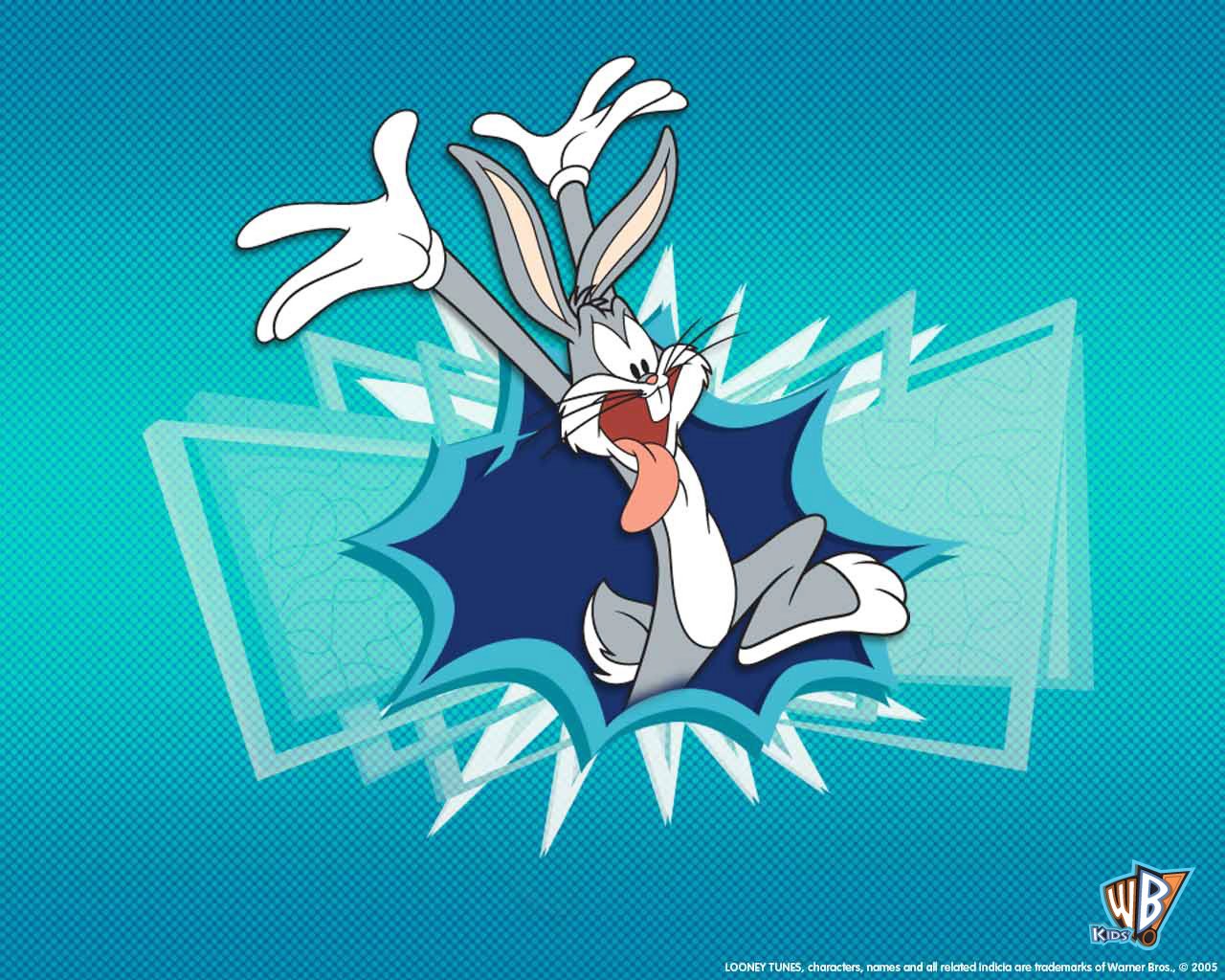
He is basically a giant, walking heart with sneakers. If you grew up watching Saturday morning cartoons, you know exactly who I’m talking about. That towering pile of orange-red hair, officially known as Gossamer, is the ultimate foil to our favorite carrot-chomping protagonist. The Bugs Bunny big red monster didn’t start with a name, though. He started as a visual gag, a literal mountain of fur designed to make Bugs look small for once.
It worked.
The dynamic between these two is legendary in animation circles because it flips the script. Usually, Bugs is the one in control, but Gossamer represents raw, unbridled anxiety wrapped in a sweater. He’s huge. He’s menacing. Yet, he is incredibly fragile. One mention of a "people" and he falls apart. That’s the genius of Chuck Jones.
The Birth of the Bugs Bunny Big Red Monster
Back in 1946, a short titled Hair-Raising Hare hit the screens. This was the debut. At the time, the monster wasn't "Gossamer." He was just a nameless creature controlled by a mad scientist who looked suspiciously like Peter Lorre. The scientist needed a rabbit’s brain for his mechanical man. Enter Bugs.
Bugs Bunny is usually the smartest guy in the room, but even he has a "Yikes!" moment when he sees this wall of red hair. The design is fascinating. Created by Chuck Jones, Gossamer is a total subversion of monster tropes. Instead of claws and fangs, you get a silhouette that looks like a giant thumb or a hairbrush. His only visible features are those massive, expressive eyes and those iconic white sneakers.
The animators at Warner Bros. knew they had something special. They didn't just want a scary beast; they wanted a character that could be funny through sheer physical presence. The way he moves—sort of a floating glide—contrasts perfectly with Bugs’ frantic, high-energy escapes.
Why the Sneakers?
Actually, the sneakers were a stroke of brilliance. They humanized him. They made him feel like a kid in a giant suit, which is exactly how he acts. He’s not malicious. He’s a henchman. He follows orders. When the scientist tells him to get the rabbit, he gets the rabbit. But he’s easily distracted.
In Hair-Raising Hare, there’s that classic bit where Bugs poses as a hairstylist. He starts giving the monster a manicure and a perm. The monster just sits there. He loves it. This is why the Bugs Bunny big red monster works so well; he is a creature of pure ego and simple desires. He wants to be pampered. He wants to look good.
Giving the Beast a Name
For decades, fans just called him "the big red monster." It wasn't until 1980, in the short Duck Dodgers and the Return of the 24½th Century, that he finally got his name: Gossamer.
The name is a joke in itself. "Gossamer" usually refers to something light, thin, and delicate—like a spiderweb or a fine veil. Calling a nine-foot-tall, five-hundred-pound wall of hair "Gossamer" is peak Looney Tunes irony. It’s also a testament to how the character evolved. He went from a one-off gag to a recurring icon.
Mel Blanc, the man of a thousand voices, originally provided the vocalizations. They weren't exactly words. They were more like whimpers, growls, and sighs. Later on, Maurice LaMarche and others took over the mantle, but that original, timid-yet-boisterous personality remained the same.
The Second Major Appearance: Water, Water Every Hare
If you ask a casual fan about the Bugs Bunny big red monster, they’re probably thinking of the 1952 short Water, Water Every Hare. This is the one where Bugs’ hole gets flooded, and he ends up in the castle of another mad scientist. This time, the monster is used as a "sleeping" threat that eventually wakes up and chases Bugs through a series of surreal corridors.
The visual of the monster being reduced to a tiny skeleton by "hair dryer" or shrinking in the wash is burned into the collective memory of Gen X and Millennials. It highlights the recurring theme of his existence: he is 99% hair. When you take the hair away, there’s almost nothing left.
Why Gossamer Still Matters in Pop Culture
Why are we still talking about a character who only appeared in a handful of original shorts?
Honestly, it’s the design. It is perfect. In a world of over-complicated CGI villains, Gossamer is a masterclass in minimalism. You have a shape, a color, and a pair of eyes. That’s it. He’s been referenced in everything from The Simpsons to Tiny Toon Adventures. He even made an appearance in Space Jam, though he didn't get nearly enough screen time if you ask me.
There's also something deeply relatable about him. Gossamer is the personification of being overwhelmed. He’s big, he’s loud, but deep down, he’s scared of people. When Bugs says, "I wonder if there are any people in the audience," and Gossamer runs away screaming, it’s a moment of pure vulnerability. We’ve all been there. Maybe not with the orange-red fur, but definitely with the social anxiety.
The Modern Era and Space Jam: A New Legacy
In the 2021 sequel Space Jam: A New Legacy, Gossamer got a bit of a glow-up. He’s part of the Tune Squad, and his presence is more of a nostalgic nod than a plot driver. But seeing him in high-definition 3D was a trip. You could see every individual hair. While some purists prefer the flat, hand-drawn look of the 40s, the modern version proved that the character's silhouette is so strong it can survive any medium.
He also appeared in The Looney Tunes Show (the 2011 version), where he was re-imagined as a shy, giant kid living with a witch named Lezah (Hazel spelled backward). This was a controversial move for some, but it leaned into the "misunderstood monster" trope that was always present in the original shorts.
Analyzing the Art Style
If you look at the sketches from the Warner Bros. archives, you see that the Bugs Bunny big red monster was originally much more "monstrous." Early concept art showed him with more defined limbs and a less abstract shape.
Chuck Jones pushed for the "hair-only" look. He wanted him to look like a rug that had come to life. By removing the neck, the waist, and the shoulders, the animators forced themselves to express emotion solely through the eyes and the hands. It’s a technique called "silhouette testing." If you can tell who a character is just by their shadow, you’ve designed a winner.
Actionable Takeaways for Looney Tunes Fans
If you want to dive deeper into the history of the Bugs Bunny big red monster, here is how you should spend your weekend:
- Watch the "Big Three" Shorts: Start with Hair-Raising Hare (1946), move to Water, Water Every Hare (1952), and finish with Duck Dodgers and the Return of the 24½th Century (1980). This gives you the full arc of the character from nameless beast to named legend.
- Study the Chuck Jones Philosophy: Look for the book Chuck Amuck. He talks extensively about how he designed characters based on psychological traits rather than just "looking cool."
- Check Out the Merch: Gossamer has some of the coolest vintage toys in the Looney Tunes universe. Because he’s basically a plush toy in real life, the 90s beanbag versions of him are highly collectible and actually hold their value well on sites like eBay.
- Analyze the "People" Gag: Pay attention to how Bugs uses psychology to defeat him. It’s rarely through physical force. It’s always through social engineering—shampoo, manicures, or stage fright. It’s a great lesson in brains over brawn.
The Bugs Bunny big red monster remains a titan of animation history not because he’s scary, but because he’s us. He’s big, messy, and just wants someone to do his hair. He is the ultimate reminder that even the biggest monsters in our lives are usually just a bunch of hair and a pair of sneakers, waiting to be outsmarted by a clever rabbit with a plan.