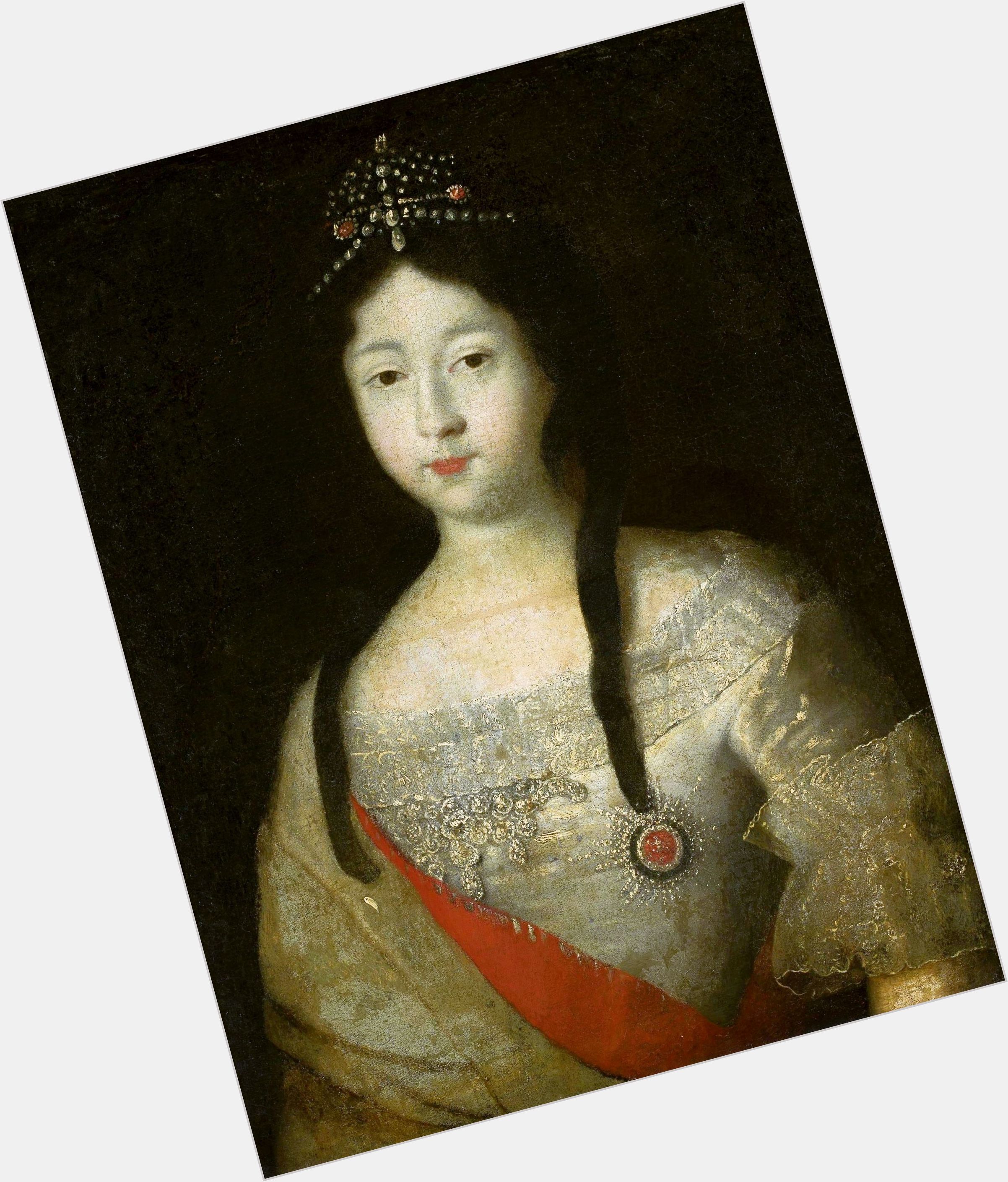
History is usually written by the winners, or at least the ones who lived long enough to sit on the throne. Grand Duchess Anna Petrovna is one of those figures who kind of falls through the cracks because she died so young. She was only 20. But if you look at the family tree of the Russian Empire, she is basically the bridge that kept the Romanov name alive—even if the bloodline technically shifted to the Germans.
She was the eldest daughter of Peter the Great and his second wife, Catherine I. People often forget that her birth was actually a bit of a scandal at the time. Peter and Catherine weren't officially married when Anna was born in 1708. She was an "illegitimate" child who was later "legitimized" by their wedding in 1712. Imagine being the daughter of the man who literally built the Russian Empire from the ground up, only to have your very existence be a point of political debate. It wasn't an easy childhood, honestly.
Who was Anna Petrovna?
Anna was widely considered the smartest of Peter’s children. While her younger sister Elizabeth (who eventually became Empress) was the social butterfly and the fashion icon, Anna was the bookworm. She spoke French, German, Italian, and Swedish. Contemporary accounts, like those from foreign ambassadors, often mentioned that she looked just like her father—tall, striking, and incredibly sharp.
Peter the Great was obsessed with Westernizing Russia. He didn’t just want his daughters to be pretty; he wanted them to be diplomatic assets. By the time Anna was a teenager, she was already being dangled as a potential bride for European royalty. The goal? To cement Russia's place as a heavyweight in European politics.
The Marriage That Changed the Map
In 1724, Peter signed a marriage contract for Anna. She was to marry Karl Friedrich, Duke of Holstein-Gottorp. This wasn't exactly a love match. Karl Friedrich was the nephew of Charles XII of Sweden—Peter’s greatest rival. It was a strategic move to gain influence in the Baltic and eventually press a claim to the Swedish throne.
But there was a catch. A big one.
The marriage contract specifically stated that Anna and her husband had to renounce all claims to the Russian throne. However, Peter added a secret clause. He reserved the right to name a son from this marriage as his successor. This tiny legal loophole is essentially why the Russian monarchy survived the 18th century, but it also made Anna a target for every power-hungry courtier in St. Petersburg.
Life After Peter the Great
When Peter died in 1725, things got messy. Fast.
Anna’s mother, Catherine I, took the throne, which kept Anna in a position of power for a while. She was the leader of the "Holstein party" at court. But Catherine didn't last long. When she died in 1727, the tide turned against the Holstein-Gottorps. The Russian nobility, specifically the powerful Menshikov, wanted the Germans out.
Anna and Karl Friedrich were basically bullied into leaving Russia. They moved to Kiel, the capital of Holstein. Imagine moving from the glittering, massive palaces of St. Petersburg to a tiny, drafty, provincial German court. It was a massive step down. Anna was miserable. She wrote letters home begging to come back, but the political climate in Russia was too volatile.
The Birth of Peter III and a Tragic End
In February 1728, Anna gave birth to a son, Carl Peter Ulrich. This boy would eventually become Emperor Peter III of Russia.
She didn't get to see him grow up.
Less than three months after giving birth, Anna Petrovna died. Some say it was "childbed fever" (infection), while others suggest she succumbed to the cold and the depression of her exile. Before she died, her last wish was to be buried back in Russia. Even in death, she wanted to go home. Her body was transported back to St. Petersburg and laid to rest in the Peter and Paul Cathedral, the traditional burying ground of the Romanovs.
Why We Still Talk About Anna Petrovna Today
You might think a woman who died at 20 didn't leave much of a mark. You'd be wrong.
Because the male line of the original Romanovs died out with Peter II, the throne eventually passed through Anna’s bloodline. Her son, Peter III, was brought back to Russia by her sister, Empress Elizabeth. When Elizabeth died, the "Romanov" dynasty continued as the House of Holstein-Gottorp-Romanov.
Every Russian Tsar from that point until the revolution in 1917—including Catherine the Great’s husband and her descendants—was a direct descendant of Anna Petrovna. She is the biological link.
Key Takeaways for History Buffs
- Legacy over Longevity: Anna’s life proves you don't need a long reign to change history. Her son and her descendants defined the Russian Empire for nearly 200 years.
- The Power of Contracts: That secret clause in her marriage contract was the pivot point for Russian succession. It reminds us that 18th-century politics was basically a high-stakes legal game.
- The Gender Gap: Anna was clearly more capable than many of the men who surrounded her, yet she was used as a pawn for dynastic expansion. It’s a classic, albeit tragic, example of the limitations placed on royal women.
Digging Deeper into the Romanov Archives
If you're looking to understand the nuances of this era, don't just stick to the basic textbooks. The memoirs of the era, particularly those that touch on the "Bironovshchina" and the reign of Anna Ioannovna, provide a lot of context for why Anna Petrovna's branch of the family was initially kept away from power.
To truly grasp the impact of Grand Duchess Anna Petrovna, one should look into the history of the Order of Saint Anna. Originally created by her husband in her honor, it eventually became one of the most prestigious state awards in the Russian Empire. It’s a lasting physical reminder of a woman who was much more than just a footnote in her father's biography.
The best way to appreciate her story is to visit the Peter and Paul Fortress in St. Petersburg. Standing at her tomb, you realize she was just a young woman caught between her father's massive ambitions and the cold reality of European power struggles. She was a Romanov to her core, even when the world tried to turn her into a German duchess.
To explore this further, research the specific diplomatic correspondence between the Russian court and the Duchy of Holstein from 1725 to 1728. These documents reveal the true level of anxiety the Russian elite felt regarding Anna's potential claim to the throne. You can also look for the published letters of her sister, Elizabeth Petrovna, which offer a more personal glimpse into their relationship before politics tore the family apart.