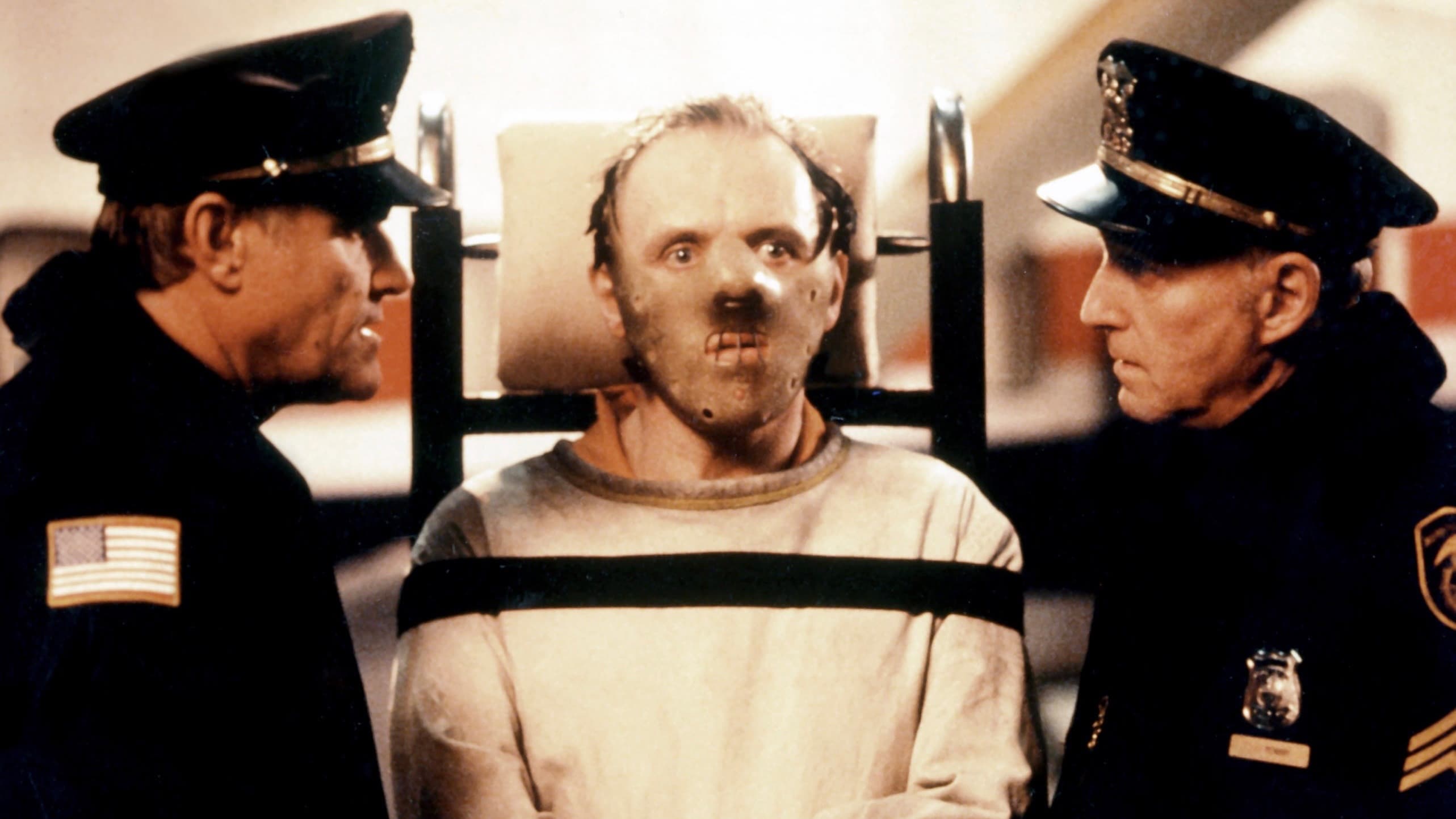
If you’re sitting down to figure out the order of Silence of the Lambs movies, you’ve probably realized pretty quickly that the timeline is a total disaster. It’s not like Star Wars where there’s a clear (mostly) linear path. No. This franchise is a jagged mess of prequels, sequels, reboots, and a TV show that somehow manages to be the best thing in the whole series. You’ve got Anthony Hopkins, who is the definitive Hannibal Lecter for most people, but then you have Brian Cox doing a gritty 80s version and Mads Mikkelsen bringing a weird, European elegance to the role that honestly makes Hopkins look a bit hammy.
Most people just want to know where to start. Do you go by the year the movies hit theaters, or do you try to piece together the life of Hannibal "The Cannibal" Lecter from his childhood in Lithuania to his final days in Florence? It’s a choice between historical context and narrative flow.
The Release Date Order: How the World First Met Hannibal
Watching in the order these films were actually released is usually the best way to go if you want to see how the "Lecter-mania" evolved in pop culture.
It started way back in 1986. Michael Mann, the guy who did Heat, directed a movie called Manhunter. It’s based on the book Red Dragon by Thomas Harris. Most people don’t even realize this is a Hannibal movie because Brian Cox plays the character (spelled "Lecktor" here) and he’s only on screen for about ten minutes. It’s a neon-soaked, synth-heavy police procedural. It flopped. Hard.
Then came 1991. The Silence of the Lambs.
This movie changed everything. It’s one of the few films in history to sweep the "Big Five" Academy Awards. Jodie Foster’s Clarice Starling and Anthony Hopkins’ Hannibal Lecter created a blueprint for every serial killer thriller that followed. If you watch in release order, this is your true starting point.
- Manhunter (1986) – The "forgotten" original.
- The Silence of the Lambs (1991) – The undisputed masterpiece.
- Hannibal (2001) – Ten years later, Ridley Scott took over. It’s gorey, it’s weird, and Julianne Moore replaces Jodie Foster.
- Red Dragon (2002) – A remake of the story from Manhunter, but this time with Hopkins.
- Hannibal Rising (2007) – The prequel nobody really asked for, explaining why Hannibal became a monster.
- Hannibal (TV Series, 2013-2015) – The Mads Mikkelsen era. It’s a prequel to Red Dragon but feels like its own universe.
- Clarice (TV Series, 2021) – A CBS show about Clarice Starling’s life after the Buffalo Bill case.
The Chronological Order: Hannibal's Life Story
If you want to follow the character's internal timeline, the order of Silence of the Lambs movies looks very different. You start with a teenager in World War II and end with a disgraced FBI agent trying to find her soul in the 90s.
Hannibal Rising (The Origin)
We start with Hannibal Rising. Set primarily in the aftermath of WWII, we see a young Hannibal (played by Gaspard Ulliel) watching his sister get eaten by starving soldiers. It’s dark. It tries to give a "reason" for his cannibalism, which many fans think actually makes the character less scary. If he’s just a guy with trauma, he’s not the mythic beast we see later.
The Will Graham Era (Hannibal and Red Dragon)
Next, you jump into the NBC series Hannibal. This show is visually stunning. It covers the time when Hannibal was a practicing psychiatrist helping the FBI. Then you hit Red Dragon (or Manhunter). This is the specific story of the "Tooth Fairy" killer and how Will Graham caught Lecter. If you’re doing the Hopkins marathon, you watch the 2002 Red Dragon here.
The Clarice Starling Era
Now we get to the meat of it. The Silence of the Lambs. Hannibal is behind glass. Clarice is a student. It’s perfect cinema. Directly after this, chronologically, comes the TV show Clarice. It deals with her PTSD. Finally, you wrap up with the movie Hannibal, where Lecter is loose in Italy and Clarice is a hardened veteran agent.
Why "Manhunter" Is the Black Sheep (and Why You Should Watch It)
Honestly, Manhunter gets a bad rap because it doesn’t fit the "Hopkins aesthetic." But if you like 80s vibes—think Miami Vice—it’s a must-watch. Brian Cox plays Hannibal as a bored, manipulative bureaucrat rather than a theatrical villain. It’s arguably more realistic.
The film was directed by Michael Mann, and it’s gorgeous. The use of color is intense. When Will Graham visits "Lecktor" in his cell, the room is blindingly white. It feels clinical and cold. It’s a massive contrast to the dungeon-like atmosphere of the 1991 film.
There’s a common misconception that Red Dragon (2002) is a sequel to Silence. It’s not. It’s a prequel. But because Hopkins looks older in 2002 than he did in 1991, it feels a bit jarring to the eyes. You just have to suspend your disbelief and pretend he hasn't aged a day.
Dealing with the Clarice Starling Discontinuity
One of the biggest hurdles in the order of Silence of the Lambs movies is the character of Clarice Starling. In Silence, she’s played by Jodie Foster. Foster famously turned down the sequel, Hannibal, because she didn't like where the character went in the book (where Clarice basically becomes Hannibal’s lover).
So, in the 2001 film Hannibal, Julianne Moore takes over. She does a great job, but the vibe is different. Then, in the 2021 series Clarice, Rebecca Breeds takes the role. This creates a weird "multiverse" feel.
- The Foster Version: Vulnerable but incredibly steely.
- The Moore Version: Tired, cynical, and more action-oriented.
- The Breeds Version: Haunted and struggling with the bureaucracy of the FBI.
If you’re a purist, you might find it hard to jump between these three. Most fans tend to stick to the Foster version and then skip to the Mads Mikkelsen TV show, which ignores Clarice entirely for its first two seasons.
The NBC "Hannibal" Show: Is It Canon?
The TV show is a masterpiece, but it’s its own thing. Developed by Bryan Fuller, it’s basically a "remix" of the Thomas Harris novels. It takes dialogue from the books and puts it in the mouths of different characters. It changes the race and gender of several key players.
It’s technically a prequel to the events of Red Dragon, but it ends in a way that makes the 1991 movie impossible to happen in that same universe. Think of it as a high-art, Gothic romance version of the story. If you want the most "accurate" Hannibal, Mikkelsen is arguably closer to the book's version—polyglot, elegant, and terrifyingly calm—than even Hopkins.
Breaking Down the Essential Watch List
If you don't have time for seven movies and two TV shows, here is the "No-Nonsense" path. This gives you the core story without the filler or the bad prequels.
- The Silence of the Lambs (1991): Start here. Always.
- Red Dragon (2002): See how it all started with the Hopkins version of the character. Edward Norton is great as Will Graham.
- Hannibal (The TV Series): It’s better than most of the movies. Watch it all.
- Manhunter (1986): Watch it as a "What If?" scenario to see a different take on the same story.
Skip Hannibal Rising. It tries to explain the unexplainable, and in doing so, it makes Hannibal less interesting. Part of the horror of the character is that we don't really know why he is the way he is. He’s just a "pure sociopath," as Dr. Chilton says, though even that is a simplification.
The Thomas Harris Books vs. The Movies
It’s worth noting that the order of Silence of the Lambs movies follows the books pretty closely in terms of publication, but the endings are wildly different.
The book version of Hannibal ends with Clarice and Hannibal literally running away together after he brainwashes her (and they eat a guy’s brain together). The movie changed this because test audiences hated it. They thought it ruined Clarice’s character.
The TV show takes the spirit of the books—the obsession, the "becoming"—and turns it into a visual poem. If you’re a fan of the films, reading the books is the only way to get the full, unadulterated (and much weirder) version of the story.
Actionable Next Steps for Your Marathon
To get the most out of your viewing experience, don't just mindlessly binge.
- Start with the 1991 film to establish the baseline of the world. It is the gold standard for a reason.
- Watch Red Dragon (2002) immediately after if you want to see the backstory of Hannibal’s capture without changing the lead actor.
- Contrast Manhunter with Red Dragon. It’s a fascinating exercise in how two different directors (Michael Mann vs. Brett Ratner) can interpret the exact same source material.
- Save the Mads Mikkelsen series for last. It is so stylistically dense and "extra" that it might make the older movies feel a bit plain if you watch it first.
- Check the rights and streaming platforms. These movies are notoriously scattered. Silence is often on MGM+ or Max, while the TV show jumps between Hulu, Netflix, and Prime Video depending on the month.
Focusing on the order of Silence of the Lambs movies by release date is usually the most rewarding for a first-timer, as it allows you to appreciate the cultural impact as it happened. If you’re a returning fan, the chronological route offers a fresh, albeit slightly disjointed, look at the life of the world's most famous literary cannibal.