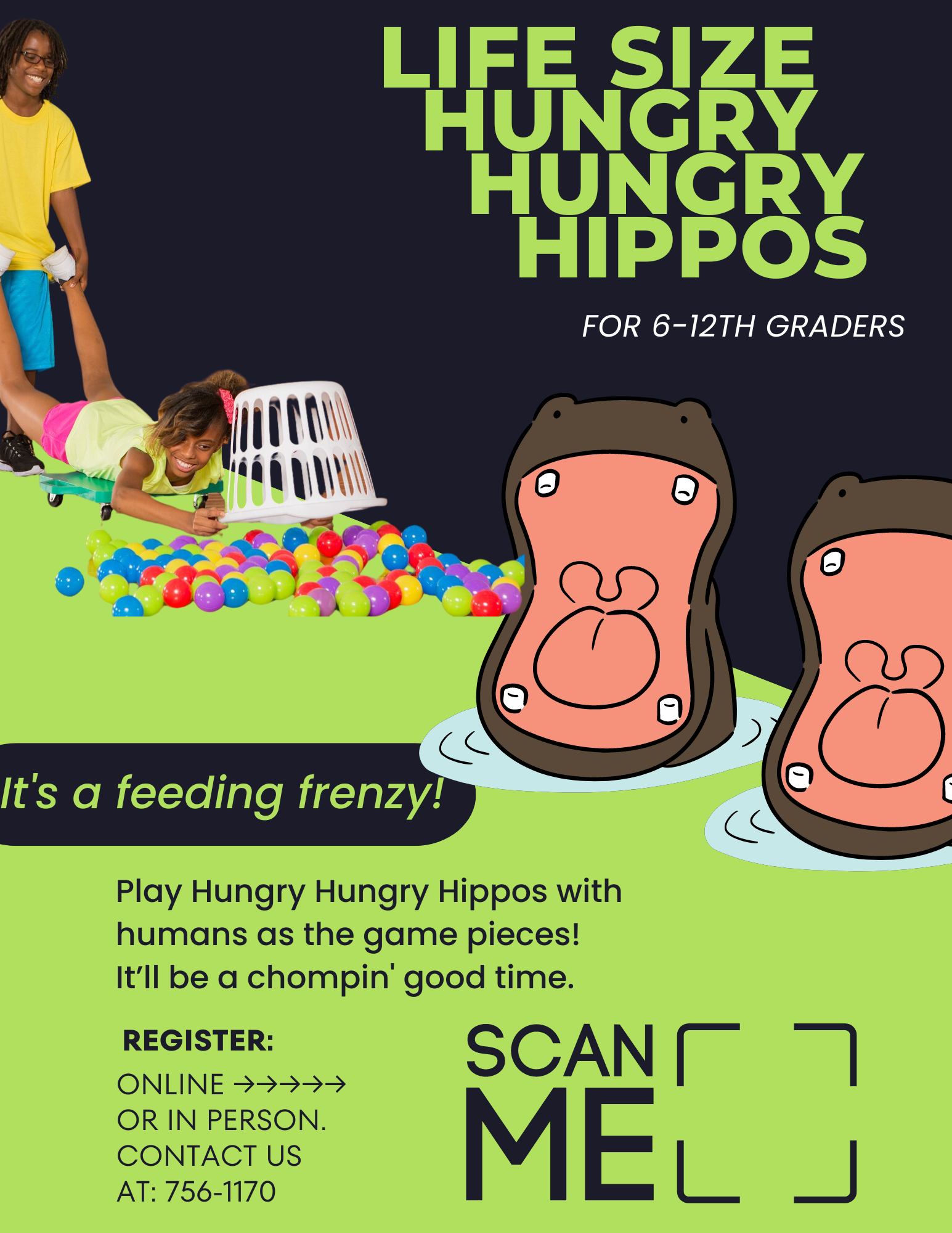
Ever looked at those tiny plastic hippos and thought, "I bet I could do that better"? You aren't the only one. Honestly, the fascination with hungry hippos life size builds have basically become a rite of passage for summer camps, corporate team-building retreats, and wacky neighborhood block parties. It’s loud. It's chaotic. It usually involves people lying face-down on skateboards while someone holds their ankles like they're a human wheelbarrow.
It works because the original 1978 Milton Bradley game is pure, unadulterated tension. Four players. One pile of marbles. Total mayhem. When you scale that up to human proportions, the stakes feel hilariously high even though the prize is usually just bragging rights or a cheap plastic trophy.
The Engineering of a Human-Sized Feeding Frenzy
Building a functional version of hungry hippos life size isn't actually as easy as it looks on a viral TikTok. If you just throw people on the floor, they get carpet burn. If the "balls" are too heavy, they hurt. Most successful setups use a few specific components that have become the unofficial industry standard for DIY gamers.
First, you need the "hippo" transit system. Usually, this means heavy-duty flatbed dollies or those vintage four-wheeled scooters you used in middle school gym class. You know the ones—the plastic squares that would absolutely crush your fingers if you gripped the sides? Yeah, those. A human "driver" holds the player's legs and shoves them into the center of the ring, then yanks them back before the other "hippos" collide with them.
Then there’s the "mouth." You can't exactly hinge a human jaw to snap up plastic balls. Instead, people use laundry baskets or plastic storage bins. The player holds the basket upside down, slams it over a ball, and tries to drag it back to their corner without losing the cargo. It's physically exhausting. It’s essentially a high-intensity interval workout disguised as a board game.
Why the Physics of Scale Changes Everything
In the tabletop version, the levers are small. You tap a plastic tab, and the spring does the work. When you're dealing with a 180-pound human on wheels, momentum becomes a real problem. Kinetic energy ($E_k = \frac{1}{2}mv^2$) scales up quickly. If you've got four adults charging toward a central point at three miles per hour, that's a lot of mass converging on a small pile of ball pit balls.
Collisions happen. Often.
This is why "safety" (or at least the appearance of it) matters. I've seen groups use inflatable barriers or even pool noodles to create a "safe zone" in the middle. Most professional event companies that rent out hungry hippos life size kits actually use inflatable arenas. These are massive, air-filled rings with bungee cords attached to the players. The bungee adds a level of resistance that prevents you from just camping in the middle and hogging all the balls. It also snaps you back to your starting point, which is both terrifying and hilarious to watch.
Commercial vs. DIY: What's the Better Experience?
If you're looking to play, you've got two main paths. You can go the "scrap wood and laundry basket" route, or you can spend a few thousand dollars on a commercial inflatable.
- The DIY Route: Best for backyard parties. You need four skateboards, four laundry baskets, and a bag of 100-200 ball pit balls. Pro tip: use a smooth surface like a garage floor or a tennis court. Grass is the enemy of the skateboard hippo.
- The Inflatable Version: Often called "Hungry Human Hippos" or "Hippo Chow Down." These are staples in the "interactive inflatable" industry, right alongside bouncy houses and mechanical bulls. Brands like Galaxy Multi-Rides or various manufacturers on Alibaba sell these. They typically feature a central ball pit and four lanes where players are strapped into bungees.
The inflatable version is objectively safer. The DIY version is objectively funnier because of the inherent "jank" factor. There is something uniquely entertaining about watching your boss struggle to stay on a skateboard while clutching a Sterilite bin.
The Psychological Pull of Oversized Games
Why do we do this? Why not just play the board game?
There is a concept in entertainment design called "Environmental Immersion." When we take a familiar, nostalgic object and make it larger than life, it triggers a specific type of joy. It breaks the "fourth wall" of toys. We spent our childhoods manipulating these little plastic creatures; being inside the game fulfills a subconscious desire to inhabit that world.
Also, it's a great equalizer. You don't need to be an athlete to play hungry hippos life size. You just need to be willing to look a little ridiculous. In a corporate setting, seeing the VP of Finance lunging for a yellow plastic ball levels the playing field. It’s hard to maintain a "corporate persona" when you’re being dragged backward by your ankles.
Real World Examples of Huge Hippo Events
Many people first saw this go viral via the "Human Hungry Hungry Hippos" videos from various minor league hockey intermission shows. Teams like the Toledo Walleye or the Fort Wayne Komets have used this as a fan-participation game on the ice. They put fans on sleds and have them "scoot" out to center ice. It's slippery, it's fast, and the falls are spectacular.
Then there are the "Gamer" versions. Some tech enthusiasts have tried to automate the process, creating remote-controlled platforms for the players. But honestly? That takes the soul out of it. The "human" element—the pusher and the catcher working in tandem—is what makes it a team sport.
Technical Logistics: Setting Up Your Own
If you're actually going to build a hungry hippos life size arena, don't skip the small details.
- Ball Choice: Standard ball pit balls are okay, but they're light. A bit of wind or a fast-moving player will send them flying. Some people use "dodgeballs" or even those cheap inflatable beach balls, but they don't fit as well under a laundry basket.
- The Floor: If you’re using skateboards, you need a hard, flat surface. Concrete is fine, but it’s unforgiving on skin. Interlocking foam gym mats are the gold standard here. They provide enough grip for the "pusher" but allow the wheels to glide.
- The Baskets: Don't get the flimsy ones from the dollar store. They will crack the first time someone slams them down. Look for the "tuff" or "rubberized" bins.
- Protective Gear: It sounds nerdy, but knee pads and gloves are game-changers. The "hippo" spends a lot of time on their knees or stomach.
Common Misconceptions
People think the goal is to be fast. It isn't. The goal is "trapping." If you slam the basket down too hard, the ball just pops out or the basket bounces. The best players use a "scooping" motion, tilting the basket slightly as they approach the pile.
Another mistake? Too many balls. If the center of the ring is overflowing, players just collide and nobody can actually see what they’re catching. You want a single layer of balls in the middle to start. It forces more movement and more strategy.
Actionable Insights for Your Next Event
If you want to pull this off without a trip to the emergency room or a boring "dud" of a game, follow these steps:
The One-Pusher Rule
Every "hippo" must have one dedicated "pusher." This person is responsible for the player's safety. They are the brakes. If the player is about to head-butt another person, the pusher needs to yank them back.
The "Bucket" Scoring
Don't just count balls. Assign different point values. Yellow balls are 5 points, blue are 1. It adds a layer of decision-making. Do you go for the high-value target or the easy volume?
Round Limits
This game is exhausting. Keep rounds to 60 seconds. Trust me, by 45 seconds, the players are huffing and puffing. Short bursts keep the energy high for the spectators.
Safety Gear is Non-Negotiable
At a minimum, make players wear helmets. Even a bicycle helmet is fine. When you have four heads converging at ground level, the risk of a "bonk" is 100%.
Clean the Wheels
If you're using skateboards or dollies, wipe the wheels down with a damp cloth before you start. Dust makes them slide sideways, which ruins the "lunge" and leads to players tipping over.
This game isn't just about being a "hungry hippo"; it's about the absurdity of adult play. We spend so much time being "productive" that lying on a piece of plywood to chase plastic spheres feels like a radical act of rebellion. Whether you rent an inflatable or build a DIY rig from hardware store parts, the result is always the same: a lot of laughing, a bit of sweat, and a memory that a standard board game just can't provide.