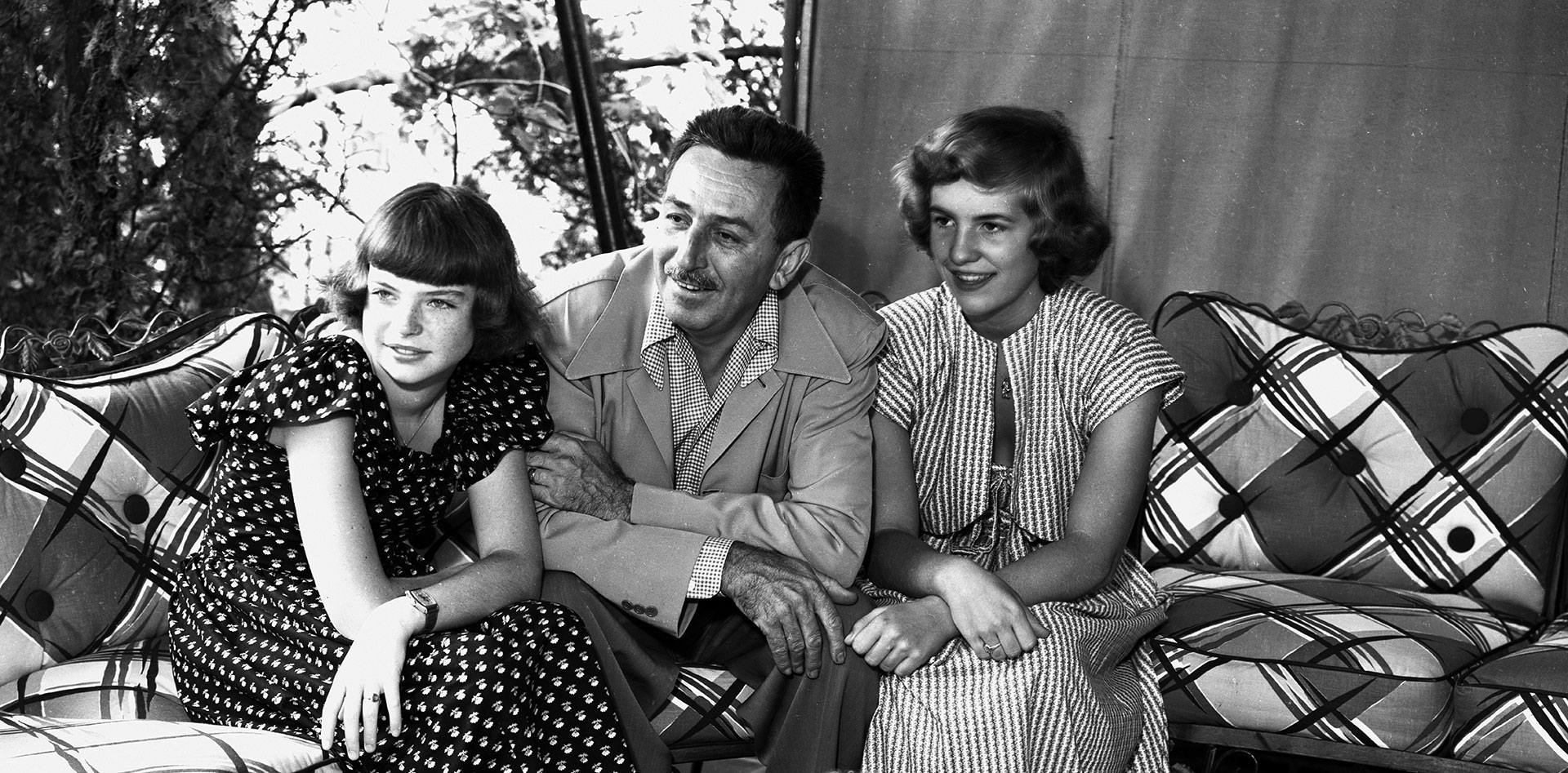
Everyone knows the mouse. Most people know the man who dreamed him up. But if you really look at the history of the Disney empire, you’ll find a woman named Lillian Bounds who basically kept the whole thing from flying off the rails for forty-one years. Lillian, the wife of Walt Disney, wasn't some silent figure standing in the background. She was the one who told Walt when his ideas were "too weird" and, most famously, she’s the reason Mickey Mouse isn't named Mortimer. Honestly, can you imagine a world with Mortimer Mouse? It sounds like a character from a dusty Victorian novel, not a global icon.
Lillian came from humble roots in Spalding, Idaho. She moved to Los Angeles in the 1920s and landed a job at the fledgling Disney Brothers Studio as an "ink and paint" girl. She was getting paid 15 dollars a week. Walt, who was notoriously broke at the time, used to offer her rides home in his old Ford, even though she lived just a few blocks away. Eventually, he started skipping her paychecks because he couldn't afford them, but she didn't care. She liked him. They got married in 1925, and from that moment on, she became the filter through which every major Disney project had to pass.
The Mortimer Mistake and Other Times Lillian Saved the Brand
In 1928, Walt was on a train ride back from New York, reeling from the fact that he’d just lost the rights to Oswald the Lucky Rabbit. He was desperate. He’d sketched out a little mouse character and turned to Lillian, announcing he was going to call him Mortimer. Lillian hated it. She thought it was pompous and "too grand" for a cartoon. She suggested Mickey instead. Walt listened. This wasn't just a cute anecdote; it was the first major instance of the wife of Walt Disney acting as the ultimate focus group.
She had this uncanny ability to ground Walt. He was a dreamer who lived in the clouds, often obsessing over details that didn't matter or spending money the studio didn't have. Lillian was the one who looked at the ledger. She wasn't just a domestic partner; she was a sounding board for every major creative risk, from Snow White and the Seven Dwarfs to the construction of Disneyland. While Walt was imagining castles, Lillian was often the one reminding him that people needed a place to sit and that the flowers needed to look nice.
Life at Home: Not Exactly a Fairy Tale
Don't get the wrong idea—their marriage wasn't a scripted Hollywood movie. It was tough. Walt was a workaholic who suffered from "dark moods" and high-strung nerves. Lillian had to manage a man who would sometimes disappear into his workshop for days. They faced the crushing tragedy of several miscarriages before finally having their daughter, Diane, and later adopting Sharon.
Lillian fiercely protected their private life. You won't find many "at home with the Disneys" photo spreads from the 1940s because she didn't want the girls growing up in the spotlight. She was the anchor. While Walt was out being the face of the future, Lillian was making sure their home in Holmby Hills felt like a real house, not a museum. She spent her time gardening and collecting fine art, often clashing with Walt’s more populist tastes. She liked things refined. He liked things that worked.
What Happened After 1966?
When Walt died in 1966, the world expected Lillian to fade away. They were wrong. She stayed deeply involved in the legacy, particularly with the development of Walt Disney World and the California Institute of the Arts (CalArts). She was there for the dedication of the Magic Kingdom in 1971, standing alongside Walt’s brother, Roy. You could see the weight of the moment on her face. She knew better than anyone what it had cost to build that park.
One of her most significant, yet often overlooked, contributions was her $50 million gift in 1987 to build a new home for the Los Angeles Philharmonic. This became the Walt Disney Concert Hall. It wasn't just a tribute to her husband; it was her own mark on the city they had helped build together. She insisted on the Frank Gehry design, even when it got controversial. She had a backbone of steel. She wasn't just the wife of Walt Disney by the end of her life; she was a formidable philanthropist in her own right.
Common Misconceptions About Lillian Bounds Disney
People often think she was just a secretary who got lucky. That's a total misunderstanding of her role. She was an employee before she was a wife, which meant she understood the mechanics of the studio. She knew how the ink dried. She knew how the cells were layered. When Walt would come home and vent about a director or a budget issue, she wasn't just listening to be polite. She understood the stakes.
- She wasn't a "Yes" person. In fact, she was often the only person who could tell Walt "no" without getting fired.
- She wasn't obsessed with the spotlight. She turned down countless interviews over the decades.
- She was a shrewd investor. She held onto her Disney stock and helped ensure the family retained influence long after Walt was gone.
Lillian lived to be 98 years old, passing away in 1997. She outlived Walt by over thirty years. In those three decades, she saw the company turn into a global behemoth that probably would have terrified the Walt of the 1920s. She remained the silent guardian of his reputation, ensuring that the "Disney" name stayed synonymous with a certain kind of quality and magic, even as the corporate world changed around her.
Practical Insights for History Buffs and Fans
If you're looking to understand the real Lillian, you have to look past the official biographies. Visit the Walt Disney Family Museum in San Francisco if you get the chance. They have personal letters and artifacts that show her dry wit and her no-nonsense attitude.
How to research her legacy further:
- Read Disney's Daughter by Diane Disney Miller. It gives the most honest look at the family dynamic from an insider perspective.
- Look into the history of the Walt Disney Concert Hall. The struggle to get it built reflects Lillian's stubbornness and vision.
- Check out archival footage of the 1955 opening of Disneyland. Watch Lillian in the background; she’s usually the one making sure everything is running smoothly while Walt talks to the cameras.
The wife of Walt Disney was more than a spouse. She was the original Disney imagineer, the one who imagined a world where a mouse named Mickey could actually make sense. Without her, the studio might have folded during the Great Depression or lost its soul in the 1950s. She was the secret ingredient.
To truly honor her contribution, don't just look at the movies. Look at the persistence required to keep a dream alive for a century. That persistence started with Lillian.
Actionable Next Steps:
- Visit the Walt Disney Family Museum: Located in the Presidio of San Francisco, this is the definitive place to see Lillian’s influence on the studio's early days.
- Support CalArts: Lillian was a major benefactor of this institution; researching their history reveals her commitment to the next generation of artists.
- Watch 'The Walt Disney Story' at Disneyland: Pay close attention to the personal photos—Lillian is often the one holding the family together in the candid shots.