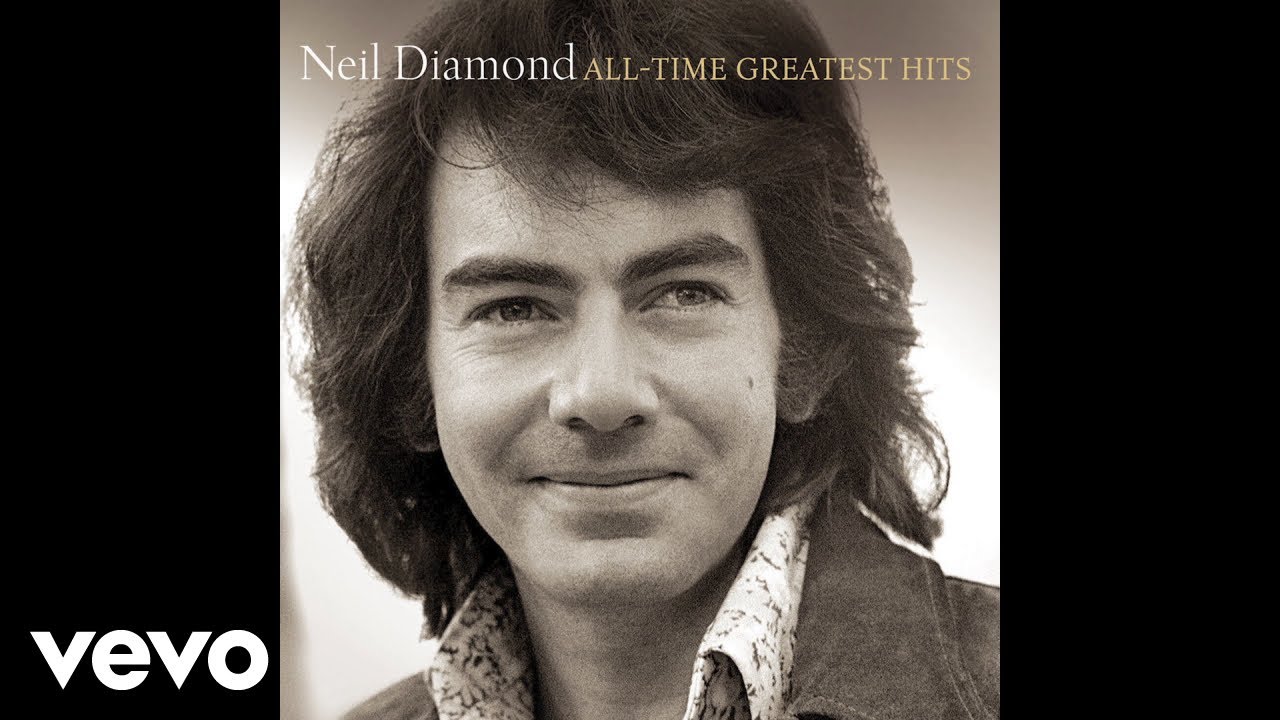
You know that feeling when a song starts with a literal explosion of sound? That's the opening of the Neil Diamond song America. It doesn't just start; it announces itself. Released back in 1980 as part of The Jazz Singer soundtrack, it’s basically become the unofficial anthem for anyone who ever looked at a map and decided to move. Honestly, it’s one of those tracks you’ve heard at every 4th of July firework show since you were a kid, but there's a lot more to it than just flag-waving.
It’s about guts.
Neil Diamond didn’t just write this for a movie. He wrote it because his own grandparents were the ones on those boats. They came from Russia and Poland, escaping stuff most of us only read about in history books. When he sings about people "huddling close" and "hanging on to a dream," he isn't being poetic for the sake of a rhyme. He's talking about his own blood.
Why the Neil Diamond Song America Still Works
The song actually reached number eight on the Billboard Hot 100 in 1981. That’s pretty impressive for a song that basically sounds like a Broadway showstopper. It has this weird, driving energy—sorta like the heartbeat of someone stepping off a plane in a new city for the first time.
You've probably noticed the "live" feel of the track. Interestingly, the single version was actually a studio recording. They just layered in the sound of a cheering crowd to give it that "stadium" vibe. It worked. People love it.
The Lyrics: More Than Just "They're Coming"
Look at the line "Without a home, but not without a star." Most folks think it’s about the stars on the U.S. flag. It’s actually widely believed to be a nod to the Star of David, given Diamond’s Jewish heritage and the plot of The Jazz Singer.
The movie itself? It was kinda a flop. Critics like Roger Ebert absolutely shredded it. But the music? The music lived forever.
- The Boats and Planes: It bridges the gap between the Ellis Island era and the modern traveler.
- Freedom’s Light: A clear shout-out to the Statue of Liberty.
- The Reprise: The way it ends with "My Country, 'Tis of Thee" is a masterclass in emotional manipulation (the good kind).
Changing Times and Controversy
It hasn't always been smooth sailing for this track. After the 9/11 attacks, the song actually ended up on a list of "inappropriate" songs distributed by Clear Channel. Why? Because it was deemed too upbeat or potentially sensitive given the political climate. Diamond didn't care, though. He just changed the lyrics in his live shows.
Instead of "They’re coming to America," he started singing "Stand up for America."
Even now, in 2026, the song hits differently depending on who you ask. For some, it’s a beautiful tribute to the "melting pot" ideal. For others, it feels like a relic of a more optimistic time. Some critics have pointed out that the song’s "shiny place" imagery doesn't reflect the experience of everyone who ended up here—specifically those who didn't come by choice. It's a complicated piece of art, which is probably why we're still talking about it forty-five years later.
How to Experience it Right Now
If you want to actually "get" why this song matters, don't just stream the radio edit. Find a video of him performing it live at the Greek Theatre. There’s usually a giant flag involved.
What You Can Do Next
- Check out the soundtrack: The Jazz Singer album actually has some other bangers like "Love on the Rocks" and "Hello Again."
- Watch the documentary bits: Neil has done interviews where he talks about his grandmother’s journey from Kiev. It puts the "Far, we’ve been traveling far" line into a whole new perspective.
- Listen for the "interpolation": See if you can spot exactly when the melody shifts into the traditional patriotic hymns at the end. It's subtle but brilliant.
The Neil Diamond song America isn't just a pop hit. It's a family history set to a drum beat. Whether you think it’s "schmaltzy" or "heroic," you can't deny that the man knows how to write a hook that stays in your head for four decades.