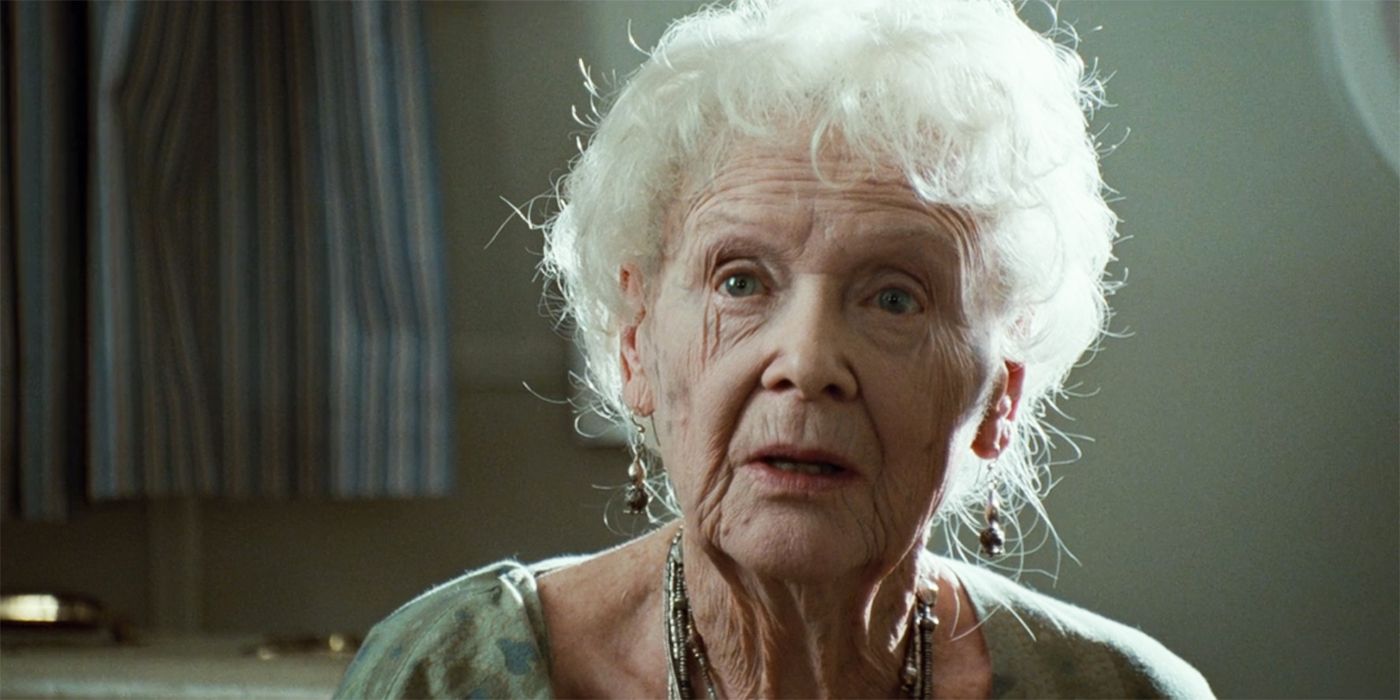
Everyone remembers the blue dress. They remember the sketch, the "drawing me like one of your French girls" line, and the frantic splashing in the freezing North Atlantic. But when it comes to Rose's real name from Titanic, things get messy. Most people just want to know the character's full fictional name, but there is a massive rabbit hole involving the real-life inspiration behind the role that most fans completely overlook.
She wasn't just "Rose."
In James Cameron’s 1997 blockbuster, her name is Rose DeWitt Bukater. Later, she becomes Rose Dawson, taking Jack’s surname to hide her identity from her mother and her abusive fiancé, Cal Hockley. By the time we see her as an old woman at the start of the movie, she is Rose Calvert.
But here is the thing. Rose DeWitt Bukater didn't exist.
James Cameron didn't just pull her out of thin air, though. He based the spirit of the character on a real woman named Beatrice Wood. If you’ve never heard of her, you’re missing out on the wildest part of the movie's DNA. Beatrice wasn't a passenger on the Titanic, but her life was so rebellious and avant-garde that Cameron used her autobiography, I Shock Myself, to shape the "Old Rose" we see at the beginning of the film.
The fictional identity of Rose DeWitt Bukater
Let’s talk about the name on the ticket. Rose DeWitt Bukater represents the stifling, "Old Money" society of Philadelphia. The surname DeWitt suggests a Dutch-American lineage, typical of the East Coast elite at the turn of the century.
Cameron was meticulous. He wanted a name that sounded heavy. Stodgy. The kind of name that feels like a corset.
When Rose reaches New York at the end of the film, a steward asks for her name. She looks up at the Statue of Liberty and says, "Dawson. Rose Dawson." This is the pivotal moment of the film. It isn't just a romantic gesture. It is a legal erasure. By ditching "DeWitt Bukater," she effectively dies to her family. She escapes the debt, the social expectations, and the marriage to Cal.
Interestingly, there actually was a "J. Dawson" on the Titanic. After the movie came out, fans flocked to grave 227 in Fairview Lawn Cemetery in Halifax, Nova Scotia, thinking it was Jack’s grave. It wasn't. It belonged to Joseph Dawson, a coal trimmer from Dublin who worked in the boiler rooms. Cameron didn't even know Joseph existed when he wrote the script. It was a total fluke.
Beatrice Wood: The real woman behind the name
If you want to understand Rose's real name from Titanic in a historical sense, you have to look at Beatrice Wood.
Cameron was reading Wood’s autobiography while developing the character. Beatrice was a wealthy socialite who ditched her family to become an artist. She was known as the "Mama of Dada." She hung out with Marcel Duchamp. She was bold, she was funny, and she lived to be 105 years old.
Sound familiar?
Old Rose in the movie is 101. When we see her at the beginning of the film, her apartment is filled with pottery and art. That is a direct nod to Beatrice Wood, who became a world-renowned ceramicist. Beatrice never stepped foot on the Titanic, but her defiance against her mother and her love for the "unconventional" are the literal blueprints for Rose.
Beatrice died in 1998, just after the film became a global phenomenon. She never actually watched the whole movie because she said it was "too late" for her to be sad about things, but she did meet James Cameron and acknowledged that her persona helped birth the character.
Why the "Bukater" name matters for SEO and History
The search for Rose's real name from Titanic often leads people to look for her on the actual passenger manifests. You won't find her. The manifest lists real people like Margaret "Molly" Brown or Isidor and Ida Straus.
By creating a fictional lead, Cameron was able to weave through the real history without being bound by the actual survival lists. If Rose were a real person, we would know exactly where she sat and what she ate. By making her Rose DeWitt Bukater, she becomes an avatar for all the young women of 1912 who felt trapped by their social standing.
Common misconceptions about the name
Sometimes people get confused and think Rose was based on Rhoda Abbott. Rhoda was the only woman to go down with the ship and survive the water. She was on the deck with her two sons, but she lost them both in the chaos. Her story is tragic and visceral, but it’s not Rose’s story.
Other people think her name was "Rose DeWitt-Bukater" (with a hyphen). In the script, it's usually written without it, though fans often add it. The "DeWitt" is actually her mother’s maiden name or part of a double-barreled family name common in high society.
Then there's the "Calvert" mystery.
In the modern-day framing of the movie, she is Rose Calvert. This implies she eventually married a man named Calvert, had children, and lived that "full life" Jack told her to have. We see the photos on her dresser: Rose riding a horse on the beach (like Jack promised), Rose as an actress, Rose flying a plane.
She lived as Rose Calvert, but she died as Rose Dawson.
The legacy of a name that never was
It is rare that a fictional name carries as much weight as a historical one. People talk about Rose DeWitt Bukater as if she were a real survivor. They debate the door (it was a piece of door frame, technically) and they debate her choices.
The name Rose itself is symbolic. It's a classic, beautiful flower that has thorns. It represents the fragility of her old life and the sharp edge of her survival instinct.
If you are looking for the "real" Rose, look for Beatrice Wood’s pottery. Look for the letters of survivors like Lady Duff-Gordon. But if you just want to know who that girl was on the deck of the most famous ship in the world, the answer is three-fold.
She was the girl who had everything (DeWitt Bukater).
She was the girl who lost everything (Dawson).
She was the woman who lived through it all (Calvert).
Summary of the identities
For those keeping track, here is how the names break down throughout the timeline:
- 1912 (Pre-Sinking): Rose DeWitt Bukater. This is her social identity, her "cage."
- 1912 (Post-Sinking): Rose Dawson. This is her chosen identity, her "freedom."
- 1996 (Modern Day): Rose Calvert. This is her "legacy" identity.
The power of the film is that by the end, the "real" name doesn't matter as much as the life she lived. She kept Jack’s memory alive not by keeping his name legally forever, but by living the life he saved.
To truly understand the history of the Titanic beyond the film, your next steps should be to look into the Encylopedia Titanica. This is the gold standard for real passenger data. You can cross-reference the fictional Rose DeWitt Bukater against the real women of First Class, like Lucile Carter or Madeleine Astor, to see how close Cameron got to the actual fashion and social pressures of the era. Exploring the biography of Beatrice Wood will also give you a much deeper appreciation for the "Old Rose" segments of the movie.