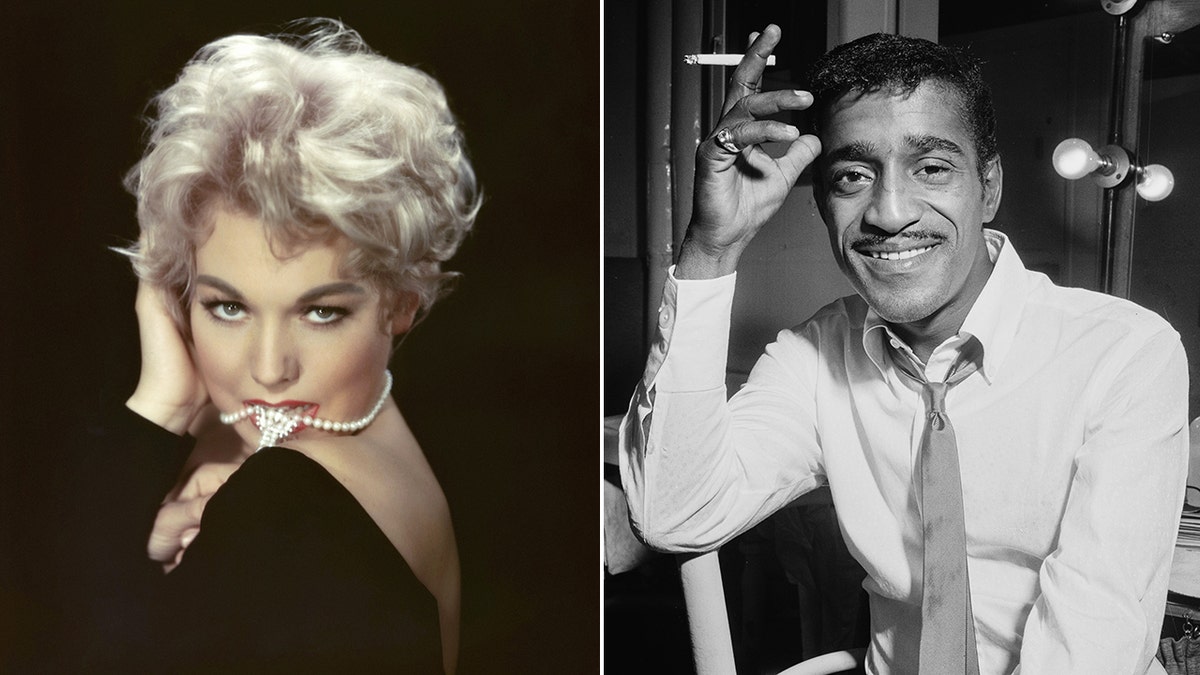
You’ve probably heard the rumors. Maybe you saw a grainy clip on YouTube or a snippet of an old interview where the "Candy Man" himself mentions the devil. It sounds like a bad creepypasta or some weird Hollywood fan fiction, right? One of the most famous Black entertainers in history—a man who famously converted to Judaism after a near-fatal car crash—dabbling in the Church of Satan?
Well, honestly, it’s all true. Mostly.
The story of the Sammy Davis Jr. Satanist era isn't just some tabloid fabrication. It’s a bizarre, high-stakes, and surprisingly short chapter of 1960s and 70s counterculture that involves painted fingernails, a failed TV sitcom about a demon, and an unlikely friendship with the most infamous occultist in America.
How it All Started: A Party, a Barber, and Red Fingernails
The year was 1968. Sammy was already a superstar, but he was also a man who possessed what he called an "insatiable curiosity." He wanted to experience everything. According to his own memoir, Why Me?, his introduction to the occult didn't happen in some dark basement. It happened at "The Factory," a trendy nightclub he partially owned.
He was invited to a party by a group of young actors. The dress code? Hoods and masks. The vibe? Sammy described it as "dungeons and dragons and debauchery."
The "host" of his introduction was actually his own barber, Jay Sebring. You might recognize that name for a tragic reason; Sebring was one of the victims of the Manson Family murders just a year later. At this party, several guests were sporting a single red-painted fingernail—a secret signal of their allegiance to the Church of Satan.
Sammy was intrigued. He didn't see it as evil at first. He saw it as a "Yes, I Can" philosophy taken to the extreme. The Church of Satan, founded by Anton LaVey in 1966, wasn't about worshipping a literal red monster with a pitchfork. It was about indulgence, ego, and the idea that you are your own god. For a man who had fought his way through segregation and systemic racism to become the biggest star in the world, that "self-worship" message hit home.
The "Poor Devil" Sitcom and Anton LaVey
By the early 1970s, Sammy wasn't just a casual fan. He was actually inducted into the Church of Satan as an honorary Second Degree Warlock.
Imagine that for a second. The man who sang "What Kind of Fool Am I?" was officially a Warlock.
This culminated in one of the weirdest artifacts in television history: a 1973 TV pilot titled Poor Devil. In the show, Sammy played a bumbling, low-level demon named Sammy Beetlejuice (no relation to the movie) who works in Hell. His job? To convince a San Francisco accountant—played by Jack Klugman—to sell his soul.
The show was essentially a pro-Satanism comedy. At one point in the script, Klugman’s character even suggests calling the "Church of Satan downtown" to find Sammy’s character.
Anton LaVey loved it. He saw Sammy as the perfect high-profile ambassador. The two became legitimate friends. When Sammy performed in the Bay Area, he would reserve front-row seats for LaVey and his "coven." From the stage, Sammy would flash the "Sign of the Horns" to his friends in the front row. He even started wearing a Baphomet medallion—a goat’s head inside a pentagram—during his live sets.
Why did Sammy Davis Jr. leave the Church of Satan?
The "Satanic" phase didn't last forever. In fact, it ended almost as abruptly as it began.
There are a few reasons why he walked away:
- The TV Pilot Failed: Poor Devil wasn't picked up for a full series. Religious groups were furious, and the ratings weren't high enough to justify the controversy. Without the creative outlet, the novelty started to wear off.
- It Got "Too Heavy": Sammy later admitted in interviews that things eventually got a bit too intense. He described a particular "coven" meeting that wasn't "all fun and games." He realized that while he liked the philosophy of self-empowerment, he didn't actually want to spend his Tuesday nights in dark rooms with people taking the "darkness" too literally.
- Public Image: His PR team, including David Steinberg, was reportedly terrified. Being a Black, Jewish man in America was hard enough in the 70s. Adding "Satanist" to the resume was a bridge too far for his mainstream Vegas audience.
One morning in 1974, Sammy simply took some nail polish remover to his red fingernail and moved on. He remained Jewish until the day he died, but he never truly "denounced" his friends in the Church. He just chalked it up to another experience in a life full of them.
The Legacy of the "Satan Swings" Era
Years later, Eddie Murphy told a story on Comedians in Cars Getting Coffee about having dinner with Sammy in the 80s. According to Eddie, Sammy leaned over the candlelight and whispered, "You know, Satan is as powerful as God."
It seems that even after he left the "Church," the dualistic philosophy stuck with him. He was a man of contradictions: a Christian by birth, a Jew by choice, and, for a few wild years, a Satanist by curiosity.
Actionable Insights for History Buffs:
- Don't take "Satanism" at face value in the 1960s/70s: It was often more about Libertarian-style self-empowerment than "devil worship."
- Check out the Poor Devil pilot: It’s available on various archive sites and is a fascinating look at how close the occult came to 70s primetime TV.
- Read "Why Me?": Sammy’s second autobiography goes into much more detail about his internal struggle with faith and his need for "every human experience."
- Look for the "Sign of the Horns": If you watch old footage of Sammy's 1972-1973 performances, look closely at his hands and his neck. You might just spot the Baphomet.
Sammy Davis Jr. was never a "devil worshipper" in the way horror movies portray it. He was a seeker. He was a man who refused to be put in a box, even if that meant stepping into the shadows for a little while to see what was there.