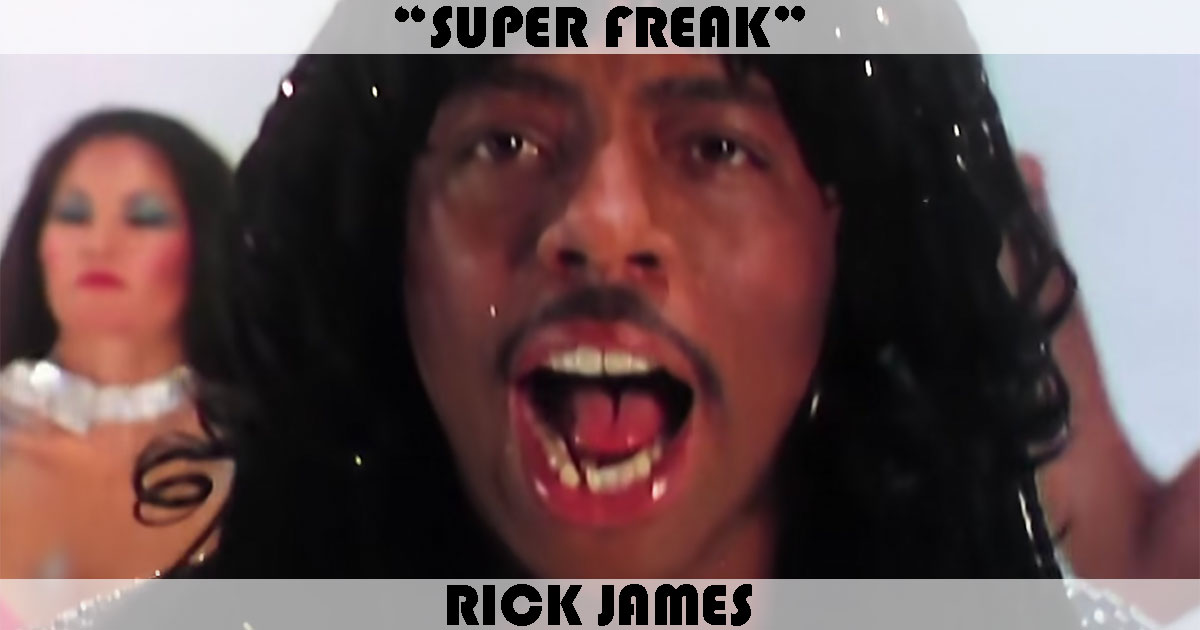
Rick James didn't even like the song. Honestly. When he sat down at the Record Plant in Sausalito to record the track that would define his entire existence, he was just looking for a "silly" filler. He wanted something "white folks could dance to." He got exactly what he asked for, plus a whole lot of chaos he didn't see coming.
The year was 1981. Funk was in a weird spot, caught between the dying embers of disco and the shiny, robotic rise of New Wave. Rick James decided to smash them together. The result was Super Freak, a song so ubiquitous it basically owns the DNA of 80s pop culture. You know the riff. Everyone knows the riff. It’s a descending bassline that feels like walking into a party you’re not quite cool enough to attend.
But behind that "kinky girl" lyric—the one you probably shouldn't take home to mother—is a story of a guy who lived every single word he sang. Rick James wasn't playing a character. He was the character. And that’s usually where the trouble starts.
The Birth of the Punk Funk Anthem
The recording of Street Songs was intense. Rick locked himself in the studio from dawn to sunset, sleeping on a bed shoved into a corner of the live room. He was obsessed with getting back to the "essence of the ghetto" after his previous album, Garden of Love, had flopped for being too soft. He needed grit.
Super Freak wasn't a solo effort, though Rick’s name is the one in lights. He brought in the heavy hitters. We’re talking about The Temptations on background vocals. Specifically, Melvin Franklin—the man with that legendary deep bass voice—provided the "Super Freak, Super Freak" chants that anchor the chorus. Can you imagine? One of the most prestigious vocal groups in Motown history singing about a girl who likes "incense, wine, and candles."
The technical setup was surprisingly lean:
- Oscar Alston handled the bass guitar.
- Daniel LeMelle ripped that tenor saxophone solo.
- Alonzo Miller, a Los Angeles DJ, actually helped tone down Rick’s original improvised lyrics because they were, well, a bit too graphic for 1981 radio.
It worked. The song hit No. 16 on the Billboard Hot 100, which sounds modest now, but it stayed on the charts forever. It was the "Uptown Funk" of its day—a cross-genre monster that played in Black clubs, white suburban bedrooms, and high-end discos simultaneously.
Why Super Freak Still Matters (and the MC Hammer Drama)
You can't talk about this song without talking about the heist. In 1990, MC Hammer took that opening riff, looped it, and called it "U Can't Touch This."
Hammer didn't ask. He just did it.
Rick James was furious. At the time, Rick was spiraling into the darkest period of his life, battling a massive cocaine addiction that was costing him upwards of $7,000 a week. Hearing his signature groove turned into a "clean" pop-rap hit while he was struggling for relevance felt like a slap in the face.
He sued. Hard.
The settlement changed music history. Instead of just a one-time payout, Rick James was granted a co-writing credit. This is the ultimate irony: Rick James won his only Grammy Award because of MC Hammer. He didn't win for the original Super Freak in '81 (he lost Best Male Rock Vocal to Rick Springfield’s "Jessie’s Girl," which he never quite got over). He won it as a songwriter for a rap song that "borrowed" his genius.
The Man Behind the Braid
The lifestyle wasn't a gimmick. Rick grew up in Buffalo, the son of a woman who ran numbers for the mob. He was a draft dodger who fled to Canada and started a band called The Mynah Birds with a young Neil Young. Think about that for a second. The guy who wrote "Super Freak" and the guy who wrote "Heart of Gold" were once in a rock-soul band together on Motown’s dime.
That duality defined him. He was a brilliant producer who nurtured talent like Teena Marie and the Mary Jane Girls, but he was also a man whose "demons" weren't just a metaphor. By the early 90s, the "Super Freak" persona had curdled into something much darker.
He was convicted in 1993 for two separate, horrific instances of kidnapping and assault involving women at his home. He served two years in Folsom State Prison. It’s the part of the story people often gloss over when they're laughing at the Chappelle's Show sketches, but it’s the reality of the "kinky girl" lifestyle taken to its most violent, drug-fueled extreme.
A Legacy That Refuses to Quit
Even with the scandals and the prison time, the music hasn't faded. It’s too well-constructed.
Nicki Minaj brought the riff back in 2022 with "Super Freaky Girl," proving that the 1981 groove still has enough heat to power a No. 1 hit forty years later. Jay-Z used it. The Black Eyed Peas used it. It’s become a foundational text for hip-hop and pop.
What to take away from the Rick James story:
- The Power of the Riff: A great four-bar loop is worth more than a thousand complex melodies. Rick James understood that "feel" beats "theory" every time.
- Ownership is Everything: The lawsuit against MC Hammer set a massive precedent for sampling rights. If you’re a creator, protect your publishing. It might be your only retirement plan.
- Context Matters: Listen to the full Street Songs album. "Super Freak" is the hook, but tracks like "Mr. Policeman" show a political depth that most people forget Rick James possessed.
If you want to understand the modern music industry, you have to look at the "Punk Funk" era. It was the moment R&B stopped trying to be polite and started being loud, aggressive, and unashamedly weird. Rick James paid a high price for that authenticity, both legally and physically, but the sonic footprint he left behind is permanent.
Next time you hear that bassline drop at a wedding or on the radio, remember it wasn't just a party song. It was a calculated, slightly desperate attempt by a Buffalo kid to prove he could make the whole world dance. And he did.
Actionable Insight: For anyone producing music today, study the "pocket" of the Super Freak bassline. It’s slightly ahead of the beat, giving it that urgent, "freaky" energy that quantized MIDI often loses. Try recording your bass parts live without a click track to capture that same human grit.