You know that feeling when you watch a movie and you're not sure if you should be cheering or calling the police? That’s basically the 2008 Bronson Tom Hardy film in a nutshell. It’s a loud, sweaty, and deeply weird piece of cinema that didn't just put Tom Hardy on the map—it practically redefined what a "tough guy" performance looks like in the 21st century.
Honestly, calling it a "biopic" feels like a lie. Most biopics have that predictable "he was born, he struggled, he died" rhythm. Bronson doesn't care about that. Directed by Nicolas Winding Refn (the guy who later did Drive), the movie treats the life of Michael Peterson—Britain’s most violent prisoner—less like a documentary and more like a twisted vaudeville show.
Why the Bronson Tom Hardy Film Isn't Your Typical Prison Flick
If you go into this expecting The Shawshank Redemption, you’re going to be very confused very quickly. There are no heartwarming moments about the human spirit here. Instead, you get Tom Hardy standing on a stage in white face paint, narrating his own life to an imaginary audience.
It’s jarring. It’s meant to be.
The film focuses on Peterson, who took the name Charles Bronson from the Death Wish actor because his fight promoter thought it sounded cooler. He didn't kill anyone, which is the weirdest part of his "most dangerous" label. He just... couldn't stop fighting. He’d take hostages, strip naked, cover himself in butter (or axle grease, depending on the day), and wait for the "riot squad" to come in so he could have a go at them.
Refn's directing style here is all about "theatre." He uses classical music—think Verdi and Wagner—to score scenes of absolute brutality. It creates this bizarre disconnect where you're watching a man get his teeth kicked in while a beautiful opera track plays in the background. Some critics hated it. They thought it was "glamorizing a monster." But if you look closer, the movie is actually mocking him. It shows a man who is so desperate for fame that he treats a prison cell like a Broadway stage.
The Absolute Madness of Tom Hardy’s Preparation
We have to talk about the physical stuff.
Hardy didn't just "hit the gym." He basically became a human boulder in five weeks. He’s gone on record saying his diet was a disaster: chicken and rice for the protein, but then he’d smash pizzas, Häagen-Dazs, and Coca-Cola just to pack on the "bulk" weight. He put on about 7lbs a week. He ended up gaining about two and a half stone (35 pounds) of muscle and fat.
He didn't want to look like a bodybuilder. He wanted to look like a "brawler."
"I had to become an animal," Hardy once said about the audition. "Not an actor—an animal."
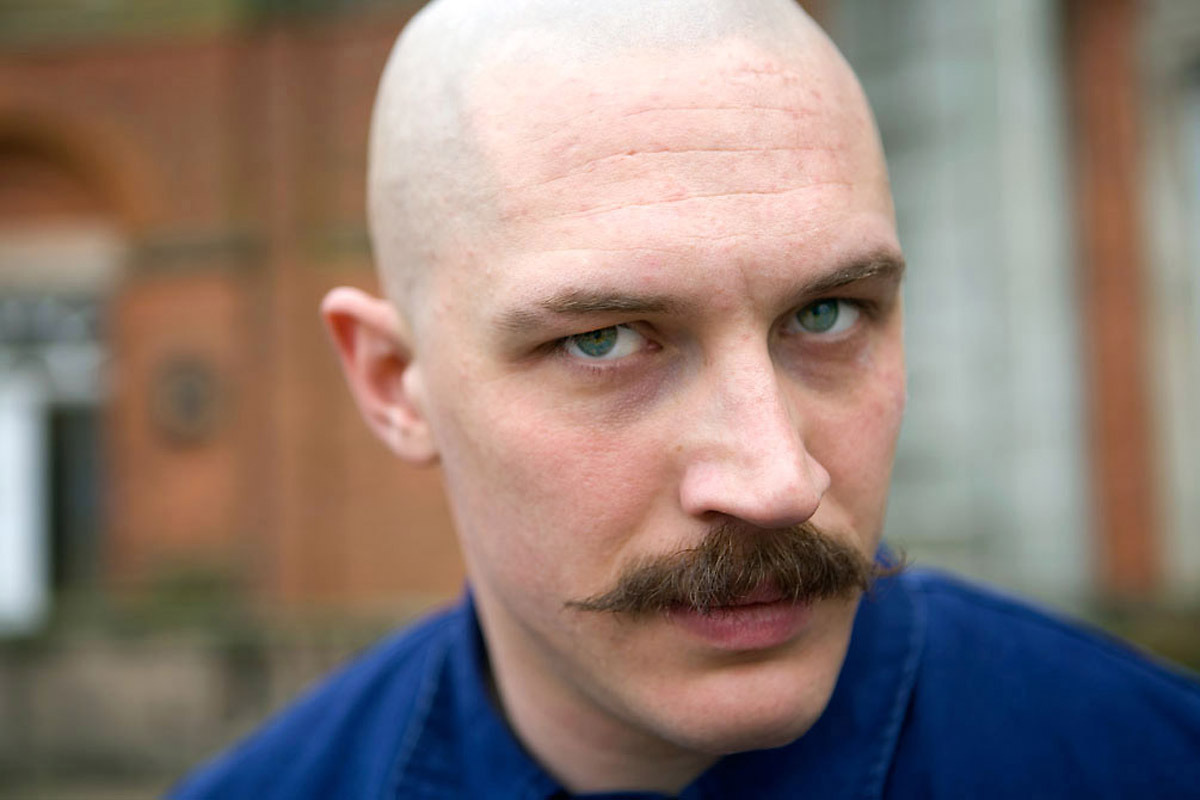
The real Charles Bronson (who now goes by Charles Salvador) was actually involved in the process, which is wild. Hardy visited him in prison multiple times. At first, Bronson wasn't sold on the "skinny" actor playing him. But after Hardy put on the weight and mastered the voice, Bronson was so impressed he reportedly cut off his own trademark mustache and mailed it to the film set so Hardy could wear it.
That is the kind of detail you can't make up.
What Really Happened vs. The Movie
While the Bronson Tom Hardy film gets the "vibe" right, it takes some creative liberties. It focuses heavily on his time in psychiatric hospitals like Broadmoor and his brief 69 days of freedom, but it skips over a lot of the boring legal paperwork.
- The Uncle Jack Factor: In the movie, his Uncle Jack (played by Matt King) is portrayed as a bit of a "ponce" running a weird underground club. The real Bronson apparently loved the portrayal, even if his family thought it was a bit much.
- The Art: One of the most accurate parts is the focus on his art. In the finale, we see him turn a hostage into a "living masterpiece." The real-life Bronson actually won several awards for his poetry and art while behind bars.
- The Motivation: The movie never gives you a "why." It doesn't show a tragic childhood or a secret trauma. It just presents him as a man who was born to fight. This frustrated some viewers who wanted a psychological explanation, but Refn argued that some people are just beyond comprehension.
Is It Worth a Rewatch in 2026?
Actually, yeah.
In a world where every "true crime" story is stretched into a ten-part Netflix series with 40 minutes of filler per episode, Bronson is a lean 92 minutes of pure adrenaline. It doesn't overstay its welcome. It also serves as a perfect time capsule of that moment before Tom Hardy became a global superstar as Bane or Mad Max. You can see the seeds of those characters in his performance here—the way he uses his voice, the physical presence, the "menacing but somehow charming" energy.
The movie deals with "toxic masculinity" before that was even a buzzword. It shows a man who is so hyper-masculine he literally cannot function in a civilized society. He is a square peg that refuses to stop being square, even when the hole is a concrete box.
Practical Insights for Film Buffs
If you're planning to dive into this (or re-watch it), keep these things in mind to get the most out of the experience:
- Watch the background: Refn uses color specifically. Red usually signifies Bronson's "stage" or his internal moments of "seeing red," while the clinical blues and greys represent the prison system trying to crush him.
- Listen to the score: The contrast between the synth-pop and the classical music tells you everything about Bronson’s split personality. He thinks he’s an artist; the world sees a thug.
- Check out the real art: If the "living painting" scene fascinates you, look up the real Charles Salvador's sketches. They are surprisingly intricate and give a lot more context to the man's actual headspace than a 90-minute movie ever could.
Don't go looking for a hero. You won't find one. What you will find is a masterclass in acting that proves Tom Hardy was always destined to be one of the greats.
Your next move: If you want to see how this role evolved into Hardy's later work, go back and watch Warrior (2011). You’ll see the same physical intensity but channeled into a completely different, much more disciplined character. Comparing the two is a great way to see just how much range Hardy actually has when he isn't covered in CGI or a mask.