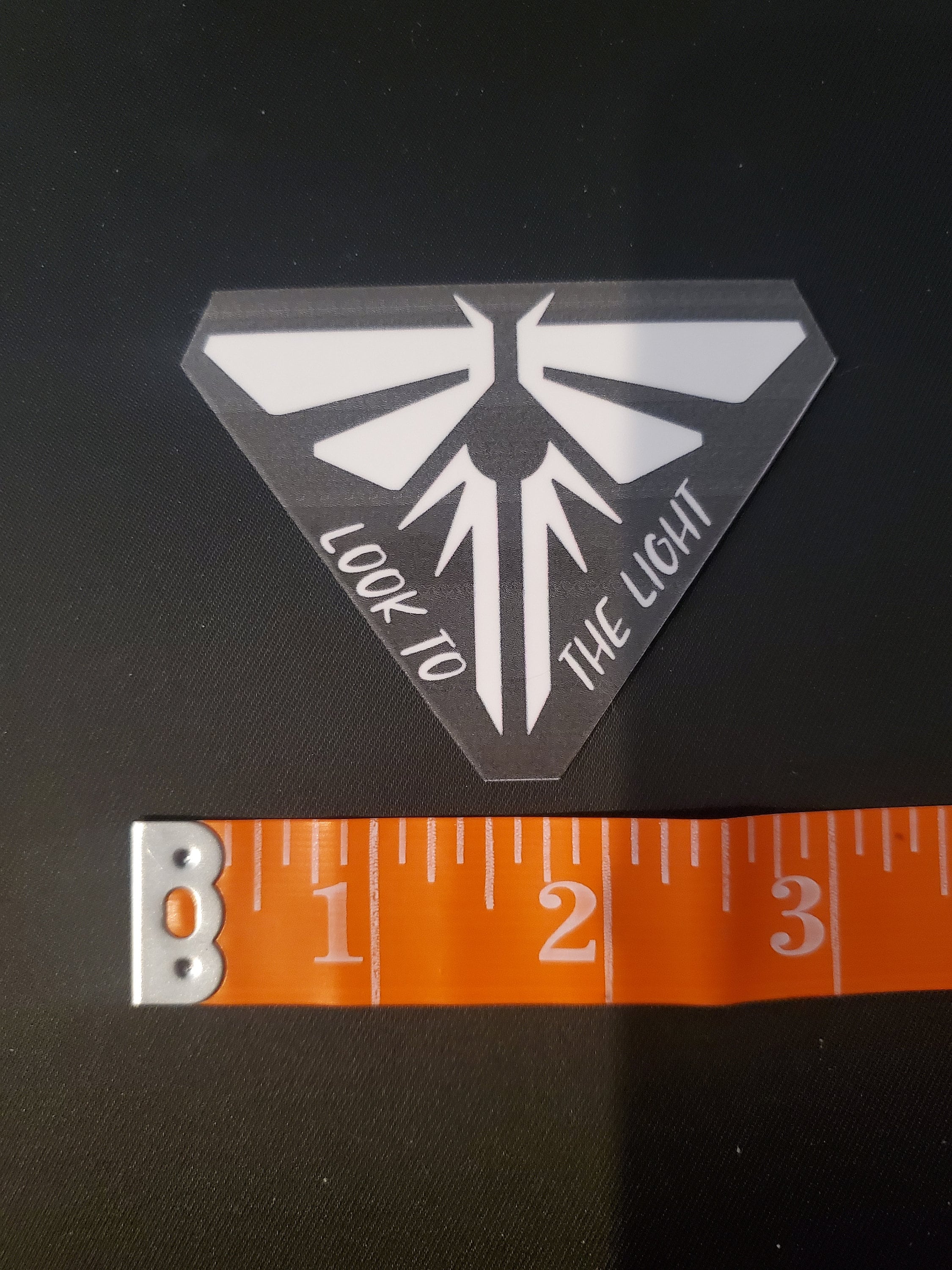
You’ve seen it everywhere. Scrawled on a rusted brick wall in Boston. Spray-painted over a ransacked FEDRA checkpoint. It’s a simple, jagged circle with lines radiating outward like a dying star or, well, a bug. But the firefly symbol in The Last of Us isn't just a piece of environmental storytelling. It’s a Rorschach test for the player. To some, it’s a beacon of hope in a world that smells like wet concrete and cordyceps. To others? It’s a warning sign that someone with a messiah complex and a gun is nearby.
"Look for the light."
That’s the mantra. It sounds poetic, right? In a world where the sun literally set on civilization in 2013, the idea of "light" is intoxicating. But as you spend more time in Naughty Dog’s brutal vision of America, you start to realize that light can blind you just as easily as it can guide you.
The Anatomy of the Firefly Symbol in The Last of Us
The design itself is fascinatingly lo-fi. It doesn't look like a corporate logo because it isn't one. It’s guerrilla art. When you stumble across the firefly symbol in The Last of Us, you’re seeing the mark of a decentralized militia. The lines aren't perfectly straight. The paint often drips. This visual instability mirrors the organization itself—a group of scientists, former soldiers, and fed-up civilians trying to hold a revolution together with duct tape and desperation.
The Fireflies were born as a direct response to FEDRA’s (Federal Disaster Response Agency) martial law. While FEDRA represents the cold, suffocating "blue" of authoritarianism, the Fireflies chose a name that suggests something small, natural, and bioluminescent. Something that flickers in the dark.
Interestingly, the symbol serves a dual purpose in the game's level design. For Joel and Ellie, finding a spray-painted firefly often means they are on the right track toward a contact, but it also signals a transition in the narrative. It’s a waypoint. It says, "People were here who believed in something." Whether or not that belief was misplaced is the question that haunts the entire franchise.
Why the Fireflies Aren't the Heroes You Think They Are
Let’s be real for a second. Most post-apocalyptic fiction has a "good guy" faction. We want the Fireflies to be the New California Republic or the Resistance. We want them to be the "cure" in every sense of the word. But Neil Druckmann and the writing team at Naughty Dog didn't make it that easy for us.
The firefly symbol in The Last of Us is frequently associated with failure. Think about the Museum in Part I or the University of Eastern Colorado. You find the symbol, you find the recordings, and then you find the bodies. The Fireflies are almost always one step behind. They are a group defined by their reach exceeding their grasp.
Marlene, the leader of the Fireflies, is a tragic figure because she actually believes the propaganda. She truly thinks that the ends justify the means. When you see that symbol on the doors of the Saint Mary's Hospital in Salt Lake City, it’s no longer a sign of hope. It’s a clinical, cold marking. It represents a group willing to sacrifice a child to save a species that might not even deserve saving anymore.
- They used suicide bombings in Quarantine Zones.
- They recruited kids.
- They executed dissenters.
It’s messy. It’s human. It’s why the symbol remains so iconic—it represents the moral gray area that defines the series.
A Visual Contrast: The Firefly vs. The WLF and Seraphites
By the time we get to The Last of Us Part II, the Fireflies are essentially a ghost story. The firefly symbol in The Last of Us becomes a nostalgic relic. It’s something Ellie draws in her journal while she’s spiraling into a cycle of revenge.
Compare the Firefly logo to the imagery of the Washington Liberation Front (WLF). The WLF is all about the "W"—sharp, blocky, militaristic. It’s professional. Then you have the Seraphites with their hand-carved shrines and "feel" of ancient religious iconography. The Firefly symbol sits right in the middle. It’s not as organized as the WLF, but it’s more "scientific" than the Seraphites.
When Abby travels to Santa Barbara looking for the regrouped Fireflies, the symbol changes meaning again. It becomes a symbol of a lost era. Finding that one house with the radio and the hidden Firefly sigil feels like finding a fossil. It’s a remnant of a time when people still thought they could "fix" the world rather than just surviving it.
The Real-World Legacy of the Design
Why do people get this tattooed? Honestly, it’s one of the most popular gaming tattoos of the last decade.
Part of it is the aesthetic. It’s minimalist. It looks cool on a forearm. But the deeper reason is that it represents resilience. To the fans, the firefly symbol in The Last of Us isn't about Marlene’s failed revolution or the questionable ethics of surgery. It’s about the phrase "Look for the light."
In the real world, we deal with our own versions of the apocalypse—climate change, political upheaval, personal loss. Wearing that symbol is a way of saying, "I’m looking for a way out of the dark." It’s a piece of fiction that provides a very real sense of solidarity.
Common Misconceptions About the Group
Many players think the Fireflies were a nationwide government. They weren't. They were a series of cells. This is why the symbol varies slightly in different parts of the country. They were spread thin. Another misconception? That they were the "only" hope. The game hints that other groups were working on cures, but the Fireflies were the most vocal—and the most violent—about their pursuit.
How to Spot the Symbol (And What It Means for Gameplay)
If you’re playing the games for the first time, or maybe revisiting them after watching the HBO series, pay attention to where the developers place the firefly symbol in The Last of Us.
- Environmental Cues: If you see the symbol, look for yellow paint or yellow tape nearby. Naughty Dog uses "The Firefly Yellow" to guide players through the environment.
- Collectibles: Firefly Pendants are the main collectible in the first game. Each one has a name and a serial number. It’s a grim reminder that every person who wore that symbol was a human being with a story, not just a generic NPC in a yellow vest.
- Dialogue Triggers: Standing near a piece of Firefly graffiti often triggers optional conversations between Joel and Ellie. These are crucial for understanding their evolving worldviews.
The symbol is a prompt. It’s the game asking you: "What would you sacrifice?"
Moving Forward: The Future of the Fireflies
With rumors of The Last of Us Part III always swirling and the HBO show's second season on the horizon, the firefly symbol in The Last of Us is poised for a comeback. We know from the end of the second game that a group of Fireflies is supposedly regrouping on Catalina Island.
The symbol is being reclaimed. It’s moving away from the tragedy of Salt Lake City and toward something new. Whether that "something new" is actually a good thing remains to be seen. In this universe, "light" often comes with a lot of heat.
If you want to dive deeper into the lore, start by hunting for all the Firefly Pendants in the 2022 Remake. Read the names. Look up their locations. You’ll find that the symbol is less about a grand organization and more about the individual people who were tired of living in the shadows of the QZ.
To really understand the weight of the imagery, pay close attention to the lighting in the final hospital scene. Notice how the "light" the Fireflies talk about is artificial, harsh, and blinding. It tells you everything you need to know about their philosophy versus Joel’s brutal, grounded reality.
Next time you see that jagged circle on a wall, don't just walk past it. Stop. Look at the drips in the paint. Think about the person who stood there with a spray can, risking a FEDRA execution just to tell the world they hadn't given up yet. That's the real power of the symbol. It’s a middle finger to the end of the world.
Actionable Insights for Fans and Players:
- For Lore Hunters: Re-examine the Firefly pendants in your inventory; each one belongs to a character whose story is often told through nearby notes or environmental clues.
- For Photographers: Use the in-game Photo Mode to capture the symbol in different lighting conditions (Daylight vs. Flashlight) to see how the "Look for the light" theme is visually reinforced.
- For New Players: Treat the symbol as a warning. Where there are Fireflies, there is usually high-stakes conflict and complex moral choices ahead.