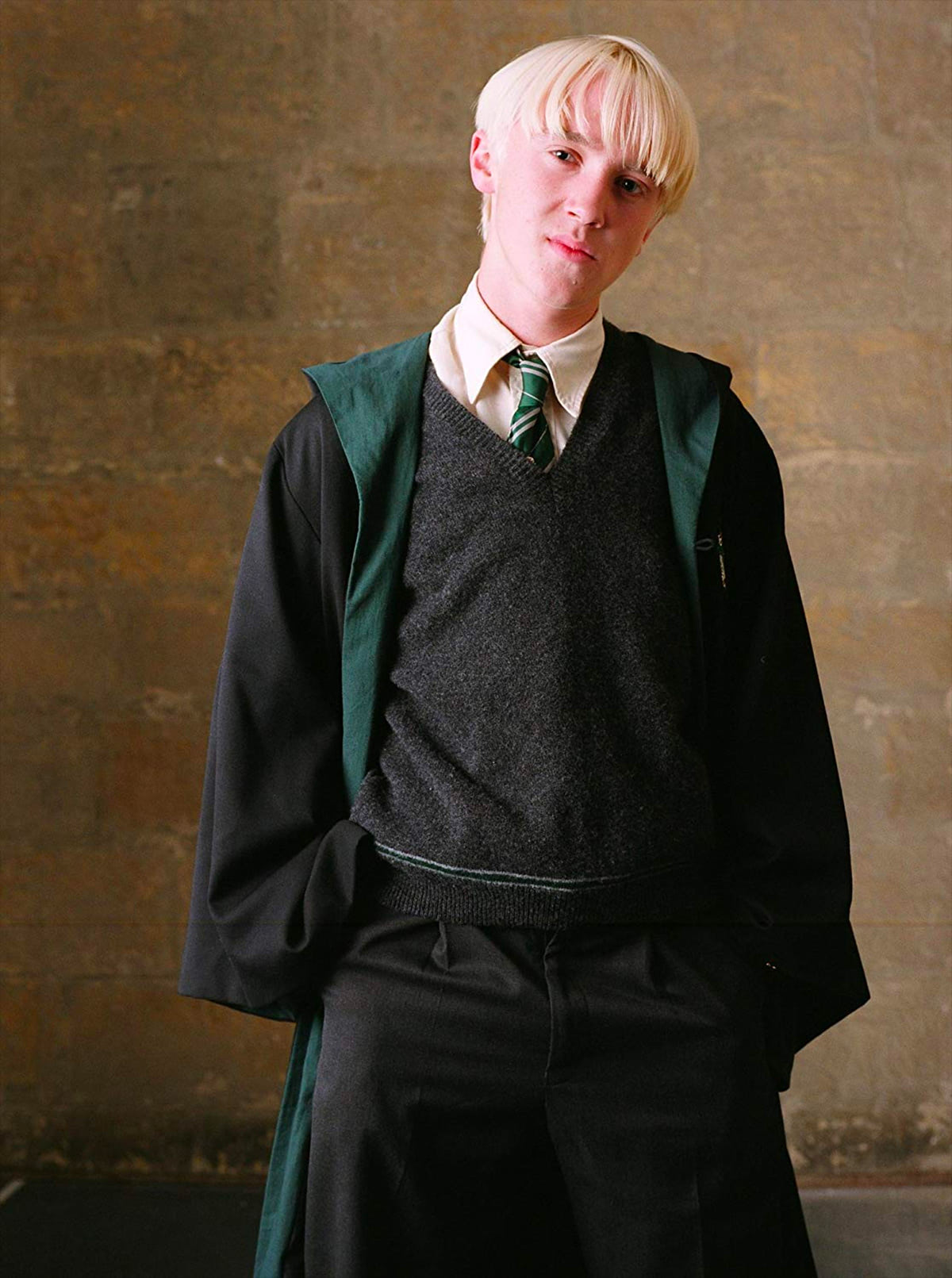
Let’s be real for a second. If you grew up reading the books or watching the movies, you probably spent way too much time thinking about why Harry Potter and Draco Malfoy just couldn't get along. It wasn't just a "hero vs. villain" thing. It felt more personal. It felt like two sides of the same coin, tossed into a fountain at the Ministry of Magic and left to oxidize for seven years.
Draco wasn't Voldemort. He wasn't even Bellatrix Lestrange. He was just a kid with a bad haircut and a massive chip on his shoulder, standing across from a kid who had every reason to be bitter but chose not to be. That friction? That’s what kept us turning pages at 2:00 AM.
That First Handshake (Or Lack Thereof)
Everything started at Madam Malkin’s in the book, or on the stairs of Hogwarts in the movie. That moment defines the entire series. Draco reaches out a hand. He offers Harry a path to "the right sort" of wizarding families. It’s a classic playground power move. But Harry, having already bonded with Ron Weasley—the boy with the hand-me-down robes and the sandwich he didn't want—says no.
Harry chose the "wrong" side according to the Malfoy manifesto. Honestly, Draco never really got over that rejection. It wasn't just about blood purity; it was about a rich, pampered boy being told "no" for the first time in his life by a boy who lived in a cupboard.
You see the shift immediately. Draco’s entitlement slams into Harry’s newfound moral compass. J.K. Rowling didn't just write a school rivalry; she wrote a class war played out with wands.
The Harry Potter and Draco Malfoy Dynamic is More Than Just School Bullying
We need to talk about the obsession. Because it was an obsession.
By the time we get to The Half-Blood Prince, the roles have flipped in a way that most people forget. Usually, it’s the bully chasing the hero. But in the sixth year, Harry becomes the stalker. He’s the one tracking Draco on the Marauder’s Map. He’s the one skipping meals and losing sleep because he knows Malfoy is up to something.
Hermione and Ron think he’s losing it. They literally tell him to give it a rest.
But Harry can't. There’s this weird, psychic tether between them. Harry sees the cracks in Draco before anyone else does. While everyone else sees a mini-Death Eater in the making, Harry starts to see a boy who is way out of his depth.
The Sectumsempra Incident
This is the turning point. If you want to understand the grit of the Harry Potter and Draco Malfoy relationship, you have to look at the bathroom scene.
It’s messy. It’s bloody. It’s definitely not "all-ages" magic.
Harry uses a spell he doesn't understand—Sectumsempra—and nearly kills Draco in a puddle of water and tears. This is the moment Harry realizes he isn't just the "good guy." He’s capable of horrific violence. And Draco? Draco is shown as a victim for the first time. He was crying to Moaning Myrtle because he couldn't kill Dumbledore. He was failing. He was scared.
The image of Harry standing over a bleeding Draco is one of the darkest mirrors in the whole story. It shows that under the right pressure, the line between them almost vanishes.
The Burden of Choice and the Malfoy Family Legacy
Why did Draco turn out the way he did? Look at Lucius.
Lucius Malfoy is the personification of "do you know who my father is?" He raised Draco to believe that the world was a prize to be inherited, not a place to live. When Voldemort returns, that inheritance turns into a death sentence.
Harry had the burden of being the "Chosen One," which sucked. But Draco had the burden of being the "Expected One." He was expected to be a Death Eater, expected to serve, and expected to sacrifice his soul for a cause his parents championed until it got too scary.
- Harry had mentors like Dumbledore and Lupin.
- Draco had a father who failed him and an aunt (Bellatrix) who was literally insane.
- Harry’s "home" was Hogwarts.
- Draco’s home was turned into a headquarters for a snake-faced dictator.
When you look at it that way, it's kinda amazing Draco didn't snap sooner.
The Malfoy Manor Silence
If you want proof that Draco changed, look at the moment in The Deathly Hallows where a disfigured Harry is dragged into Malfoy Manor.
Draco knows it’s Harry. He knows.
He’s looking right at him. If he confirms Harry’s identity, the Malfoys get their status back. They get saved. But Draco hesitates. He says, "I can’t be sure." That "I can’t be sure" is the most important thing Draco Malfoy ever said. It’s his silent apology for seven years of torment. It’s the moment the rivalry died.
Redemption or Just Survival?
There is a huge debate in the fandom about whether Draco Malfoy actually redeemed himself. Some people think he’s a misunderstood hero. Others think he’s just a coward who realized he was on the losing side.
The truth is probably somewhere in the middle.
Draco never had a "Snape moment." He didn't have a grand sacrifice. But he did stop. He stopped fighting. He stopped believing the lies. In the final battle, the Malfoys aren't fighting for Voldemort; they’re just wandering through the rubble looking for each other. That’s a very human, very flawed ending.
In the "Nineteen Years Later" epilogue, Harry and Draco see each other on Platform 9 ¾. They don’t hug. They don’t grab coffee. They just nod.
That nod is heavy. It acknowledges that they both survived something that should have killed them. They both lost friends. They both grew up too fast.
Lessons From the Rivalry
What do we actually take away from the saga of Harry Potter and Draco Malfoy?
First, that hate is often a product of environment. Draco wasn't born hating Muggles; he was taught to. Second, that the people we despise might be going through a version of hell we can't see. Harry’s obsession with Draco in the sixth book was actually a weird form of intuition—he knew Draco was breaking.
Finally, it shows that you don't have to be best friends with someone to respect the fact that you both made it out of the woods.
To really understand this dynamic, you have to stop looking at Draco as a villain and start looking at him as a foil. He exists to show what Harry could have been if he’d been raised with privilege and fear instead of neglect and courage.
Actionable Insights for Fans and Writers:
- Analyze the Foil: If you're a writer, study how Draco mirrors Harry’s journey. For every "win" Harry gets, look at what Draco "loses."
- Re-read Book 6: Focus specifically on the chapters where Harry is using the Map. It’s a masterclass in building tension between two characters who aren't even in the same room.
- Visit the Locations: If you’re ever at Warner Bros. Studio Tour in London, stand in the Great Hall and look at the Slytherin table. It puts the physical distance between the two characters into perspective.
- Check the Scripts: Read the Cursed Child script (even if you hate the plot). It actually provides a lot of "expert" insight into how Draco and Harry function as adults and parents. It’s the only way to see the "final" version of their relationship.
The rivalry wasn't about who was better at Quidditch. It was about the slow, painful process of two boys realizing that the world is much bigger than their fathers' reputations. Harry and Draco are the heart of the series because they represent the hardest part of growing up: realizing your "enemy" is just as scared as you are.