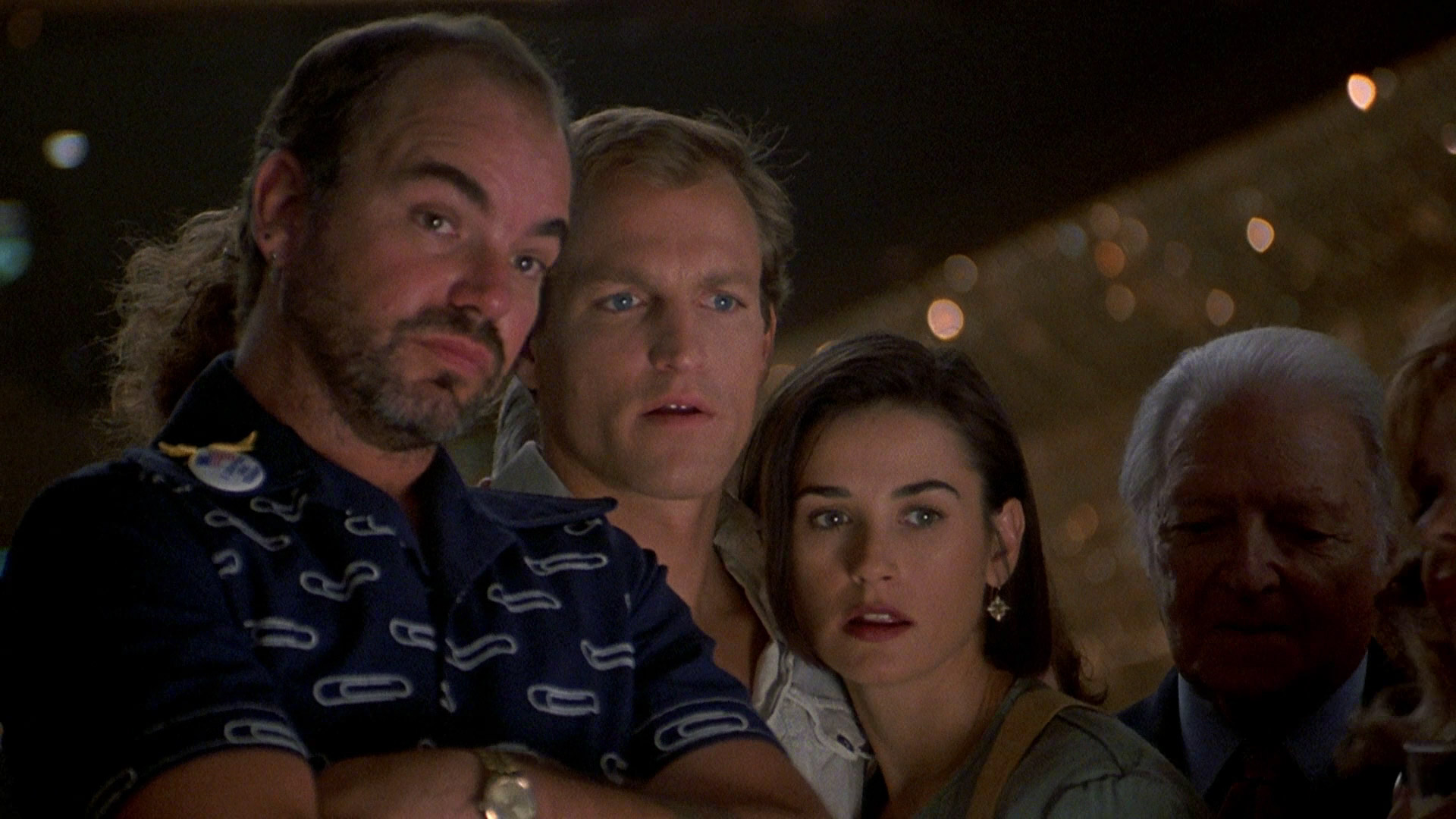
It was 1993. Everyone was talking about one thing: Would you sleep with a stranger for a million bucks? Honestly, the premise of Indecent Proposal was a bit thin, maybe even trashy by some critics' standards, but it worked. It worked because the Indecent Proposal movie cast brought a weird, magnetic intensity to a story that could have easily fallen flat.
Adrian Lyne directed it. He’s the guy who basically cornered the market on "erotic thrillers" back then. He knew exactly how to light a room to make a million dollars look like the most tempting thing on Earth. But without the specific trio of Woody Harrelson, Demi Moore, and Robert Redford, the movie probably would’ve been a forgettable late-night cable flick. Instead, it became a cultural touchstone that still sparks arguments at dinner parties thirty years later.
Robert Redford as John Gage: The Billionaire We Sorta Liked
Robert Redford wasn't the first choice. Can you imagine that? The producers actually looked at Warren Beatty. They even thought about Val Kilmer for the husband role. But Redford brought something nobody else could: effortless, old-school class. He played John Gage, the billionaire who drops the "indecent" offer.
Gage is a predator. Let’s be real. He uses his wealth to dismantle a marriage because he's bored or lonely or maybe just powerful enough to do it. Yet, Redford plays him with such a soft touch that you almost—almost—root for him. He doesn't twirl a mustache. He doesn't yell. He just leans back in those expensive suits and makes a life-altering proposal feel like a casual business merger.
This was a pivot for Redford's career. He was the golden boy of the 70s, the Sundance Kid, the guy from All the President's Men. In Indecent Proposal, he used that "good guy" equity to play someone deeply manipulative. It’s a masterclass in screen presence. When he says, "The night would come and go, but the money would last a lifetime," he makes it sound like sound financial advice rather than a moral catastrophe.
Demi Moore and the Weight of Diane Murphy
Demi Moore was at the absolute peak of her powers here. She had just come off Ghost and A Few Good Men. She was the highest-paid actress in Hollywood for a reason. As Diane Murphy, she had the hardest job of the entire Indecent Proposal movie cast. She had to sell the internal conflict of a woman who loves her husband but sees their dream home—and their entire future—slipping away because of a recession.
People forget the movie is actually about real estate, at least at the start. Diane and David are architects. They're broke. They go to Vegas in a desperate "hail mary" attempt to save their house.
Moore’s performance is subtle. You see the calculation in her eyes during that high-stakes baccarat game. It’s not just about the sex; it’s about the agency. When she finally decides to go to Gage’s yacht, the look on her face isn't just shame. It's a weird mix of resignation and curiosity. She carries the emotional brunt of the film's second half, dealing with David's burgeoning insecurity and Gage's persistent "courtship" after the fact.
Woody Harrelson: From Cheers to High-Stakes Drama
Woody Harrelson was the wild card. Back then, most people still saw him as Woody Boyd, the lovable, dim-witted bartender from Cheers. Taking on the role of David Murphy was a huge risk. He had to play a man who literally sells his wife's company for a night and then has to live with the psychological fallout.
It’s a raw performance.
Harrelson does "tortured" really well. He spends a lot of the movie looking like he’s about to throw up or punch a wall, which is exactly how a guy in that position would feel. The scene where he’s trying to teach a lecture while his life is falling apart is heartbreakingly awkward. He and Moore had genuine chemistry, which made the betrayal feel like a physical wound. If they hadn't felt like a real couple, the movie's central hook wouldn't have hurt so much.
The Supporting Players You Forgot Were There
While the "big three" got all the posters, the rest of the Indecent Proposal movie cast filled in the gaps of this glossy, paranoid world.
- Seymour Cassel: He played Mr. Shackleford, Gage's right-hand man. Cassel was a legend of independent cinema, a favorite of John Cassavetes. He brought a grounded, slightly weary vibe to the billionaire's entourage.
- Oliver Platt: He’s the lawyer, Jeremy. Platt is always great at playing the cynical professional who has seen it all. He provides the necessary reality check to David and Diane's idealistic dreams.
- Billy Bob Thornton: Seriously. He has a tiny role as a gambler named Day Tripper. This was right before he blew up with Sling Blade. It’s a "blink and you’ll miss it" moment, but it adds to the movie’s grit.
- Rip Taylor: The flamboyant comedian makes a cameo as Mr. Langford. It’s a bizarre, campy touch in a movie that usually takes itself very seriously.
Why the cast chemistry caused such a stir
There were rumors, of course. There are always rumors when you put three massive stars in a room with a "steamy" script. Some reports from the set suggested that Redford and Moore didn't exactly get along, or that the power dynamics were weird because of the age gaps. But on screen? It’s seamless.
The tension works because of the contrast. You have Harrelson’s frantic, middle-class energy clashing against Redford’s cool, detached wealth. In the middle is Moore, trying to bridge the gap between love and survival.
Critics at the time, like Roger Ebert, pointed out that the movie is more of a fable than a realistic drama. He gave it three stars, noting that while the logic was shaky, the acting kept it afloat. He was right. If you replace the Indecent Proposal movie cast with lesser actors, the whole thing turns into a Lifetime movie.
The legacy of the million-dollar question
Why do we still care? Honestly, because the movie taps into a universal anxiety. Money vs. Love. It’s the oldest story in the book.
The film didn't just stay on the screen; it entered the lexicon. In the 90s, "doing an Indecent Proposal" became shorthand for any moral compromise involving cash. It grossed over $266 million worldwide. That’s a massive number for a R-rated drama.
But it wasn't all praise. The movie "won" several Razzie Awards, including Worst Picture. It’s one of those rare films that is simultaneously a massive commercial success, a cultural icon, and a critical punching bag. That’s usually a sign that the movie touched a nerve that people didn't want to admit they had.
What people get wrong about the ending
Most people remember the "deal." They don't remember the aftermath. The movie isn't actually about the night on the yacht. It's about the six months later. It’s about how David can’t look at Diane without thinking about John Gage. It’s about how Diane realizes that David's permission was actually a form of abandonment.
The ending—with the hippopotamus story and the pier—is polarizing. Some find it romantic. Others find it incredibly toxic. But that’s the point. The cast makes you believe that these two people are so broken and so bonded that they might actually try to start over, even if the "million dollar" ghost is always in the room.
Assessing the impact today
If Indecent Proposal were made today, the internet would melt. The power dynamics would be dissected on TikTok for months. The Indecent Proposal movie cast of a modern remake would likely look very different, focusing more on the predatory nature of Gage's wealth. In 1993, we were a bit more seduced by the glamor of it all.
If you're looking to revisit this 90s staple or watch it for the first time, keep an eye on the smaller details. Watch how Redford uses silence. Notice how Moore’s wardrobe changes as she gets closer to Gage’s world—moving from homey knits to structured, expensive silhouettes.
Next Steps for the curious viewer:
- Watch the "Original" Source: Check out the novel by Jack Engelhard. It’s actually quite different from the movie—the billionaire is an Arab sheik in the book, and the themes of ethnicity and identity are much more prominent than in the film.
- Compare to Fatal Attraction: Since Adrian Lyne directed both, it's fascinating to see how he uses "the home" as a place of safety that gets invaded by outside desires.
- Check out the soundtrack: The score by John Barry is legitimately beautiful and does a lot of the heavy lifting in making the movie feel more elegant than its plot suggests.
Don't just look at it as a relic of the 90s. Look at it as a study of what happens when the "unthinkable" becomes a business transaction. Even with all its flaws, the performances of the lead trio ensure that the movie remains a fascinating, if uncomfortable, watch.