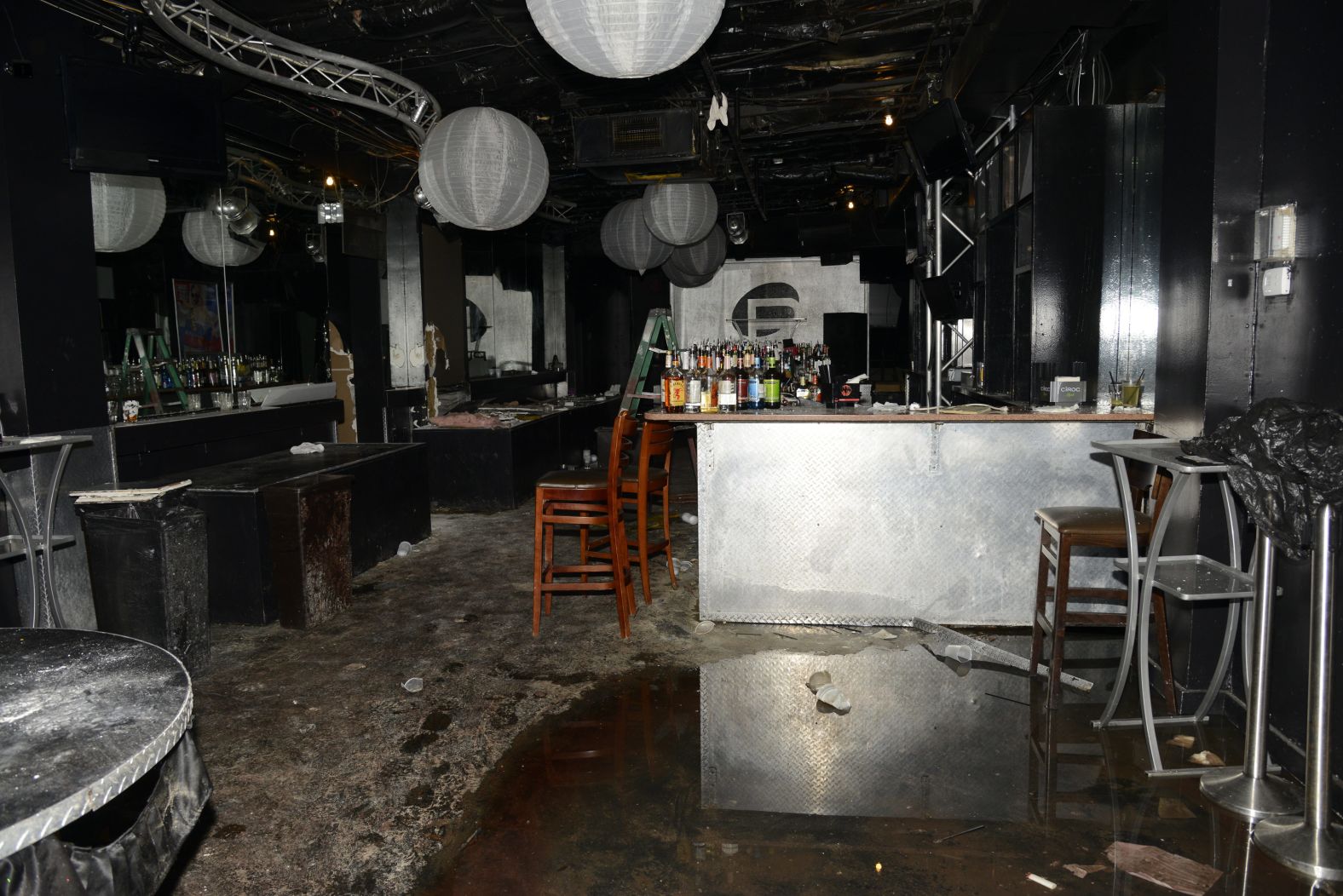
It’s been years, but the images of the Pulse shooting crime scene still feel raw. When people talk about Orlando now, they usually talk about the memorials or the legislative shifts that followed, but the actual reality of what the first responders walked into is something most folks can’t even wrap their heads around. It wasn't just a "scene." It was a massive, chaotic, three-hour tactical nightmare that changed how every police department in America looks at active shooter protocols.
Honestly, the sheer scale of the forensic evidence was staggering. You've probably heard the numbers, but seeing them in a police report is different. We’re talking about a space that was roughly 4,500 square feet, packed with over 300 people when the first shots rang out at 2:02 a.m. By the time the dust settled, investigators had to process a maze of discarded cell phones that wouldn't stop ringing, shell casings from a Sig Sauer MCX, and the structural damage from an armored vehicle breaching the wall.
It was messy. It was loud. And for the FBI and local FDLE agents, it was one of the most complex puzzles they’d ever had to piece together.
The initial chaos and the "Quiet" period
When the first shots were fired near the entrance, the Pulse shooting crime scene was immediately partitioned into different zones of trauma. There was the patio, the main dance floor, and then the bathrooms. That’s where the narrative usually gets a bit blurry for people. Most folks think of an active shooter situation as a 10-minute sprint. Pulse was a marathon. After the initial exchange of gunfire with an off-duty officer, the situation morphed into a hostage standoff that lasted three hours.
During those three hours, the scene wasn't static. People were hiding in dressing rooms. They were squeezed into bathroom stalls. If you look at the dispatch logs, the "crime scene" was actually expanding in real-time as victims escaped through holes in the fence or were carried to the nearby Einstein Bros. Bagels, which became a makeshift triage center.
The interior of the club was a sensory overload for the initial sweep teams. One of the most haunting details reported by multiple first responders—including Officer Omar Delgado—was the sound. In the stillness that followed the final breach, the club was filled with the rhythmic chirping of hundreds of cell phones. Families were calling. Over and over. The screens were lighting up the dark, blood-stained floor. It's a detail that doesn't show up in a sterile "evidence list," but it’s what defined the scene for those who were there.
Forensic mapping of a tactical breach
Eventually, the decision was made to breach the building. This is where the physical Pulse shooting crime scene changed forever. The SWAT team used a BearCat—an armored vehicle—to punch holes through the bathroom walls. Why? Because the gunman had claimed he had explosives.
When you look at the structural forensic photos, you see these massive, jagged apertures in the masonry. Those weren't caused by the shooter; they were rescue points. But they also complicated the crime scene. Suddenly, you had debris, dust, and outdoor light pouring into a space that had been a dark, enclosed nightclub.
The sheer volume of ballistic evidence
If you’ve ever seen a standard police investigation, you’re used to seeing a few yellow evidence markers. At the Pulse shooting crime scene, the floor was literally carpeted in them. Investigators recovered hundreds of shell casings.
- The Sig Sauer MCX (the primary rifle used)
- A 9mm Glock 17 semi-automatic pistol
- The rounds fired by the 14 officers who engaged in the final shootout
Sorting out the ballistics was a Herculean task for the FBI’s Evidence Response Team. They had to determine which bullets came from the perpetrator and which were part of the tactical "friendly fire" during the rescue. There was a lot of scrutiny on this. For months, there were questions about whether any victims were hit by police rounds during the chaotic final breach in the bathroom area. The final reports eventually clarified the trajectories, but the process required laser-scanning the entire interior to create a 3D digital model of every single bullet path.
Basically, they turned the club into a digital grid. Every wall, every barstool, and every bottle of liquor was mapped to ensure that the reconstruction was airtight for the inevitable DOJ review.
Why the layout of Pulse mattered
Pulse wasn't just a square room. It was a "labyrinthine" space—that’s the word the police used. It had multiple bars, a VIP area, and a specific flow that made it hard for people to find exits in the dark with strobe lights still flashing.
The "Lavender Room" and the "Pro-Lounge" were areas where many people were trapped. When the FBI processed the Pulse shooting crime scene, they found that the shooter had specifically utilized the corners of the building to maintain a tactical advantage. This wasn't random. The way the furniture was arranged and the thickness of the bathroom partitions played a huge role in who survived.
Some people survived because they hid under the bodies of others. Some survived because they stayed in the shadows of the "Dancer’s Dressing Room." These small architectural details are why the crime scene stayed closed for so long. It wasn't just about cleaning up; it was about understanding the "why" behind the casualty count in specific zones.
The role of the "Pulsating" lights
Something people rarely think about is the electricity. For days after the shooting, the club’s lighting system was still partially active. Imagine being a forensic tech trying to document a tragedy while the "party" lights are still swirling around you. It was surreal. The investigators eventually had to cut the power to get a stable environment for high-resolution photography.
The scene was also incredibly hot. Florida in June is no joke. The air conditioning was out, and the biological evidence was degrading rapidly. This forced the medical examiner’s office to work at a pace that was almost unheard of. They had to identify 49 people and remove them with dignity while still preserving the forensic integrity of their surroundings.
Misconceptions about the "Exit" doors
There’s a persistent myth that the exits were chained. That’s been debunked by the Pulse shooting crime scene investigation. The exits were functional, but the sheer volume of people trying to push through them at once created a bottleneck.
Also, the shooter didn't just stay in one spot. He moved. The evidence markers showed a trail of movement between the front door and the bathrooms. This movement pattern suggested he was looking for more targets, which is why the police eventually had to make the call to blow the wall. They realized he wasn't going to stop.
Digital evidence recovered on-site
The crime scene didn't just consist of physical objects. It was digital. Investigators found the shooter’s phone and eventually traced his activity during the three-hour standoff.
- He was checking Facebook to see if "Pulse User" was trending.
- He was looking at news reports of his own crime.
- He was texting his wife.
Recovering these digital footprints from the devices left within the Pulse shooting crime scene gave the FBI a window into his psyche. He wasn't just a shooter; he was an audience member of his own horror show. He wanted to see how the world was reacting while he was still inside the building.
Lessons that changed the "Active Shooter" playbook
What we learned from Pulse fundamentally shifted how law enforcement handles "barricaded subjects" who are also "active shooters." Before Pulse, the rule was: if they stop shooting and take hostages, you negotiate. After Pulse, the rule changed. If the shooter has already demonstrated "active killer" behavior, the "crime scene" is never considered stable until the shooter is neutralized, regardless of whether they’ve paused to talk.
The Pulse shooting crime scene proved that a "stall" is often just a shooter reloading or checking social media.
How to process the legacy of Pulse
If you're looking for a way to actually understand the impact of this event, don't just look at the tragedy. Look at the resilience. The site of the club is now a place of reflection, but the data gathered there helped hospitals in Las Vegas and Parkland prepare for their own mass casualty events.
- Study the "Stop the Bleed" campaigns: Many victims at Pulse died from blood loss that could have been slowed with tourniquets. This led to a massive national push to put bleeding kits in public spaces.
- Support the OnePulse Foundation: While the museum plans have been controversial, the core mission of supporting survivors remains.
- Understand the legal precedents: The lawsuits against the shooter’s employer (G4S) and the gun manufacturers were informed by the specific ballistics and security failures identified at the scene.
The Pulse shooting crime scene was a failure of safety but a masterpiece of forensic recovery. It showed us that even in the absolute worst-case scenario, the truth can be reconstructed piece by piece. The ringing phones eventually stopped, but the data they provided—and the stories the survivors told—ensured that the 49 people lost weren't just statistics. They were individuals whose lives were documented in the most tragic way possible, so that we might prevent it from happening again.
To truly honor what happened, we have to look at the hard facts of that night. It's uncomfortable. It's gruesome. But avoiding the details of the scene only makes us less prepared for the next time someone decides to turn a place of joy into a place of evidence. We owe it to the survivors to know the truth of what they lived through.