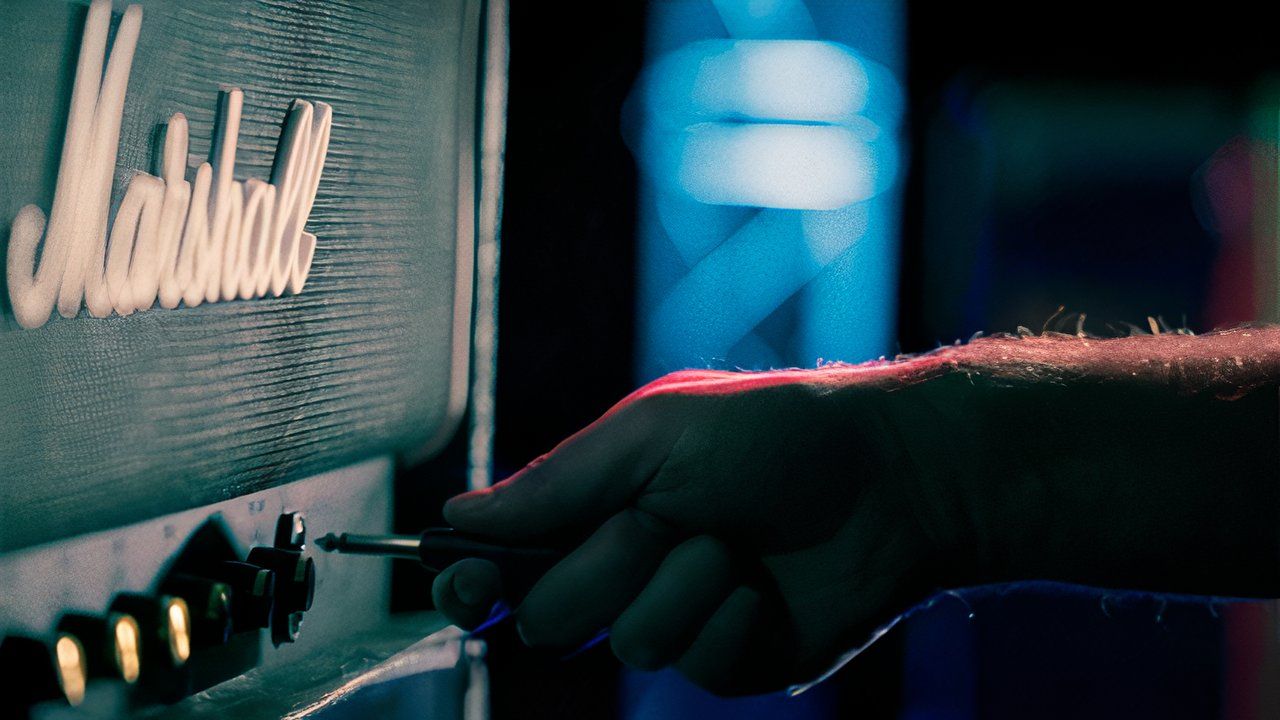
It’s a simple piece of plastic. A tiny, numbered dial on a Marshall amplifier. But for over four decades, the number 11 has been the ultimate shorthand for heavy metal excess, rock and roll stupidity, and the absolute refusal to accept the laws of physics.
When Christopher Guest, playing the dim-witted but lovable Nigel Tufnel, uttered the words, "It's one louder, isn't it?" he wasn't just making a joke. He was creating a cultural landmark. This Is Spinal Tap 11 isn't just a scene; it’s a philosophy. It’s the idea that if you just push a little harder, ignore the experts, and change the labels, you can somehow transcend reality.
Honestly, it’s kind of incredible how much mileage we’ve gotten out of a five-minute bit from 1984.
The Logic of Nigel Tufnel
Most amps go to ten.
You’re on ten on your guitar, where can you go from there? Nowhere. That’s the problem Nigel Tufnel solved with his custom-ordered heads. In the film, Rob Reiner’s character, Marty DiBergi, tries to apply logic. He asks why they didn't just make ten a little louder and make that the top number.
Nigel’s response is legendary. He pauses, looks at DiBergi with a mix of pity and confusion, and simply repeats: "These go to eleven."
It’s the perfect encapsulation of the "more is more" era of 80s rock. You had bands like Mötley Crüe and Poison competing for the biggest hair, the loudest pyrotechnics, and the most ridiculous stage sets. Spinal Tap was a parody, sure, but they were barely exaggerating.
Why the math doesn't actually matter
In the real world of audio engineering, the numbers on a dial are often just arbitrary gain stages or markings for "tapered" potentiometers. If you turn a knob from 9 to 10, you aren't necessarily getting a 10% increase in decibels. But Nigel doesn't care about decibels. He cares about the visual confirmation of power.
Seeing that 11 provides a psychological boost that a mere "10" never could. It’s a placebo effect for volume.
Real-World Impact: When Life Mimics Tap
You might think this was just a throwaway gag, but the industry took it seriously.
Marshall, the legendary British amp company featured in the film, eventually leaned into the joke. They actually released the JCM900 series in the 90s where the gain knobs went up to 20. It was a cheeky nod to Nigel, basically saying, "Oh, you want loud? We’ll give you double the Tap."
Even tech companies got in on it.
If you go to the volume settings on the BBC iPlayer, the slider goes to 11. Tesla’s Model S and Model X audio systems used to max out at 11 as an Easter egg. It’s become a universal signal for "we are pushing this to the limit."
Even the IMDb page for This Is Spinal Tap has a rating scale that goes up to 11 stars instead of the usual 10. It’s everywhere.
The Anatomy of a Perfect Satire
The reason This Is Spinal Tap 11 works so well is that it isn't mean-spirited.
Harry Shearer, Michael McKean, and Christopher Guest spent months touring with real bands to get the details right. They saw the confusion, the ego, and the genuine technical illiteracy that sometimes comes with being a rock star.
- The band actually played their own instruments.
- The dialogue was almost entirely improvised.
- Real rockers like Ozzy Osbourne and Steven Tyler have famously said they didn't find the movie funny the first time because it was too close to their actual lives.
When Nigel explains the amp, he isn't trying to be a jerk. He truly believes he has discovered a loophole in the universe. That sincerity is what makes it "human-quality" comedy. It’s not a caricature; it’s a portrait of a man who loves his gear more than he understands it.
The Legacy of the "One Louder" Mentality
We see this "11" mentality in everything today.
Marketing departments are obsessed with it. Whether it’s razor blades adding a fifth blade because four wasn't enough, or smartphone cameras boasting megapixels that the human eye can't even process, we are living in Nigel’s world.
We want to feel like we have that extra gear.
The Gear Head Obsession
If you go on forums like The Gear Page or Reddit’s r/guitar, you'll see people still debating the "11" phenomenon. Is it better to have a high-wattage amp you never turn up, or a small amp you crank to the max?
Nigel would tell you to get the big one and put an 11 on it.
The "loudness war" in music mastering is another extension of this. Producers in the early 2000s were so desperate to have the "loudest" CD on the radio that they compressed the dynamic range until the music literally started to distort. They were chasing the 11, and in doing so, they almost ruined the listening experience.
How to Apply the 11 Philosophy (Responsibly)
There is actually a lesson here for creatives and professionals.
Sometimes, the "standard" way of doing things—stopping at 10—is just a suggestion. Pushing for that extra 1% of effort or that slightly-too-far idea is where the magic happens. The "11" is that extra bit of personality that makes a project stand out.
But you have to know why you're doing it.
If you're just relabeling the dial like Nigel, you're just performing "volume theater." If you're actually finding a way to make the output more impactful, you've captured the spirit of the film.
Practical Next Steps for the Tap-Inspired:
- Audit your "Max": Look at a project you're working on. Where have you stopped because it felt like the "standard" limit?
- Add the 11: Identify one area where you can push beyond the expected norm. This could be in the level of detail in a report or the boldness of a design choice.
- Check the "Ohm" factor: Don't just be loud for the sake of being loud. Ensure your "11" doesn't blow the metaphorical speakers.
- Watch the movie again: Seriously. This Is Spinal Tap is a masterclass in character-driven comedy. Pay attention to how the actors use silence and pauses—especially in the amp scene. The comedy isn't in the lines; it's in the belief behind them.
The enduring power of This Is Spinal Tap 11 is its relatability. We all have those moments where we want to believe our "ten" is just a little bit better than everyone else's. And in a world that often feels like it's stuck on a boring level 5, there's something genuinely inspiring about a guy who just wants to turn it up to 11 and let it rip.