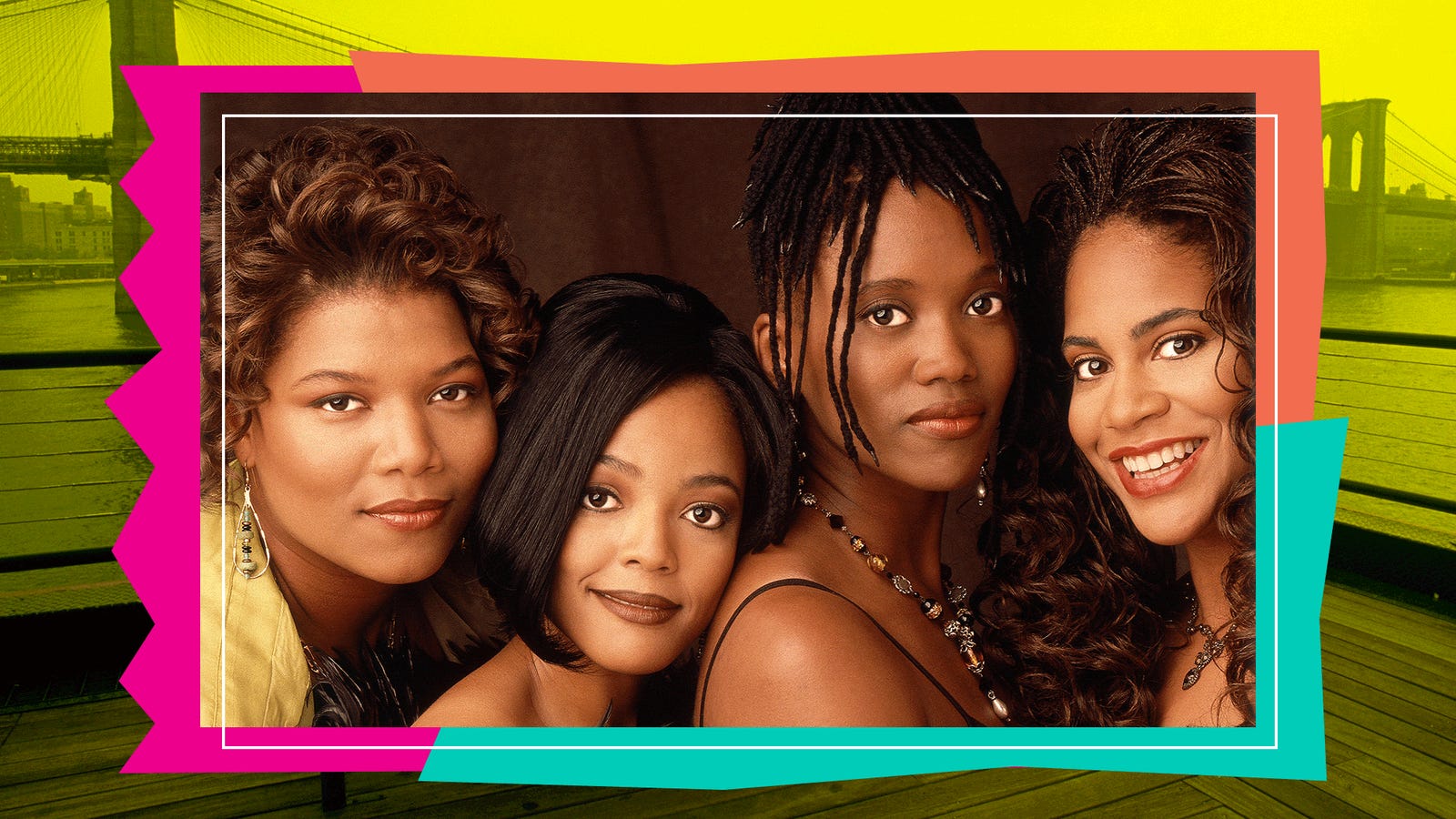
It was a Sunday. August 22, 1993. If you were sitting in front of a heavy tube television that night, flipping through channels, you probably didn’t realize you were about to witness a shift in the tectonic plates of pop culture. That was the day when did Living Single come out—and for many, it felt like the first time the screen actually reflected their real lives.
Kim Coles, Queen Latifah, Erika Alexander, and Kim Fields walked onto that Brooklyn brownstone set and basically told the world that being young, Black, and single wasn't just a struggle. It was a blast.
Why 1993 Was the Perfect Storm for Khadijah and the Crew
The early nineties were weirdly transitional. We were moving out of the glitzy, over-the-top eighties and into something grittier but also more aspirational. When Fox debuted Living Single, the network was still the scrappy underdog trying to steal viewers from the "Big Three." They needed something loud. They needed something fresh.
Yvette Lee Bowser, the show’s creator, was only 27 at the time. Think about that for a second. A 27-year-old woman convinced a major network to let her helm a show about four Black women living their best lives in New York. Honestly, it was a miracle it happened at all given how the industry looked back then. She drew from her own life, her own friends, and her own "90s girl" energy.
Before this, Black women on TV were often relegated to being the "sassy best friend" or the overworked mother in a struggling household. Living Single flipped that script. Khadijah James wasn't just a character; she was an entrepreneur running Flavor magazine. Regine was obsessed with status and wigs (legendary ones, at that). Max was the high-powered attorney who took no garbage from anyone. And Synclaire? She was the heart—the quirky, sweet, aspiring actress we all kind of wanted to protect.
The Great "Friends" Controversy Nobody Wants to Admit
You can't talk about when did Living Single come out without addressing the elephant in the room. Friends.
It’s one of those things that still makes people a little salty today. Living Single premiered in August of 1993. Friends didn't show up until September of 1994. Yet, if you look at the history books or watch mainstream retrospectives, Friends often gets the credit for inventing the "six friends hanging out in a city" trope.
Queen Latifah has been pretty open about this. She’s mentioned in interviews how Warren Littlefield, who was the head of NBC at the time, once said he wished he had a show like Living Single. Lo and behold, a year later, Joey, Rachel, and the gang were sitting on a couch in Manhattan.
The differences were stark, though. While Friends lived in a version of New York that was oddly devoid of diversity, Living Single was rooted in the culture. It wasn't just about dating; it was about the professional grind. It was about the specific nuances of Black professional life in the nineties.
The Evolution of the Brooklyn Brownstone
The show ran for five seasons, ending its journey on January 1, 1998. During those years, it became a staple of the "Must See TV" alternative on Fox. It anchored a Thursday night lineup that eventually included Martin, creating a powerhouse block of Black television that hasn't really been replicated with the same cultural impact since.
People always ask why it only lasted five seasons. In the world of syndication, 100 episodes is the magic number, and Living Single hit 118. But by the final season, things felt different. The chemistry shifted a bit when the focus moved toward more traditional sitcom tropes like marriage and babies.
Still, the legacy is massive. You see its DNA in Insecure. You see it in Girlfriends. You see it every time a show features a group of women who actually like each other and support each other's careers instead of just fighting over men.
Breaking Down the Cast and Their Impact
Honestly, the casting was lightning in a bottle. You had Queen Latifah, who was already a hip-hop icon. Bringing her to a sitcom was a massive gamble that paid off. She brought a grounded, "boss" energy that made the show feel authentic.
- Erika Alexander (Maxine Shaw): Max was revolutionary. She was a Black woman who was unapologetically smart, sexually confident, and wouldn't let a man dim her shine. Her back-and-forth with Kyle Barker (played by Terrence C. Carson) was the peak of "will-they-won't-they" television.
- Kim Fields (Regine Hunter): Coming off The Facts of Life, Fields had to prove she could play an adult. She did it by becoming the fashion-obsessed Regine. The wigs alone deserve their own wing in a museum.
- Kim Coles (Synclaire James): She provided the levity. In a show full of high-powered personalities, Synclaire was the reminder to stay kind.
The men—Kyle and Overton—weren't just side characters either. They lived upstairs! It was a simple setup that allowed for a constant flow of comedy and tension. Overton’s "Slow Jam" and Kyle’s sophisticated (and sometimes pretentious) attitude balanced the house perfectly.
The Cultural Ripple Effect
When you look back at August '93, you realize that Living Single wasn't just a show; it was a movement. It influenced fashion, with its oversized blazers, bold prints, and Afrocentric accessories. It influenced language. It influenced how a generation of young Black people viewed their own futures.
It told us that you could move to the city with nothing but a dream and a couple of good friends and actually make it. It wasn't always easy, and the rent was probably unrealistic even for 1993 Brooklyn, but it felt possible.
There’s a reason why, decades later, the show is a hit on streaming platforms like Hulu and Max. New generations are discovering Khadijah’s office at Flavor and realizing that the struggles of being twenty-something in the city are pretty much universal, even if the technology has changed.
Surprising Facts You Probably Forgot
Did you know the theme song was performed by Queen Latifah herself? It’s one of the most recognizable intros in TV history. "In a 90s kind of world, I'm glad I've got my girls." It set the tone immediately.
Also, the show was almost called My Girls. Imagine that. It doesn't quite have the same ring to it, does it? Living Single captured the essence of independence that the show was trying to promote.
Another tidbit: the show actually featured some incredible guest stars before they were "huge." We’re talking about people like Terrence Howard, Monica, and even Busta Rhymes. It was a hub for Black talent in a way few other shows were at the time.
How to Revisit the Magic Today
If you’re looking to dive back in, don't just look for the big moments. Watch the background. Look at the art on the walls of the brownstone. Listen to the references to 90s R&B and politics. The show was deeply embedded in its era, which is why it serves as such a perfect time capsule.
Practical Steps for the Living Single Superfan:
- Check the Streaming Rights: Currently, the show lives on Hulu and Max. If you haven't seen the later seasons, they’re worth a watch just to see how the characters' arcs conclude, even if the vibe is different from the early days.
- Follow the Creators: Yvette Lee Bowser is still a force in the industry. Looking into her later work, like Dear White People (the series) or Run the World, shows how she has continued to evolve the themes she started in 1993.
- Explore the Soundtrack: The 90s R&B featured in the show is top-tier. Creating a playlist based on the musical guests and the background tracks is a great way to capture that specific "Flavor" vibe.
- Support Black-Owned Media: Since the show was centered around Khadijah running a magazine, use that as inspiration to support modern Black-owned publications and digital platforms that are doing the work today.
The reality is that when did Living Single come out marks a "before and after" moment for television history. It proved that stories about Black women could be universal, profitable, and enduring. It didn't need to be a "niche" show. It was just a great show. Period.
Whether you're a Max, a Khadijah, or a Synclaire, there's a piece of that 1993 magic that still resonates. It’s about the family you choose when you leave your actual family behind. That never goes out of style.
To truly appreciate the impact of Living Single, one should look into the history of the Fox network's "Black Block" of the 1990s. This era redefined the sitcom landscape and paved the way for the diverse storytelling we see today. Understanding the production hurdles Yvette Lee Bowser faced offers a masterclass in creative persistence in a rigid industry.