History books usually give you a one-sentence answer that feels like a dry cracker. They say George Calvert wanted a place for Catholics, and then he died, so his son took over. It's technically true, but it misses the grit. It misses the high-stakes political gambling and the fact that Maryland was essentially a family-run startup designed to save a reputation. If you really want to know who founded Maryland and why, you have to look at a man who was arguably the most powerful person in England before he lost it all over a prayer book.
George Calvert wasn't some wide-eyed pilgrim. He was the Secretary of State to King James I. He was a shark. But in 1625, he did the unthinkable: he went public with his Catholicism in an England that viewed Catholics as potential terrorists. He had to resign. He didn't just lose his job; he lost his proximity to the throne. Maryland was his "Plan B."
The Man Behind the Charter: George Calvert’s Big Gamble
George Calvert, the first Baron Baltimore, was a pragmatist. Honestly, he tried to start a colony in Newfoundland first. It was called Avalon. It failed miserably because, well, Newfoundland is freezing. After spending a winter there in 1628 and watching his settlers succumb to scurvy and the biting cold, he wrote a desperate letter to King Charles I. He basically said, "This place is a frozen wasteland, give me something further south."
He wanted a place where he could be rich and Catholic at the same time. That was the "why."
But George never actually saw the Maryland project come to fruition. He died in April 1632, just five weeks before the official charter was sealed. The heavy lifting fell to his son, Cecilius Calvert, the second Baron Baltimore. While George had the vision, Cecilius had the administrative chops to actually make it happen. He stayed in England to defend the charter from angry Virginians who thought the land was theirs, while his younger brother, Leonard Calvert, actually sailed the ships—the Ark and the Dove—to the Chesapeake.
Why Maryland Was the First "Safe Space" (With a Catch)
The "why" is deeply rooted in the 17th-century religious meat grinder. If you weren't part of the Church of England, life sucked. You couldn't hold office. You paid heavy fines. You were watched.
Calvert’s vision for Maryland was revolutionary: Religious Tolerance. Wait. Don't get it twisted. This wasn't modern "everyone is equal" tolerance. It was specifically designed so Catholics wouldn't be persecuted, but the Calverts were smart enough to know that if they only invited Catholics, the colony would fail. They needed Protestants to make the numbers work. So, they created a policy where as long as you believed in the Holy Trinity, you were cool. If you were Jewish or Unitarian? Not so much. But for 1634, this was light-years ahead of the neighbors.
The Virginia Problem
Virginia hated Maryland.
Imagine you’ve been the only game in town for decades, and suddenly a bunch of "Papists" (as they called them) move in next door on land you thought was yours. William Claiborne, a powerful Virginian, actually went to war with the Marylanders over Kent Island. It was the first naval battle in North American waters. Maryland wasn't founded in peace; it was founded in a legal and literal crossfire.
The Economic Engine: Tobacco and the Proprietary Dream
While religion was the soul of the project, money was the blood. George Calvert wasn't a monk; he was an aristocrat. He wanted a "Proprietary Colony." This meant the Calverts basically owned Maryland like a private estate. They weren't just governors; they were "Lords Proprietary." They could coin money, grant titles, and create courts.
Tobacco was the only way to make the math work.
The soil in the Chesapeake was perfect for it. But tobacco is a jealous crop. It demands massive amounts of labor and eats the soil's nutrients. This economic reality is what eventually shifted Maryland from a colony of small-scale farmers and indentured servants to a plantation economy reliant on enslaved labor. It’s a dark irony: a colony founded on the idea of escaping oppression quickly became a place that practiced it for profit.
What Most People Get Wrong About the "Founder"
Most people credit "Lord Baltimore" as a singular person. It's better to think of "Lord Baltimore" as a brand.
- George (The Visionary): Saw the need for a refuge.
- Cecilius (The Architect): Managed the politics from a desk in London for 40 years. He never even set foot in Maryland. Not once.
- Leonard (The Boots on the Ground): The first governor who actually dealt with the mosquitoes, the swamp fever, and the angry Virginians.
If Cecilius hadn't stayed in London to lobby the King, the Maryland charter would have been revoked within two years. He was the ultimate remote manager.
The Act Concerning Religion (1649)
If you're looking for the smoking gun of "why" Maryland exists, look at the Maryland Toleration Act of 1649. This is the first law in the "New World" to legally mandate a degree of religious freedom. It was a survival tactic. The Puritans were winning the Civil War back in England, and the Calverts were terrified that their Catholic experiment would be wiped out. They codified tolerance to protect themselves.
It didn't last. By the 1650s, Puritans did take over the colony for a bit and actually banned Catholicism in the very colony founded for Catholics. History is messy like that.
Actionable Insights for History Buffs and Travelers
Understanding who founded Maryland and why changes how you see the state today. It wasn't a monolithic religious movement like the Puritans in Massachusetts; it was a pragmatic, aristocratic, and often desperate family business.
- Visit St. Mary’s City: This was the original capital. It’s a living history museum now. You can see a reconstructed Dove and stand on the site of the first Catholic chapel in the English colonies. It’s much more visceral than reading a textbook.
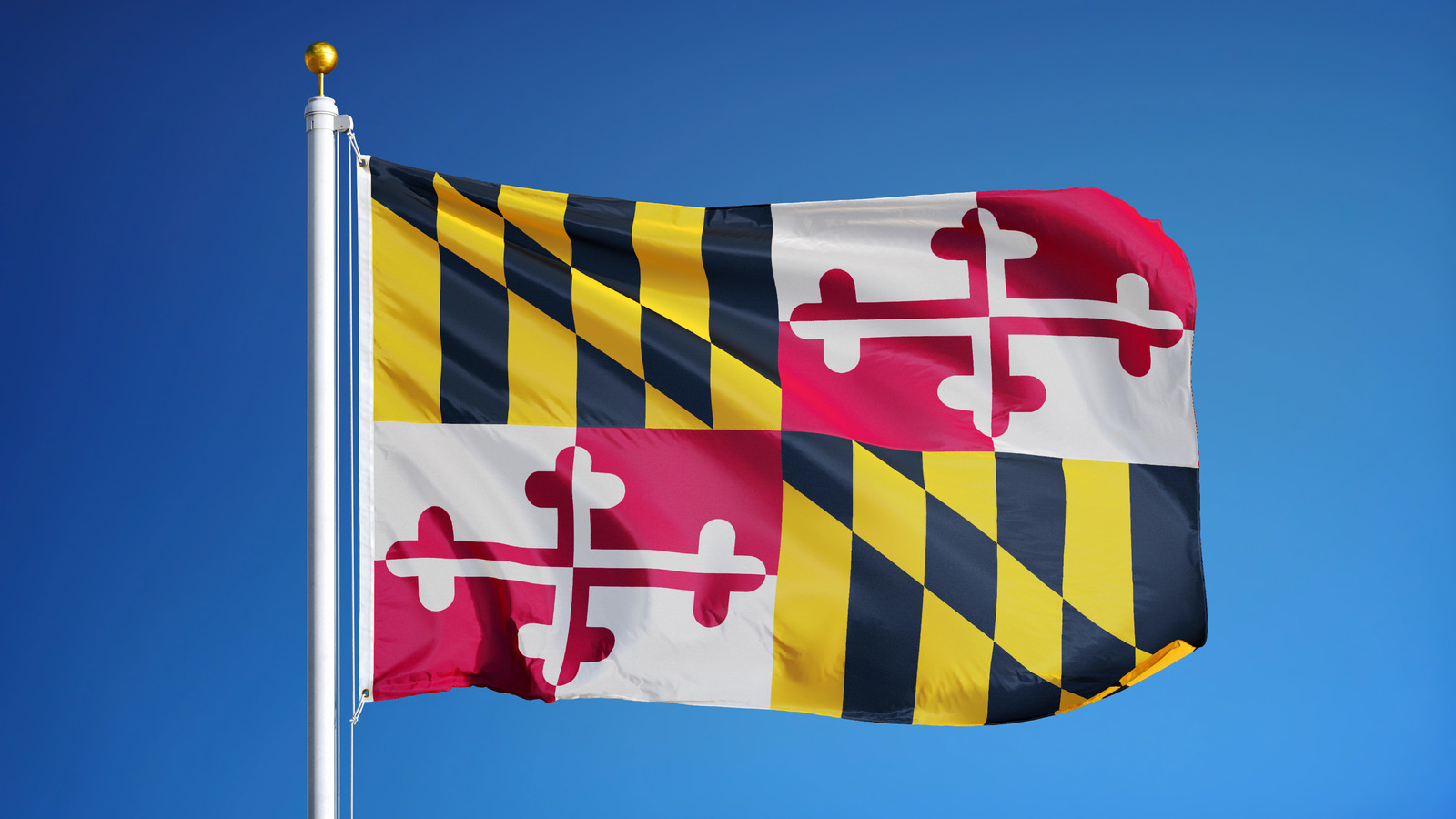
- Check the State Flag: It’s the only state flag based on British heraldry—specifically the coats of arms of the Calvert and Crossland families. The yellow and black are the Calverts; the red and white are the Crosslands (George Calvert’s mother’s family).
- Trace the "Line": If you're interested in the "why" of Maryland's borders, look into the Mason-Dixon line. It was created much later specifically because the Calverts and the Penn family (who founded Pennsylvania) couldn't stop arguing over where one "Proprietary" dream ended and the other began.
The founding of Maryland teaches us that "freedom" in the 1600s was rarely a grand philosophical gesture. It was usually a hard-fought legal loophole. George and Cecilius Calvert didn't set out to create a modern democracy. They set out to build a kingdom where they didn't have to apologize for how they prayed or how they made their money. They succeeded, but it took three generations and a lot of blood to make it stick.
To explore this further, look into the primary source documents from the Maryland Archives Online. Reading the original 1632 charter reveals just how much power the King actually handed over to a single family. It’s essentially a deed to a kingdom. If you find yourself in Baltimore, the Maryland Center for History and Culture holds the original papers that outline these early land disputes. Walking through the Calvert family exhibits provides a tangible link to the people who gambled their entire English reputation on a swampy stretch of the Chesapeake.
The story of Maryland is fundamentally a story of the Calverts’ survival. Every brick in the original foundations of St. Mary's represents a family trying to stay relevant in a world that wanted to erase them. Looking at the history through that lens makes the "why" much more human. It wasn't just about religion or money; it was about the refusal to be sidelined. That legacy is still baked into the soil of the Chesapeake today.
Next time you see that bold black and gold flag, remember it’s not just a design—it’s a family crest that survived a revolution.
---