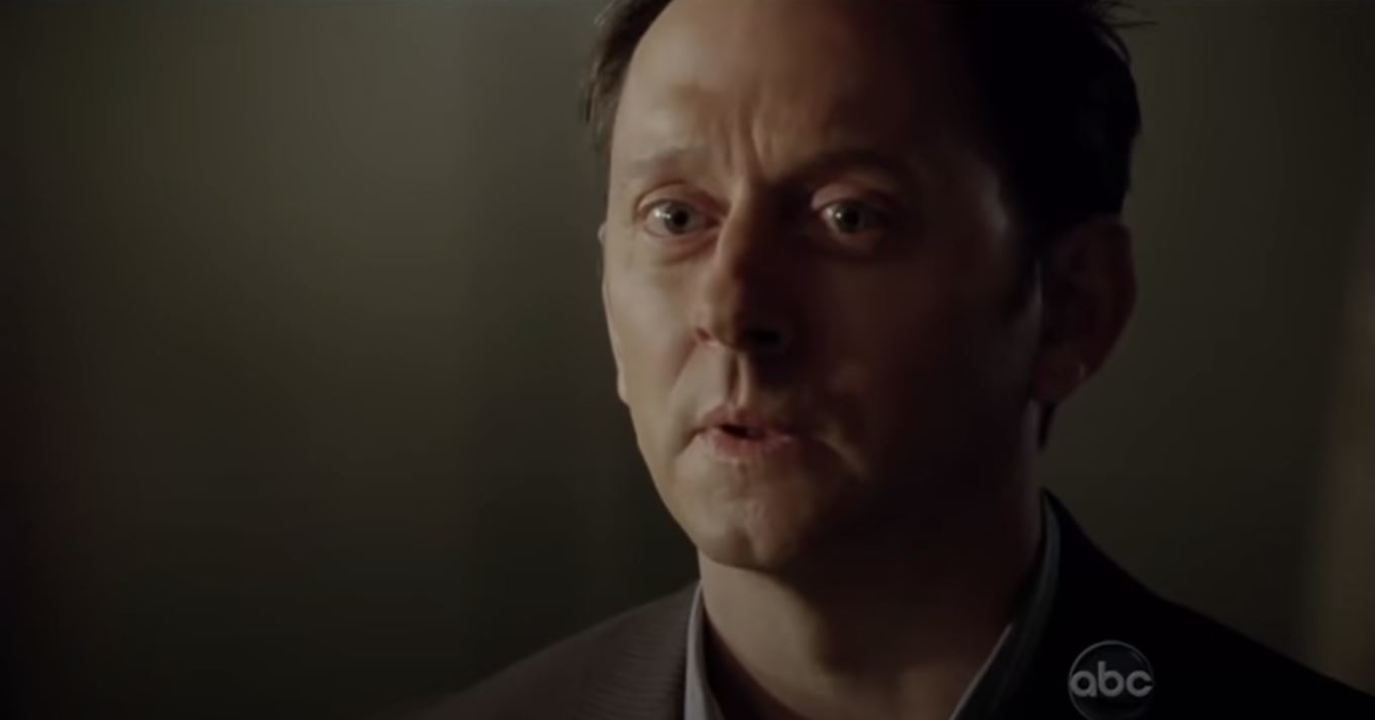
You remember that feeling. It was February 2006. Danielle Rousseau, the Island's resident "crazy French lady," drags a man out of the jungle and into the survivors' camp. He’s caught in one of her traps, bleeding and terrified. He says his name is Henry Gale. He’s from Minnesota. He crashed a hot air balloon while trying to cross the Pacific with his wife.
But something feels... off.
If you were watching Lost back then, you knew that look. The wide, unblinking eyes of Michael Emerson. That unsettlingly calm voice. It was the moment the show shifted from a survival drama into a psychological chess match. Who is Henry Gale in Lost? On the surface, he was a victim. In reality, he was the introduction of the show's greatest antagonist: Benjamin Linus.
But there’s a layer many fans forget. There actually was a real Henry Gale. He wasn’t just a lie made up on the spot; he was a real person whose identity was stolen in one of the most macabre ways possible.
The Minnesota Nice Facade
The first time we see "Henry Gale," he's locked in the armory of the swan station (the Hatch). Jack wants to heal him. Locke wants to question him. Sayid? Sayid wants to break him.
The story Henry tells is heartbreaking. He talks about Jennifer, his wife, who supposedly died of a fever after their balloon crashed on the northern shore. He even draws a map to the balloon. It’s a classic "fish out of water" tale that almost makes you feel for the guy. He’s nerdy. He’s physically weak. He’s everything the "Others" shouldn’t be, according to what we knew at the time.
Honestly, the brilliance of Michael Emerson’s performance—which was originally only supposed to be a three-episode guest spot—is why the character stuck. He played the part of a terrified librarian so well that even the audience started doubting Sayid’s instincts. We wanted to believe in the balloon. We wanted there to be hope that someone else had made it to the Island by accident.
Then came the cereal. Remember that scene? Henry sits there eating a bowl of cereal, calmly telling Locke and Jack that if he were one of the Others, he’d have led them into a trap by now. It was the first "mask slip." It was chilling. It was the moment we realized the man in the cell was the smartest person in the room.
The Real Henry Gale: A Grave Discovery
The mystery of who is Henry Gale in Lost was solved in the episode "Dave." Sayid, Ana Lucia, and Charlie trek across the Island to find the location Henry described. They find it. There’s a balloon. It’s yellow and blue, branded with "No Place Like Home" (a nod to The Wizard of Oz). It looks like Henry was telling the truth.
But Sayid Jarrah doesn't take things at face value.
He digs. Beneath the balloon, there is a grave. According to the man in the Hatch, his wife Jennifer is buried there. Sayid digs up the body and finds something that changes the entire trajectory of the show's second season. It’s not a woman.
It’s a man.
The man in the grave has an ID card. Name: Henry Gale. From Wayzata, Minnesota.
The man sitting in the Hatch was an imposter. He was a leader of the Others who had found the real Henry Gale, watched him die (or killed him), and stripped him of his identity. It was a cold, calculated move. It proved that the Others weren't just "savages" in loincloths; they were infiltrators. They were people who could blend in, lie to your face, and make you feel guilty for hurting them while they plotted your kidnapping.
Why the Henry Gale Arc Changed Television
At the time, television didn't really do this. You didn't have a secondary character take over the entire show through sheer dialogue. But Benjamin Linus—under the guise of Henry—did exactly that.
The "Henry Gale" persona allowed the writers to explore the philosophy of the Island. It forced Jack and Locke into a massive ideological rift. Jack wanted to be the humanitarian; Locke wanted to be the protector. By playing the "victim," Henry Gale acted as a mirror, reflecting the flaws of our heroes back at them.
He manipulated Locke’s insecurity about the Hatch. He teased the idea that the "button" didn't matter. He was a virus in their system.
The Wizard of Oz Connection
You can't talk about Henry Gale without talking about L. Frank Baum. The writers of Lost loved their literary references.
- The Balloon: Obviously, the Wizard arrives in Oz via a stray balloon.
- The Name: Henry is the name of Dorothy’s uncle in the books.
- The Man Behind the Curtain: Just as the Wizard was a "humbug" hiding behind a curtain, the man in the Hatch was a fraud hiding behind a stolen name.
It was a meta-commentary on power. The "Henry" in the Hatch had no physical power over Jack or Locke. He was tied to a chair. Yet, he controlled every conversation. He was the Wizard of the Island.
What Happened to the Stolen Identity?
Once the ruse was up, "Henry" dropped the act. Well, mostly. He stopped pretending to be from Minnesota, but he never stopped lying. He eventually admitted his name was Benjamin Linus.
But what about the actual Henry Gale?
The show never goes back to give us a deep backstory on the real guy. We’re left to piece it together. He was a man with a dream—to cross the ocean in a balloon—who had the incredible misfortune of being pulled into the Island’s electromagnetic reach. He died alone in the jungle. His legacy wasn't his flight; it was providing a convenient cover story for a sociopath.
It’s one of the darker elements of the show's lore. The real Henry Gale represents the "collateral damage" of the Island. Not everyone is a candidate. Not everyone is special. Some people are just lunch for the Island's history.
The Legacy of the Fake Henry Gale
In the years since Lost ended, the Henry Gale era is often cited as the show's peak. It was before the time-travel got too heavy and before the "Flash-Sideways" confused the casual viewers. It was a period of pure, character-driven suspense.
Ben Linus became one of the most complex "villains" in TV history, but he started as a guy in a dirty sweatshirt claiming to be from the Midwest.
If you're rewatching the series today, pay attention to the transition. Watch how Emerson slowly shifts his posture. The "Henry" version of the character hunches. He looks up through his lashes. He looks small. As soon as the ruse is revealed, he sits taller. His voice drops an octave. He stops being the prey and becomes the predator.
Actionable Insights for Fans and Writers
If you’re a fan of the show or a writer looking to understand why this worked, here are the key takeaways from the Henry Gale arc:
- Subvert Expectations: The audience expected a "monster." They got a middle-aged man with a soft voice. The contrast created more tension than a physical threat ever could.
- Use the Environment: The balloon wasn't just a prop; it was the "proof" that grounded the lie. A good lie always has a grain of truth (or a physical object) to tether it.
- Character through Dialogue: The "cereal scene" is a masterclass in how to reveal a character's true nature without them actually confessing.
- Identity as a Theme: Lost is obsessed with who people want to be versus who they are. Ben Linus stealing Henry’s name is the ultimate expression of that theme.
The mystery of who is Henry Gale in Lost is actually two stories. It’s the story of a tragic adventurer from Minnesota who lost his life in the jungle. And it’s the story of the birth of Benjamin Linus, the man who would eventually move the Island itself. One was a man who flew too high; the other was a man who stayed in the shadows. Both changed the fate of the survivors forever.
To truly understand the show, you have to look past the smoke monster and the polar bears. You have to look at the man in the Hatch, eating a bowl of Apollo bars, pretending to be someone he wasn't, and realize that on this Island, names are the only things that don't stay buried.
Check out the Season 2 episode "The Whole Truth" for the specific moment the cracks in the Henry Gale story begin to show, particularly through Sun’s observation of his behavior. Pay close attention to his interaction with the "fake" grave; his lack of genuine emotional reaction to the site of his supposed wife's death is the ultimate giveaway for anyone watching closely for the second time.