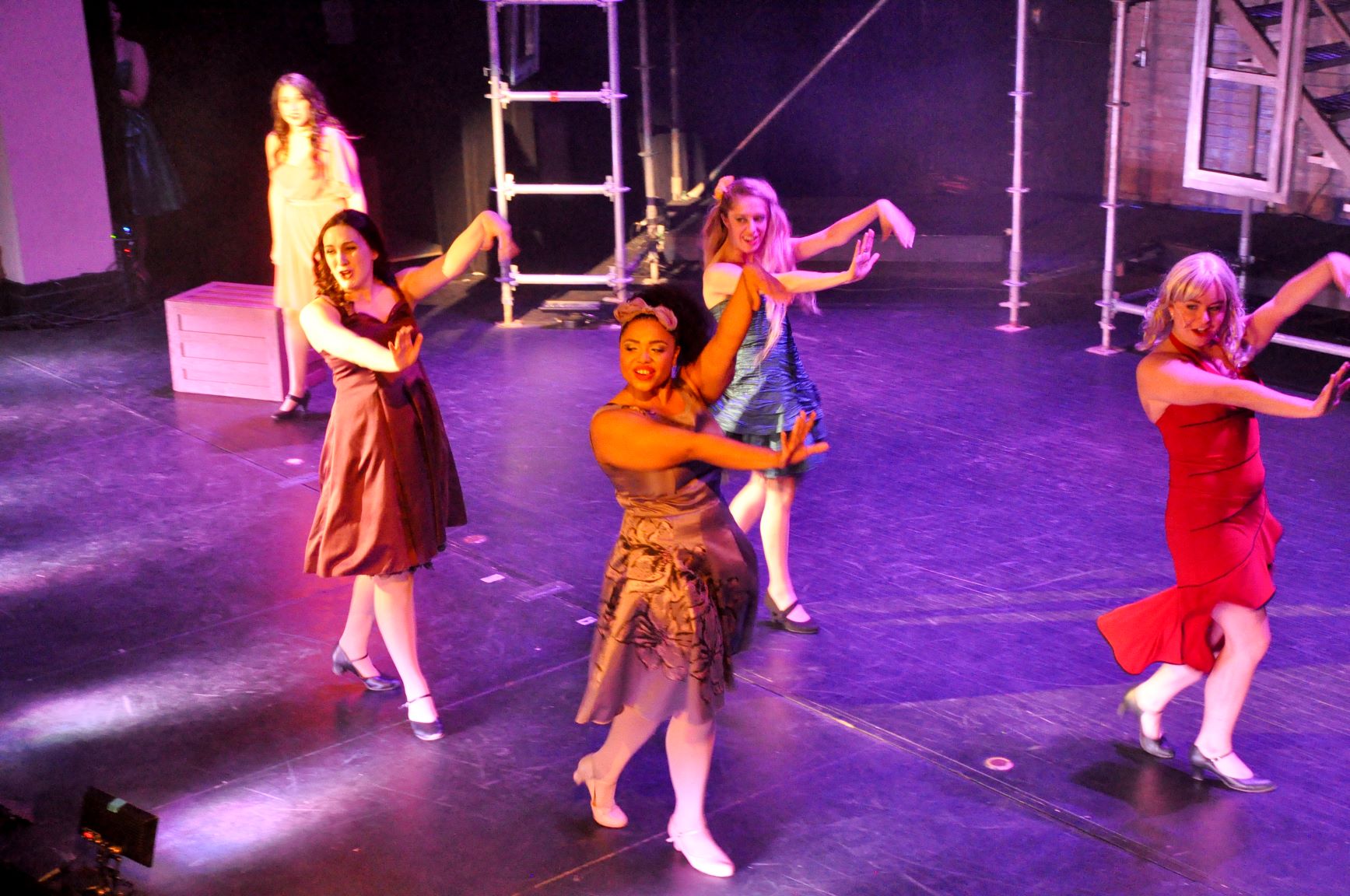
If you ask a casual theatergoer who wrote West Side Story, they might shout "Leonard Bernstein!" and call it a day. They wouldn't be wrong, exactly. Bernstein’s score is the heartbeat of the show. It’s loud, it’s brassy, and it’s undeniably iconic. But here’s the thing: calling Bernstein the sole creator is like saying Steve Jobs built the iPhone with a screwdriver in his garage.
It didn't happen like that. Not even close.
West Side Story wasn’t the product of one lone wolf sitting at a piano. It was a collision of four of the most neurotic, brilliant, and ambitious minds in Broadway history. We’re talking about a "Mount Rushmore" of talent that includes Leonard Bernstein, Jerome Robbins, Arthur Laurents, and a then-unknown kid named Stephen Sondheim.
Most people don't realize how close this show came to never existing. It was originally supposed to be about a conflict between Catholics and Jews during Passover. They called it East Side Story. Honestly, it sounded a bit dusty. It wasn't until they saw news reports about Chicano gang violence in Los Angeles that the "jets" and "sharks" dynamic finally clicked.
The Man with the Vision: Jerome Robbins
Jerome Robbins was the spark. In 1949, he approached Bernstein and Laurents with the idea of a modern-day Romeo and Juliet. Robbins wasn't just a choreographer; he was a taskmaster. He wanted the drama to be told through movement, not just dialogue.
He was also, by most accounts, terrifying to work with.
Robbins famously posted news clippings of gang fights on the rehearsal room walls to keep the actors in a state of tension. He even prohibited the actors playing the Jets from socializing with the actors playing the Sharks. He wanted real friction. When you watch the opening prologue, where the gangs are snapping their fingers and lunging across the asphalt, you’re seeing Robbins’ brain on the screen. He directed and choreographed the original 1957 production, and without his relentless (and sometimes cruel) pursuit of perfection, the show would have lacked its gritty edge.
Leonard Bernstein: The Sound of the Streets
When we talk about who wrote West Side Story, Bernstein handles the heavy lifting of the "sound." He was already a superstar conductor and composer by the mid-50s. His challenge was to blend high-brow operatic structures with the low-brow grit of 1950s jazz and Latin mambo.
It’s complex stuff.
Take the song "Cool." Most Broadway tunes of that era were simple AABA structures. Bernstein, however, decided to write a fugue. A jazz fugue. It’s technically dense, utilizing a twelve-tone row, which is something you’d expect from a concert hall in Vienna, not a musical about teenagers in denim jackets.
But it works.
The music is restless. It uses the "tritone"—the interval of the augmented fourth—which was historically known as the Diabolus in Musica (the Devil in Music). That "Ma-ri-a" jump? That’s a tritone. It creates a sense of unresolved yearning that mirrors the tragedy of the plot. Bernstein didn't just write catchy songs; he wrote a psychological landscape.
Arthur Laurents and the Language of Gangs
Arthur Laurents wrote the "book." That’s Broadway-speak for the script and the plot structure. Writing the book for West Side Story was a nightmare. Why? Because 1950s street slang went out of style in about five minutes.
Laurents knew that if he used real 1957 slang, the show would feel like a museum piece by 1960.
So, he invented his own language.
He came up with phrases like "Daddy-o" and "cracko jacko." He focused on a specific rhythm of speech that felt youthful but remained timeless. He also made the crucial decision to keep the "adults" in the play—Doc, Officer Krupke, and Glad Hand—as ineffective, one-dimensional figures. This made the world of the Jets and Sharks feel isolated, like an island where the kids were the only ones who mattered. Laurents’ script is lean. He knew when to shut up and let the dancers take over.
The "Kid" on Lyrics: Stephen Sondheim
Then there’s Stephen Sondheim. Before he became the god of modern musical theater (Sweeney Todd, Company), he was a 25-year-old lyricist looking for his big break.
Actually, he didn't even want the job.
Sondheim wanted to write music and lyrics, but his mentor, Oscar Hammerstein II, told him that working with "Big Lennie" (Bernstein) would be a masterclass. Sondheim eventually agreed.
Sondheim’s lyrics are clever—maybe too clever for his own liking. In later years, he famously cringed at the lyrics to "I Feel Pretty." He thought a poor Puerto Rican girl wouldn't use such sophisticated internal rhymes like "It's alarming how charming I feel." He felt it was "too Sondheim" and not enough "Maria."
Regardless of his own self-criticism, his contribution was vital. He brought a lyrical precision that balanced Bernstein’s massive orchestral swells. Initially, Bernstein was credited as a co-lyricist, but he eventually gave full credit to Sondheim, recognizing that the young man had done the lion's share of the word-smithing.
The Collaboration Chaos
The making of the show was a mess. Funding dropped out. Producers thought it was too dark. "Who wants to see a musical where the hero dies at the end?" they asked.
They were almost right.
The show wasn't a massive hit immediately. It did okay, but it was overshadowed by The Music Man at the Tony Awards. It wasn't until the 1961 film adaptation that West Side Story became the global juggernaut we know today.
Why the "Who" Matters
Understanding who wrote West Side Story helps you appreciate the layers.
- Robbins gave it its pulse.
- Bernstein gave it its soul.
- Laurents gave it its voice.
- Sondheim gave it its wit.
If any one of these men had been missing, the show would have been a footnote. If Bernstein had written the lyrics himself (which he started to do), they likely would have been too flowery and operatic. If Robbins hadn't insisted on the "Method" acting approach, the gangs would have looked like chorus boys instead of threats.
How to Experience the Original Vision
If you're looking to dive deeper into the history of these creators, you shouldn't just watch the movies. You need to look at the primary sources.
- Listen to the 1957 Original Broadway Cast Recording: You can hear the raw, jazzy energy that Bernstein intended before Hollywood smoothed out the edges.
- Read "Notes on Broadway" by Arthur Laurents: He’s brutally honest about the infighting and the creative struggles.
- Watch "Sondheim on Sondheim": This documentary/revue gives a great look at how the lyricist felt about his early work on the show.
- Compare the 1961 and 2021 Films: See how different directors interpreted the "book" that Laurents wrote. Spielberg’s version, for instance, gives more backstory to the neighborhood’s gentrification, which was a theme Laurents always wanted to emphasize.
The brilliance of West Side Story isn't that it was written by one person. It’s that four distinct, ego-driven geniuses managed to stay in a room together long enough to change musical theater forever. It’s a miracle of collaboration that somehow survived the 1950s to remain the most relevant tragedy on the American stage.
To truly understand the show, look for the moments where the music stops and the dancing starts—that's Robbins talking. When the words get sharp and cynical, that's Sondheim. When the dialogue feels like a ticking time bomb, that's Laurents. And when the orchestra makes your chest vibrate with a mix of hope and dread? That’s all Bernstein.