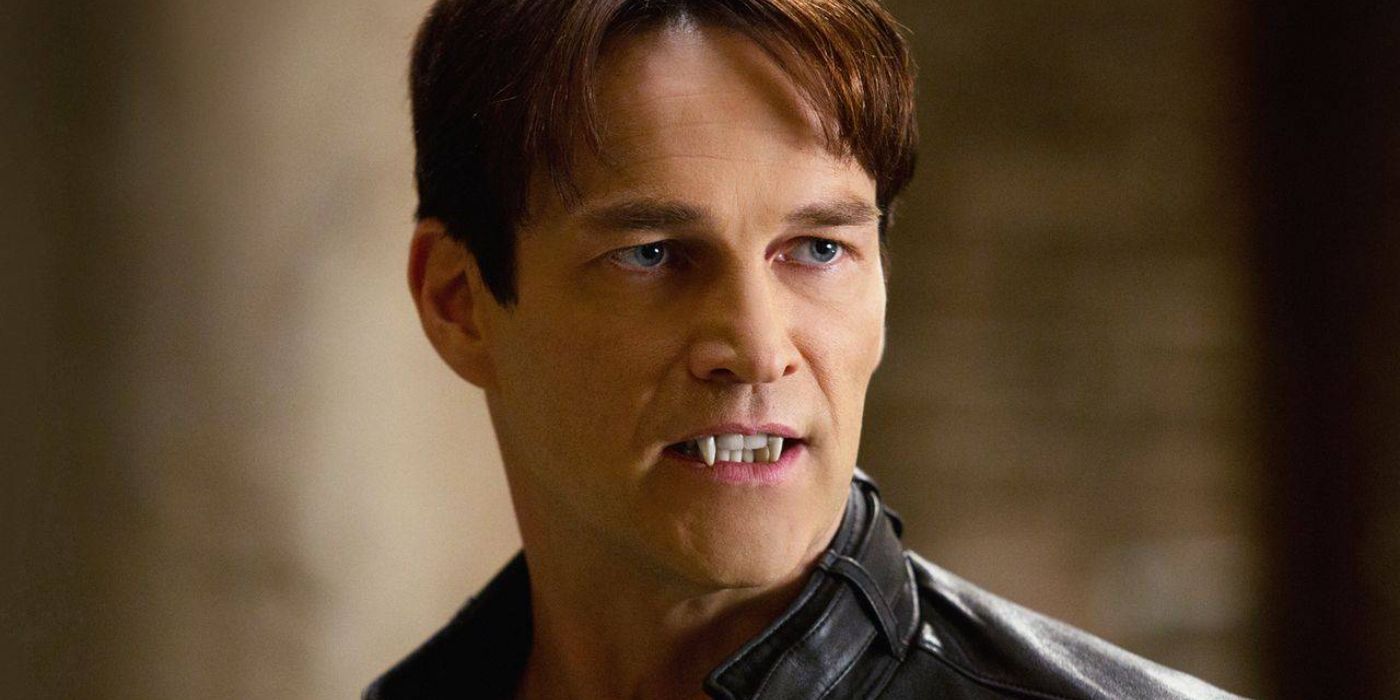
He wasn't just a vampire. He was a Confederate soldier, a grieving father, a king, a god, and eventually, a corpse. When we first met Bill Compton in the Merlotte’s parking lot back in 2008, he represented the "mainstreamed" vampire—a guy who just wanted a synthetic bottle of Tru Blood and a quiet life in his ancestral home. But looking back at Bill from True Blood now, it’s clear he was never the hero we thought he was. He was actually the show’s most complex villain, or at least its most tragic mistake.
Stephen Moyer played Bill with this stiff, formal intensity that felt weirdly out of place in modern Bon Temps. That was the point. He was a man out of time. Fans called him "Vampire Bill," and for the first few seasons, we rooted for him. We wanted him to protect Sookie Stackhouse. We wanted them to find a way to make it work despite the whole "he’s dead and she’s a faerie" thing. Honestly, though? Bill was kind of a monster from day one.
The Secret History of Bill Compton
If you really dig into the lore established by Charlaine Harris in The Southern Vampire Mysteries and adapted by Alan Ball for HBO, Bill’s origin is messy. He didn't choose this life. Lorena, his maker, forced it on him. She saw a man of honor and decided to break him. That trauma defined every single choice he made for the next 150 years.
You’ve got to remember that Bill was a plant. This is the part that still drives fans crazy. He didn't just happen to walk into Merlotte's. He was sent there by Queen Sophie-Anne to procure Sookie because of her unique abilities. Every "accidental" meeting, every romantic gesture in Season 1, it was all a calculation. It was a job. When Sookie finally finds out in Season 3 that her entire romance was a setup, it changes the way you view those early episodes. It turns a gothic romance into a psychological thriller.
He beat himself up for it, sure. Bill spent a lot of time moping in that big, empty house. But he also let Sookie get beaten nearly to death by the Rattrays just so he could "save" her with his blood. That’s dark. It's not just "troubled boyfriend" dark; it's predatory. Yet, because he spoke in that soft, Southern drawl and called her "Sook-eh," we gave him a pass for years.
From Vampire Bill to Billith: The Power Trip
By the time we hit the middle seasons, the show took a hard turn into vampire politics and religion. Bill’s arc during the Authority storyline is where a lot of viewers checked out, but it’s actually the most honest the character ever was. He stopped pretending to be the "good" vampire.
Becoming "Billith" after drinking the blood of Lilith was a wild swing for the writers. Suddenly, he was this invincible, blood-drenched deity. It was a complete departure from the guy who used to sit on the porch and talk about the Civil War. It showed that underneath the gentlemanly exterior, Bill Compton had a massive ego. He thought he was the only one who could save his species. He became a fundamentalist.
Why the Sookie-Bill-Eric Triangle Never Actually Worked
The show spent a decade trying to make us choose between Bill and Eric Northman. On paper, it was the classic "good guy vs. bad boy" trope.
- Bill: The brooding, "reformed" romantic who would eventually betray you for the "greater good."
- Eric: The arrogant, ancient Viking who was surprisingly honest about his own selfishness.
The irony? Eric ended up being more reliable than Bill. While Bill was busy having existential crises and becoming a god, Eric was just being Eric. Alexander Skarsgård’s portrayal of Eric gave us a character who knew exactly what he was. Bill, on the other hand, was constantly lying to himself. He wanted to be human, but he loved the power of being a vampire. You can't have it both ways.
The Controversial Death of Bill from True Blood
Then there’s the finale. Oh, the finale.
In "Thank You," the series finale that still makes people's blood boil, Bill decides he wants to die. He’s tired. He has Hep-V, the vampire virus, and he refuses the cure. But he doesn't just want to die; he wants Sookie to be the one to kill him. He wants her to use her "faerie light" to blast him into nothingness, which would also "cure" her of being a faerie so she could lead a normal life.
It was incredibly selfish.
Sookie refuses to give up her identity, which was a huge moment of growth for her. She ends up killing him with a broken shovel handle in a grave he dug himself. It was messy, gross, and deeply unsatisfying for many. Why did Bill have to die? He claimed it was to set Sookie free. But really, it felt like Bill couldn't handle a world where he wasn't the protagonist of her life.
What We Get Wrong About Bill's Legacy
People love to hate Bill Compton now. If you go on Reddit or TikTok today, the consensus is usually that he was a "gaslighter" or a "manipulator."
That’s a bit of a simplification.
Bill was a character written to represent the weight of the past. His house was literally a relic. His clothes were old-fashioned. His morals were stuck in the 1860s. The tragedy of Bill from True Blood isn't that he was a bad guy—it's that he was a man who couldn't evolve. Every time he tried to change, he just fell back into old patterns of control and secrecy. He was obsessed with legacy, which is why his final act was so focused on how he would be remembered.
The Real Impact of the Character
Stephen Moyer’s performance is actually underrated because of how much people grew to dislike the character. He had to play a man who was constantly performing a version of himself. He had to be the lover, the soldier, the traitor, and the king.
If you're revisiting the show, look at the way Bill reacts when he’s alone. The sadness is real. He genuinely loved Sookie, even if that love was toxic. That’s what makes the character work. If he was just a villain, he'd be boring. Because he actually cared, his betrayals hurt ten times more.
Actionable Insights for Fans and Writers
If you’re a fan of the show or a writer looking at character development, there are a few things to take away from the saga of Bill Compton.
- Deconstruct the "Gentleman" Trope: Bill is a masterclass in how "politeness" can be used as a mask for control. When a character is overly formal, ask what they are hiding.
- Watch for the "Blood Bond": In the world of True Blood, drinking a vampire's blood creates a psychic connection. This is a literal metaphor for how trauma and obsession can bind two people together. Re-watch Season 1 with this in mind—Sookie wasn't just in love; she was physically altered by him.
- The Importance of the "Maker" Relationship: To understand Bill, you have to understand Lorena. If you're doing a deep dive, go back to the Season 3 flashbacks. They explain more about Bill’s psyche than any of his dialogue with Sookie ever did.
- Analyze the Ending as a Choice, Not a Fate: Don't look at Bill's death as a tragedy. Look at it as a character who refused to live in a world he couldn't control. It changes the entire emotional weight of the final season.
Bill Compton wasn't a hero. He was a cautionary tale about what happens when you let your past dictate your future. Whether you loved him or hated him, True Blood wouldn't have been the same without that brooding, complicated man from the woods. He was the anchor of the show, even when that anchor was dragging everyone else down to the bottom of the lake.