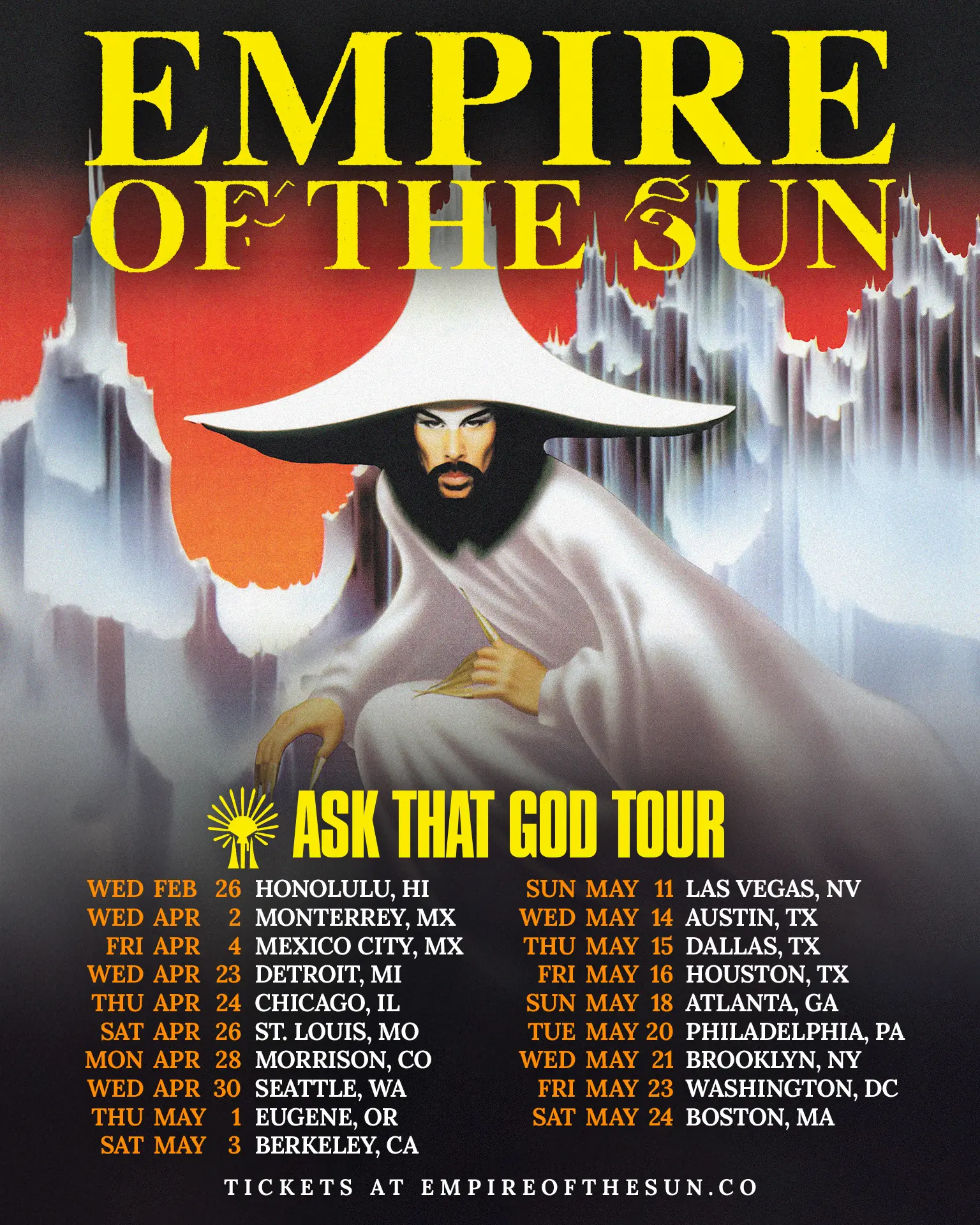
Luke Steele and Nick Littlemore are weird. I mean that as the highest possible compliment, because when Empire of the Sun released Thrill of It as a teaser for their third studio album, Two Vines, they weren't just dropping a synth-pop track. They were essentially inviting us back into a neon-soaked, psychedelic dreamscape that most bands would be too terrified to inhabit. It’s a song about euphoria, sure, but it’s also about that specific brand of Australian escapism that only these two seem to master.
People forget how high the stakes were back in 2016. The band had already conquered the world with Walking on a Dream and followed it up with the cinematic grandiosity of Ice on the Dune. There was this palpable tension: could they stay relevant without losing the weirdness? Thrill of It answered that by doubling down on the shimmering, analog-meets-digital aesthetic. It’s got that driving beat, the kind that feels like driving a convertible through a desert planet while wearing a crown made of crystals.
The Sonic Architecture of Euphoria
Let's get into the bones of the track. If you strip away the headdresses and the blue face paint, you’re left with a masterclass in production. Recorded largely at Hawaii’s Henson Recording Studios and refined in the creative pressure cooker of Los Angeles, the track benefits from the involvement of some heavy hitters. We’re talking about contributions from Wendy Melvoin (of Prince’s Revolution fame) and pianist Henry Hey. You can hear that Prince-adjacent funk in the way the bassline moves. It’s bouncy. It’s insistent. It doesn’t let you sit still.
The song starts with that signature filtered synth swell. It’s a classic Empire move. Then the drums kick in—crisp, compressed, and unapologetically 80s. Steele’s vocals come in with that characteristic breathy, almost ethereal quality. He’s singing about chasing a feeling, "living in the thrill of it," and while the lyrics might seem simple on the surface, they tap into a universal human desire to outrun the mundane.
One thing most people miss? The layering. If you listen with a good pair of headphones, there are at least five or six different melodic motifs happening simultaneously in the chorus. It’s maximalism done right. It shouldn’t work. It should be a muddy mess. Instead, it’s a shimmering wall of sound that feels like a physical embrace.
Why Two Vines Changed the Game
Thrill of It wasn't just a standalone single; it was the manifesto for the Two Vines era. The concept of the album was based on this image of a city being reclaimed by nature. Steele and Littlemore talked extensively about the idea of vines growing over skyscrapers. It’s a bit hippy-dippy, honestly, but it gave the music a grounded, organic texture that was missing from the more "galactic" previous records.
- The tempo is slightly more relaxed than their earlier hits.
- The use of real percussion instruments adds a layer of "dirt" to the polished synths.
- The vocal harmonies are tighter, drawing more from 70s folk-rock than Euro-dance.
There’s a specific kind of nostalgia baked into the track. It feels like a memory of a party you haven't been to yet. It’s optimistic music, which felt almost rebellious in the mid-2010s when everything else was leaning into moody, "PBR R&B" or aggressive EDM drops. Empire of the Sun stayed in their lane, and Thrill of It is the proof that their lane is actually a ten-lane highway to somewhere much more interesting than Earth.
The Visual Identity and the "Empire" Brand
You can't talk about this song without mentioning the visuals. The band has always been as much a visual art project as a musical one. For the Two Vines cycle, they traded the icy blues of the previous era for lush greens, deep oranges, and tropical imagery. Thrill of It carries that heat.
When you see Steele in the promotional material—decked out in elaborate costumes that look like a mix between a Japanese Shogun and a futuristic priest—it adds weight to the music. It’s theater. It’s high camp. But because they take it so seriously, we do too. They aren't "playing" dress-up; they are those characters. That commitment is what separates them from other indie-electronic acts who just throw on a cool jacket and call it a day.
The Cultural Impact and Critical Reception
When Thrill of It hit the airwaves, critics were somewhat divided, which is usually a sign that a band is doing something right. Some called it "more of the same," while others recognized the subtle evolution in their sound. Pitchfork and NME noted the polished production, but fans were the ones who truly carried the song. It became a staple of their live sets, often serving as a high-point of their Coachella and Glastonbury performances.
Is it their biggest hit? No. "Alive" and "Walking on a Dream" probably hold those titles. But Thrill of It is the "fan's favorite." It’s the deep cut that isn't actually a deep cut. It represents the band at their most confident, comfortably inhabiting the world they built without feeling the need to chase radio trends like tropical house (which was unfortunately everywhere at the time).
A Technical Breakdown for the Nerds
For the gearheads out there, the sound of Thrill of It is a testament to the power of analog synths. While much of modern pop is made "in the box" (using software instruments), Empire of the Sun has a well-documented love for the classics. You’re likely hearing the Jupiter-8 or perhaps a Juno-106 providing those thick, lush pads. There’s a warmth to the low-mids that software just struggles to replicate.
The vocal processing is also worth a look. Steele’s voice often has a short slapback delay and a healthy dose of plate reverb. This pushes his voice "back" into the mix, making him sound like a part of the atmosphere rather than someone standing right in front of the mic. It’s a psychedelic mixing technique that dates back to the Beatles' Revolver era, and it works perfectly here.
What Most People Get Wrong About Empire of the Sun
There's this weird misconception that Empire of the Sun is just a "festival band." You know, the kind of music you only listen to when you're covered in glitter at 3 AM. While they certainly excel in that environment, Thrill of It proves they are songwriters first.
The chord progression is surprisingly sophisticated. It’s not just a I-IV-V loop. There are subtle modal shifts that keep the ear engaged. It’s pop music with a high IQ. Nick Littlemore, coming from his background with Pnau, brings a dance-floor sensibility, while Luke Steele brings the melodic sensibilities of his alt-rock roots with The Sleepy Jackson. It’s a "lightning in a bottle" collaboration that probably shouldn't work on paper but sounds like gold in practice.
How to Truly Experience This Track Today
If you haven't listened to it in a while, do yourself a favor. Don't play it through your phone speakers.
- Find the highest quality stream possible (Tidal or a good vinyl press).
- Wait until the sun is starting to set—that "golden hour" vibe is literally what this song was made for.
- Pay attention to the transition between the verse and the chorus; the way the energy lifts is a masterclass in tension and release.
Thrill of It remains a vital piece of the Empire of the Sun discography. it isn't just a song; it's a mood. It captures that fleeting moment where everything feels possible, and the world feels a lot bigger and more colorful than it actually is. In a music industry that often feels cynical or overly manufactured, Steele and Littlemore remain the high priests of the fantastic. They remind us that it’s okay to be a little weird, as long as you’ve got a good hook to back it up.
Actionable Insights for Fans and Creators:
- Study the Layering: If you're a producer, analyze the frequency separation in the chorus. Notice how the high-end synths don't fight with the vocals.
- Visual Consistency: Notice how the band’s aesthetic perfectly matches the sonic palette. For creators, this is a lesson in holistic branding.
- Embrace the Weird: The success of this track proves there is a massive market for "unconventional" pop that doesn't follow the standard Top 40 blueprint.
- Listen to the Full Album: To get the context of this single, listen to Two Vines from start to finish. It’s a cohesive world-building exercise that makes the single hit much harder.