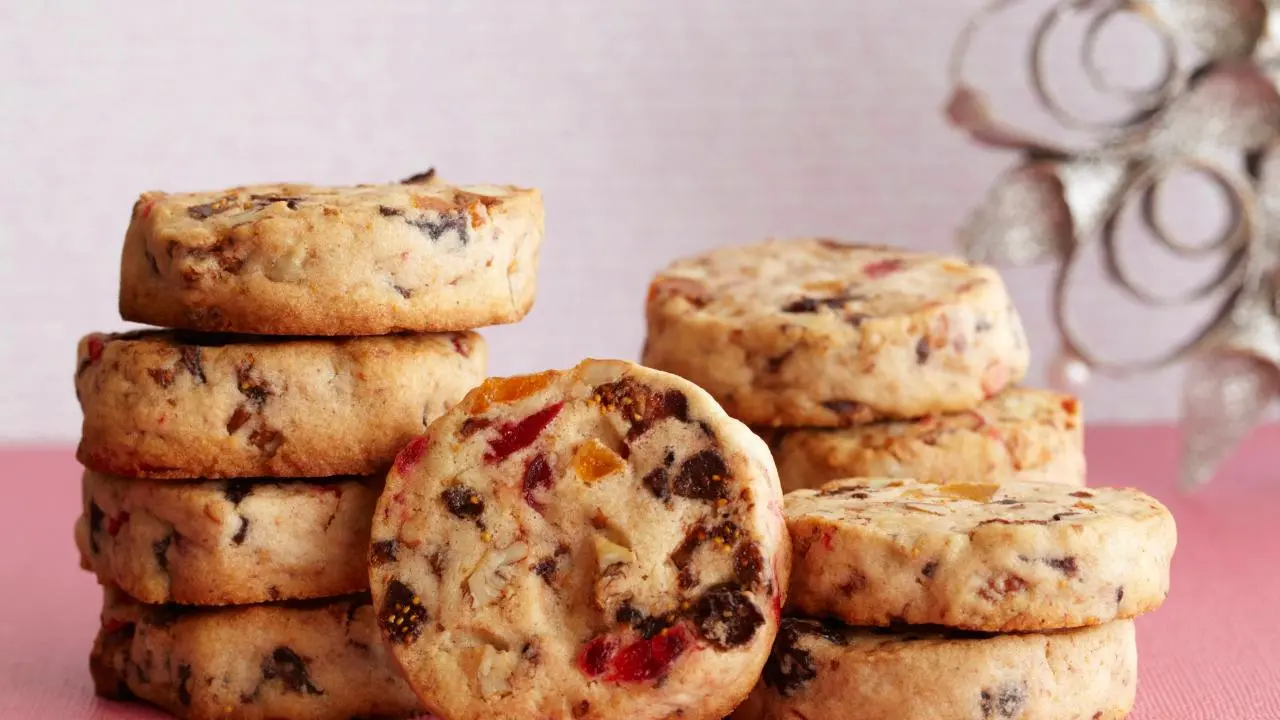
Let’s be honest. Most fruitcake is a doorstop. It’s that dense, neon-colored brick your Great Aunt Edna brings over, the one that tastes like a mix of cough syrup and sadness. But we’re talking about Ina Garten here. The Barefoot Contessa doesn't do "bad." When she tackled the much-maligned fruitcake, she didn't just tweak it. She essentially performed a culinary rescue mission. Ina Garten fruitcake cookies are the result—a buttery, boozy, sophisticated shortbread-adjacent miracle that actually makes people like candied fruit again.
It's about the quality. Always.
If you’ve ever watched her show, you can hear her voice in your head: "Use the good vanilla." For these cookies, that philosophy extends to the fruit itself. We aren't using those weird, gummy green cherries from the grocery store clearance bin. No. We’re talking about high-quality dried fruits—figs, apricots, and raisins—macerated in decent Sherry. It changes everything. It’s the difference between a cheap polyester suit and a cashmere sweater.
The Secret is the Sherry (and the Patience)
Most people mess up fruitcake because they don't give the fruit time to become something better than it is. In the classic Ina Garten fruitcake cookies recipe, you start by soaking your fruit. You’ve got half a pound of dried figs (stems off, obviously), some raisins, and dried apricots. You dump them into a bowl with a half-cup of good Sherry.
Don't skimp on the soak.
The fruit needs to drink up that fortified wine until it's plump and boozy. If you rush this, you're just eating dry fruit in a cookie. When you let it sit, the sugar in the fruit mingles with the acidity and oak notes of the Sherry, creating a flavor profile that is deeply complex. It’s sophisticated. It’s grown-up. It's the kind of cookie you serve with a glass of port by the fireplace while wearing a chambray shirt and pretending you own a sprawling estate in East Hampton.
The dough itself is a departure from your standard chocolate chip variety. It’s more of a shortbread base. You’re creaming a pound of unsalted butter with just a half-cup of sugar. Wait, only a half-cup? Yeah. Remember, the fruit is packed with natural sugars and the Sherry adds its own sweetness. If you added the typical cup or two of sugar, these would be cloying. Instead, they’re savory-sweet.
Why the Texture Works Where Others Fail
Fruitcake usually fails because it’s too heavy. It’s a literal lead weight. But by turning the concept into a cookie, Ina solves the structural integrity problem.
You mix the flour, cloves, and cinnamon—the smells are incredible, by the way—and then fold in that boozy fruit and a healthy dose of chopped pecans. The pecans are non-negotiable. You need that crunch to offset the chew of the figs. The dough gets rolled into logs, wrapped in plastic, and chilled.
This is the hard part. Waiting.
You need that butter to firm back up so the cookies don't spread into a greasy puddle in the oven. When you finally slice them—about half an inch thick—you see the "stained glass" effect. The cross-sections of apricots and figs look like little jewels embedded in the buttery dough. It’s gorgeous. It’s the kind of visual that makes people think you spent six hours in the kitchen when you actually just spent twenty minutes prep-time and a lot of time watching Netflix while the dough chilled.
Common Pitfalls and How to Avoid Them
Even with a Barefoot Contessa recipe, things can go sideways if you aren't paying attention. The biggest mistake? The Sherry choice. If you wouldn't drink a small glass of it, don't put it in the cookies. Avoid "cooking Sherry" at all costs; it’s loaded with salt and tastes metallic. Buy a bottle of Taylor Fladgate or something similar.
Then there’s the fruit.
If your dried figs are hard enough to chip a tooth, the Sherry soak won't save them completely. Start with fruit that still has some give. Also, don't over-process the fruit in the mixer. You want chunks, not a brown paste.
- Temperature Matters: If your kitchen is hot, that dough will get soft fast. Work quickly when slicing.
- The Salt Factor: Ina uses kosher salt. If you’re using table salt, cut the amount in half, or your cookies will taste like the Atlantic Ocean.
- The Bake: You want them golden brown around the edges but still slightly pale in the center. Overbaking turns these into crackers.
People often ask if they can swap the Sherry for brandy or rum. You can, but it changes the vibe. Rum makes it feel more like a tropical fruitcake. Brandy makes it heavier. The Sherry provides a nutty, raisiny backnote that perfectly complements the cloves. It’s the intended "Ina" experience. Stick to the plan.
The Shelf Life Advantage
Here is the best part about Ina Garten fruitcake cookies: they actually get better with age. Most cookies are stale in three days. Because of the high butter content and the booze-soaked fruit, these stay moist and develop deeper flavors over a week or two.
In fact, you can make the dough logs weeks in advance and keep them in the freezer. Someone drops by unexpectedly for a holiday drink? Slice off a few rounds, pop them in the oven, and fifteen minutes later, you’re the most "together" person in the neighborhood.
Beyond the Recipe: The "Barefoot" Philosophy
Why does this specific recipe have such a cult following? It's because it respects the ingredients. It doesn't hide the fruit under layers of frosting or excessive sugar. It lets the figs be figs.
There’s a nuance here that you don't find in "easy 3-ingredient" recipes. It requires you to care about the quality of your pecans and the freshness of your spices. If your cloves have been in the pantry since the Bush administration, throw them out. Buy fresh ones. The aroma of fresh cloves hitting the oven heat is half the reason to make these.
The cookies are also relatively small. They aren't the giant, palm-sized monstrosities you see at trendy bakeries. They’re dainty. They’re meant to be eaten with tea or coffee. They’re elegant. Honestly, in a world of over-the-top "crumbl" style cookies, there is something profoundly rebellious about a small, perfectly balanced fruitcake cookie.
Addressing the Fruitcake Haters
If you have a "fruitcake hater" in your life, don't tell them what these are. Just call them "Sherry Fig Shortbreads." Watch them eat three. Then, and only then, reveal the truth.
The stigma around fruitcake comes from the industrialization of the dessert—the mass-produced cakes filled with dyed citron and chemicals. Ina’s version is a return to form. It’s an homage to the European tradition of dried fruit desserts that were actually prized treats. By using the cookie format, she removes the intimidation factor. It's just a cookie. Everyone likes cookies.
Practical Steps for Your Batch
If you’re ready to tackle these, here’s the game plan for success. Don't just wing it.
- Prep the fruit tonight. Let it soak for at least 8 hours. 24 is better. Seriously.
- Use a sharp knife. When slicing the chilled logs, a dull knife will squish the dough and pull the fruit chunks out. Use a very sharp chef’s knife or a serrated blade with a light touch.
- Space them out. Even though they don't spread a ton, they need airflow to get those crisp edges.
- Storage. Keep them in an airtight tin. Not plastic. A tin keeps the edges from getting too soft.
Ina Garten fruitcake cookies aren't just a holiday tradition; they’re a lesson in how good ingredients and a little patience can redeem even the most hated dessert in history. They are buttery, spicy, salty, and just boozy enough to make the family gathering a little more bearable.
Next Steps for the Perfect Cookie:
Check the expiration date on your ground cloves and cinnamon before you start—stale spices will ruin the sophisticated profile of this dough. Ensure your butter is truly at room temperature (it should give easily when pressed) to achieve the proper creamed texture with the sugar. Finally, clear a flat space in your refrigerator for the dough logs; if they chill in a curved shape, your cookies will be wonky and unevenly baked.