When people talk about Tennessee Williams adaptations, they usually go straight for A Streetcar Named Desire or Cat on a Hot Tin Roof. I get it. Those are heavy hitters. But honestly? The 1961 film cast of The Roman Spring of Mrs. Stone brings a weird, haunting energy that those other films just don't have. It is a movie about aging, loneliness, and the brutal reality of the "gigolo" culture in post-war Italy. It’s uncomfortable to watch sometimes. That’s because the actors were so incredibly well-chosen.
Vivien Leigh was already a legend by then. Everyone saw her as Scarlett O'Hara, the ultimate survivor. But in this film, she plays Karen Stone, a woman who has lost her grip on her beauty, her career, and her purpose. Seeing Leigh—who was struggling with her own health and mental state at the time—play a fading actress is meta in a way that feels almost intrusive. It’s raw. Then you have a very young, very tan Warren Beatty. This was his first big film role, and he plays a predatory Italian prowler. It shouldn’t work, but it does.
Vivien Leigh and the Weight of Karen Stone
Leigh wasn't just "acting" here. By 1961, she was dealing with the fallout of her divorce from Laurence Olivier and the lingering effects of tuberculosis and bipolar disorder. You can see it in her eyes. The cast of The Roman Spring of Mrs. Stone needed a lead who understood what it felt like to have the world stop looking at you. Karen Stone is a wealthy American widow who retires from the stage after a disastrous performance in a role she was too old for. She retreats to Rome, thinking her money can buy her a new life.
She’s wrong.
Leigh portrays Karen with this fragile, porcelain dignity that is constantly on the verge of shattering. In the opening scenes, she’s stiff, almost regal. But as she falls for the scam artists of Rome, that mask slips. It is a performance of quiet desperation. Most people don't realize that Leigh actually took a huge risk with this role. It wasn't "glamorous" in the traditional sense. It was a study in decay.
Warren Beatty: The Birth of a Sex Symbol
Let’s talk about Warren Beatty. Before he was the powerhouse behind Reds or Bonnie and Clyde, he was Paolo di Leo. He’s the "young man" in the title’s implication. In the film, he’s a professional escort, or rather, a leech who targets wealthy older women.
Beatty’s casting was controversial at first. He’s American, obviously. He had to adopt this thick, stylized Italian accent that could have been a disaster. Somehow, he makes it work by leaning into the arrogance of the character. Paolo isn't just a boy toy; he’s a predator who is deeply bored by his prey.
- He uses his physicality to dominate the screen.
- The chemistry between him and Leigh is intentionally cold.
- Beatty plays the role with a smirk that suggests he knows exactly how this is going to end.
Interestingly, Beatty didn't just stumble into the part. He fought for it. He knew that playing opposite a titan like Vivien Leigh would cement his status in Hollywood. He was right. Even though the critics were mixed on his accent, they couldn't deny his screen presence. He was electric.
Lotte Lenya and the Art of the Villain
If Vivien Leigh is the heart and Warren Beatty is the bait, Lotte Lenya is the poison. She plays the Contessa Magda Terribili-Gonzales. Honestly, she steals every single scene she is in. Lenya was a legend of the German stage—the widow of Kurt Weill—and she brings this jagged, European cynicism to the role that makes your skin crawl.
The Contessa is the "pimp" of the story. She’s the one who introduces Paolo to Mrs. Stone. She’s a vulture. What makes Lenya’s performance so brilliant is how she balances the Contessa's aristocratic pretensions with her absolute lack of morals. She wants her cut of the money, and she doesn't care who gets destroyed in the process.
Lenya earned an Academy Award nomination for Best Supporting Actress for this role. It’s easy to see why. While Leigh is soft and fading, Lenya is sharp and predatory. She represents the "Old Europe" that sees Americans as nothing more than walking bank accounts.
Supporting Players Who Built the Atmosphere
The cast of The Roman Spring of Mrs. Stone isn't just about the three leads. The texture of the film comes from the people in the margins.
Jeremy Spenser plays the "Young Man" who lingers at the end of the film—a silent, terrifying figure who represents Karen’s ultimate surrender to her fate. He doesn't say much, but his presence is like a ticking clock. Then you have Coral Browne as Meg, Karen’s supposed friend. Browne plays the role with a sharp, brittle wit. She represents the social circle Karen is trying to escape, but also the only reality Karen has left.
There is also Jill St. John, who appears as Barbara Bingham. She’s the "new" thing. The younger, fresher American girl who threatens Karen’s tenuous hold on Paolo. The contrast between St. John’s effortless youth and Leigh’s labored elegance is one of the most painful parts of the movie.
The Tennessee Williams Connection
You can't talk about the cast without talking about the man who wrote the novella. Tennessee Williams was obsessed with the idea of the "fugitive kind"—people who don't fit into the world and are eventually hunted down by it.
The actors had to navigate his very specific brand of southern-gothic-meets-European-decay. José Quintero, the director, was primarily a stage director known for his work with Williams’ plays. This is why the movie feels so much like a play. The dialogue is heavy. The pauses are long. The cast of The Roman Spring of Mrs. Stone had to be comfortable with theatricality.
Leigh, being a stage veteran, was perfect for this. Beatty, who was still learning the ropes, had to adapt. The result is a film that feels both intimate and grand. It’s like watching a car crash in slow motion, but the car is made of gold and silk.
Why the 2003 Remake Is Different
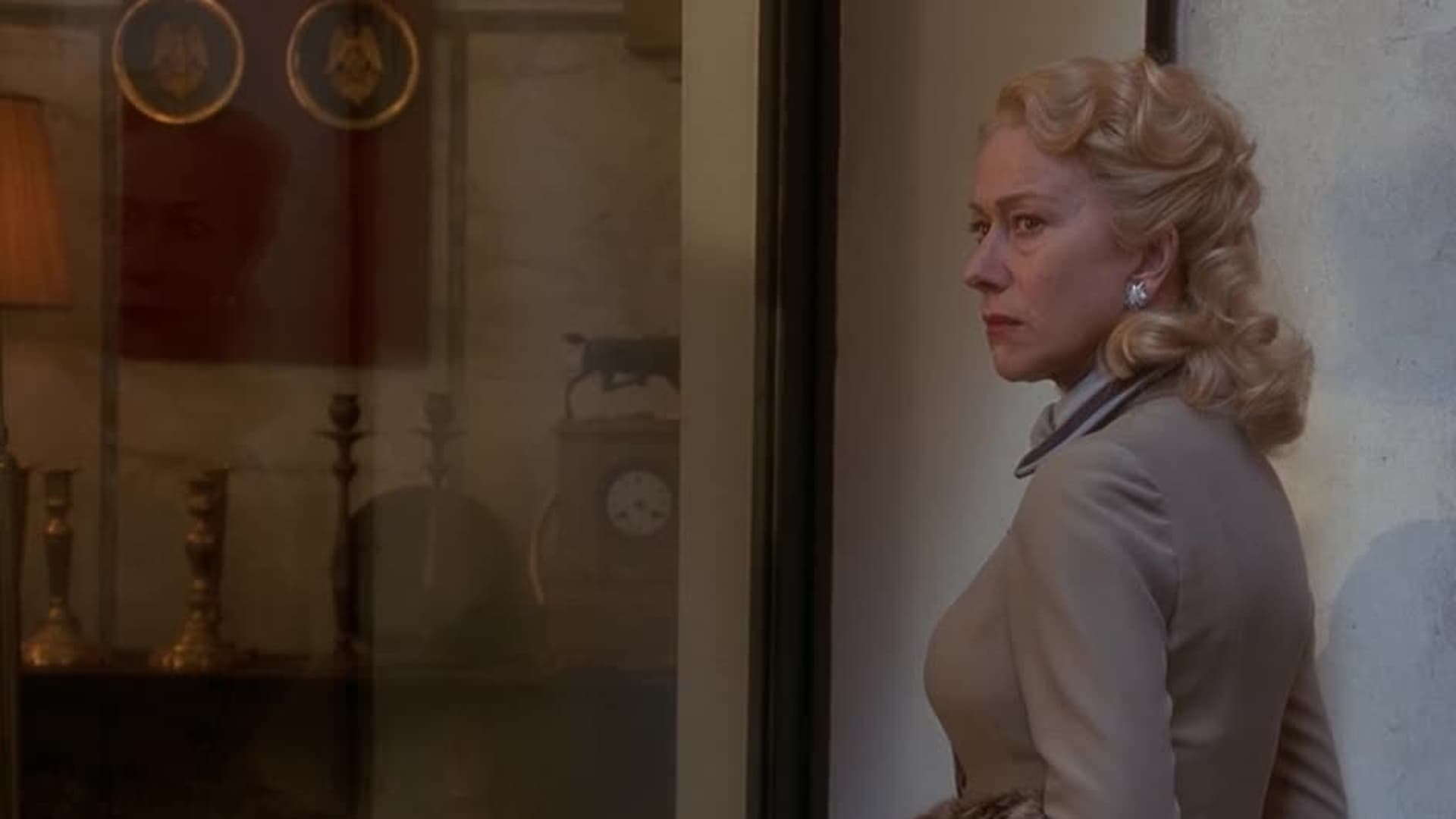
Most people don't know there was a 2003 TV movie version of this story. It starred Helen Mirren and Anne Bancroft. Now, Mirren is a goddess, and Bancroft is a legend, but that version feels different. It’s more explicit. It’s more modern.
But the 1961 version has a specific "Old Hollywood" ghosts-in-the-room feel. The 1961 cast of The Roman Spring of Mrs. Stone was operating in a time when the themes of the movie—aging and female desire—were still largely taboo. There is a tension in the original that the remake can't quite replicate because the world had changed too much by 2003. In 1961, Karen Stone’s "fall" felt like a genuine tragedy.
Production Secrets and Casting Hurdles
Finding the right Paolo was a nightmare. The producers originally wanted someone like Marcello Mastroianni, but they couldn't get him. They looked at several Italian actors, but they needed someone who could appeal to an American audience while still feeling "foreign" and dangerous.
When Beatty was cast, there was a lot of skepticism. He was "too American." But Quintero saw something in Beatty’s eyes—a calculating ambition that matched the character.
As for Leigh, she was initially hesitant. She knew the role would draw comparisons to her own life. In the end, it was her friendship with Tennessee Williams that convinced her. He wanted her. He knew only she could bring that specific blend of fragility and steel to the screen.
The Ending: A Choice That Defined a Character
The finale of the film is one of the most debated endings in 1960s cinema. Without giving too much away, it involves a set of keys and a stranger. The way Vivien Leigh plays that final moment is haunting. There is a look of total resignation on her face.
The cast of The Roman Spring of Mrs. Stone had to sell an ending that is essentially a suicide by proxy. It’s dark. It’s gritty. It’s very Tennessee Williams. Without the specific chemistry between Leigh and the silent young man at the end, the whole movie would have fallen apart. It required a lead actress who wasn't afraid to look defeated.
How to Appreciate the Film Today
If you’re going to watch it, don't expect a fast-paced thriller. This is a character study. It’s about the "Spring" of the title—which is ironic, because for Mrs. Stone, it is very much the winter of her life.
- Watch the eyes. Leigh does more with a glance than most actors do with a monologue.
- Listen to the silence. The gaps in the conversation between Paolo and Karen are where the truth lies.
- Observe the costumes. They were designed by Pierre Balmain. They aren't just clothes; they are Karen Stone’s armor.
The film is a time capsule. It shows a Rome that was beautiful but decaying, much like its protagonist. The cast of The Roman Spring of Mrs. Stone captured a moment in cinematic history where the studio system was dying, and a new, more cynical era of filmmaking was beginning.
Actionable Steps for Film Buffs
To truly understand the impact of this cast, you should watch the film alongside a few others to see the evolution of the actors.
- Watch A Streetcar Named Desire (1951) immediately after. See how Vivien Leigh’s portrayal of Blanche DuBois serves as a spiritual precursor to Karen Stone.
- Check out Splendor in the Grass (1961). This was Warren Beatty’s other big film that year. It shows his range and why he became a superstar overnight.
- Read the Tennessee Williams novella. It’s short, punchy, and gives you a much better understanding of the internal monologues that Leigh was trying to project.
- Compare the Contessas. If you can find the 2003 version, watch Anne Bancroft’s take on the character. It’s a completely different flavor of evil than Lotte Lenya’s, and it’s fascinating to see how two masters approach the same "pimp" role.
Understanding the cast of The Roman Spring of Mrs. Stone is about more than just knowing names. It’s about recognizing how the personal lives and career trajectories of the actors bled into the characters they played. That’s what makes it human. That’s what makes it last.