You remember that feeling. It’s 2007. You're sitting in a theater or maybe watching a compressed clip on a burgeoning YouTube, and Robin Williams appears on screen wearing clerical robes. He looks like a priest, but he's acting like... well, Robin Williams. That was the first hook of the license to wed trailer, a two-minute snippet that promised a classic mid-2000s rom-com setup but delivered something much weirder and more polarizing.
It’s easy to dismiss these old promos as relics of a bygone era of cinema. However, looking back at the footage now, it’s a masterclass in how Hollywood used to sell "high-concept" comedy. You had the "it" couple of the moment—Mandy Moore, fresh off her transition from pop star to legitimate actress, and John Krasinski, who was right in the middle of his The Office peak. Then, you throw in a legend.
The premise was simple. Ben and Sadie want to get married. But to do it in Sadie's family church, they have to pass a "marriage prep" course run by the eccentric Reverend Frank. No sex. No privacy. Creepy robot babies.
The Anatomy of the License to Wed Trailer
If you watch the license to wed trailer today, the first thing you notice is the pacing. It doesn’t use the "In a world..." gravelly voiceover that was finally dying out by 2007. Instead, it relies on the comedic timing of its leads. You see Krasinski doing his signature "look at the camera" face—though here he’s looking at Mandy Moore or a terrifyingly intense Robin Williams.
The trailer starts with the proposal. It’s sweet. It’s generic. Then, the music shifts. We get the introduction of St. Augustine’s Church.
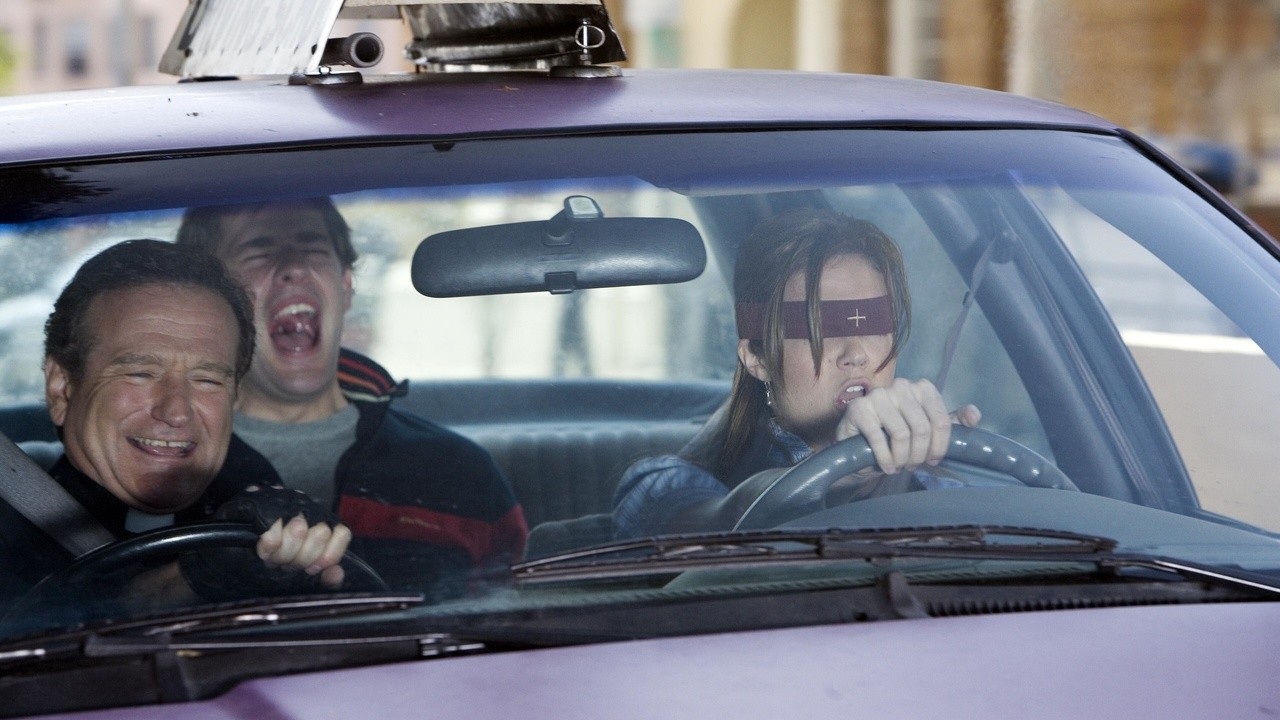
The editing is frantic. We see snippets of the "course" requirements: the blindfolded driving scene, the aforementioned robot twins that won't stop crying, and the wiretapping of the couple’s apartment. It’s actually pretty dark when you think about it. The trailer manages to mask the borderline sociopathic behavior of Reverend Frank with bright lighting and a bouncy soundtrack. Honestly, it's a fascinating look at how we used to package "invasive" humor as "heartfelt" growth.
Why the Marketing Worked (And Where the Movie Split Critics)
Trailers are meant to be highlights. This one worked because it promised a battle of wits. On one side, the charming everyman Jim Halp—err, John Krasinski. On the other, the most energetic man in the history of show business.
Critics, however, weren't as sold as the audiences who flocked to the theaters. Rotten Tomatoes still has the film sitting at a dismal 7%. But trailers don't care about reviews. They care about "the vibe." The license to wed trailer sold a vibe of relatable frustration. Everyone has that one person in their life—a father-in-law, a priest, a boss—who makes them jump through hoops. Reverend Frank was just the extreme version of that.
The Robin Williams Factor
We have to talk about Robin. In the trailer, he’s the "A" plot. Even though the movie is technically about the couple, the marketing knew who the star was.
His performance in the clips showed a man who was clearly improvising half his lines. You can see the genuine confusion on Krasinski’s face in some of those shots. It wasn't just acting; it was a young comedic actor trying to keep up with a hurricane. This tension is what makes the trailer rewatchable. You’re waiting for the next weird thing to come out of Frank’s mouth.
Interestingly, the trailer leaves out some of the more "cringe" moments that the full film leaned into. It focuses on the physical comedy. The blindfolded driving scene is the centerpiece of the promo for a reason. It’s a perfect visual metaphor for marriage: one person steering, the other screaming, and a third party in the back seat making everything harder.
A Time Capsule of 2000s Aesthetics
Everything about the license to wed trailer screams 2007. The fashion. Mandy Moore’s hair. The specific shade of "rom-com yellow" that seemed to be filtered over every frame of film back then.
It’s also a reminder of a time when mid-budget comedies were the backbone of the industry. Today, a story like this would likely be a direct-to-streaming release or a six-episode limited series on Hulu. But back then? This was a summer tentpole for people who didn't want to see Transformers or Spider-Man 3.
The music in the trailer is also a giveaway. You’ve got upbeat, slightly generic alt-pop that tells you exactly how to feel. "This is a fun time," the drums say. "Don't take the invasion of privacy too seriously," the guitar riffs imply.
Comparing the Trailer to the Final Product
Sometimes a trailer lies. With License to Wed, it didn't lie about the plot, but it did perhaps misrepresent the tone. The trailer makes it look like a wacky, lighthearted romp. The actual movie has some genuinely uncomfortable moments where Reverend Frank feels less like a quirky mentor and more like a genuine antagonist.
- The trailer emphasizes the "lessons."
- The movie focuses heavily on the strain on the relationship.
- The trailer hides the fact that the movie is, at its core, about whether these two people actually should be together.
That’s a lot of weight for a comedy about robot babies.
What We Can Learn from This Era of Film Marketing
The license to wed trailer is a textbook example of "The Hook." You take a relatable life event (getting married) and add an impossible obstacle (Robin Williams).
It’s a formula that worked for decades. Look at Meet the Parents. Look at Father of the Bride. The difference here was the "Marriage Prep" angle. It allowed for a series of vignettes—the driving, the babies, the counseling—that fit perfectly into a two-minute promotional window.
When you're analyzing how to market content today, the takeaway is clear: find the episodic moments within the larger narrative. People don't buy the whole story at first; they buy the "bits."
How to Find the Trailer Today
If you're looking to revisit this piece of nostalgia, it's widely available on platforms like YouTube and various film archive sites. Searching for the official license to wed trailer usually brings up the theatrical version, which is the one that really captures that specific mid-aughts energy.
It’s worth a watch just to see the chemistry between Moore and Krasinski. They actually had a very natural rapport that often gets overshadowed by the more bombastic elements of the script.
Actionable Steps for Film Buffs and Nostalgia Seekers
If you’re diving back into the world of 2000s rom-coms, don't just stop at the trailer. Here is how to actually engage with this era of cinema in a way that makes sense:
- Watch for the "Unseen" Cast: Look at the background characters in the trailer. You’ll see faces like Mindy Kaling and Angela Kinsey. It’s a fun "spot the Office star" game.
- Analyze the Edit: Pay attention to how the trailer uses "hard cuts" to emphasize jokes. This style of editing has mostly been replaced by the more fluid, "cinematic" trailers of the 2020s.
- Check the Soundtrack: Look up the songs used in the promo. They are often different from the songs in the actual movie because of licensing costs for trailers versus feature films.
- Read the Comments: If you're on YouTube, the comment sections of these old trailers are like digital time capsules. People talk about where they were when the movie came out, and it’s a weirdly wholesome experience.
The license to wed trailer might not be a piece of high art, but it is a perfect snapshot of a specific moment in Hollywood history. It represents the height of the star-driven comedy, a genre that has largely migrated to television. Whether you love the movie or think it’s a 7% stinker, the trailer remains a masterclass in how to sell a "what if" scenario to a mass audience. It promised us Robin Williams at his most unrestrained, and on that front, it absolutely delivered.