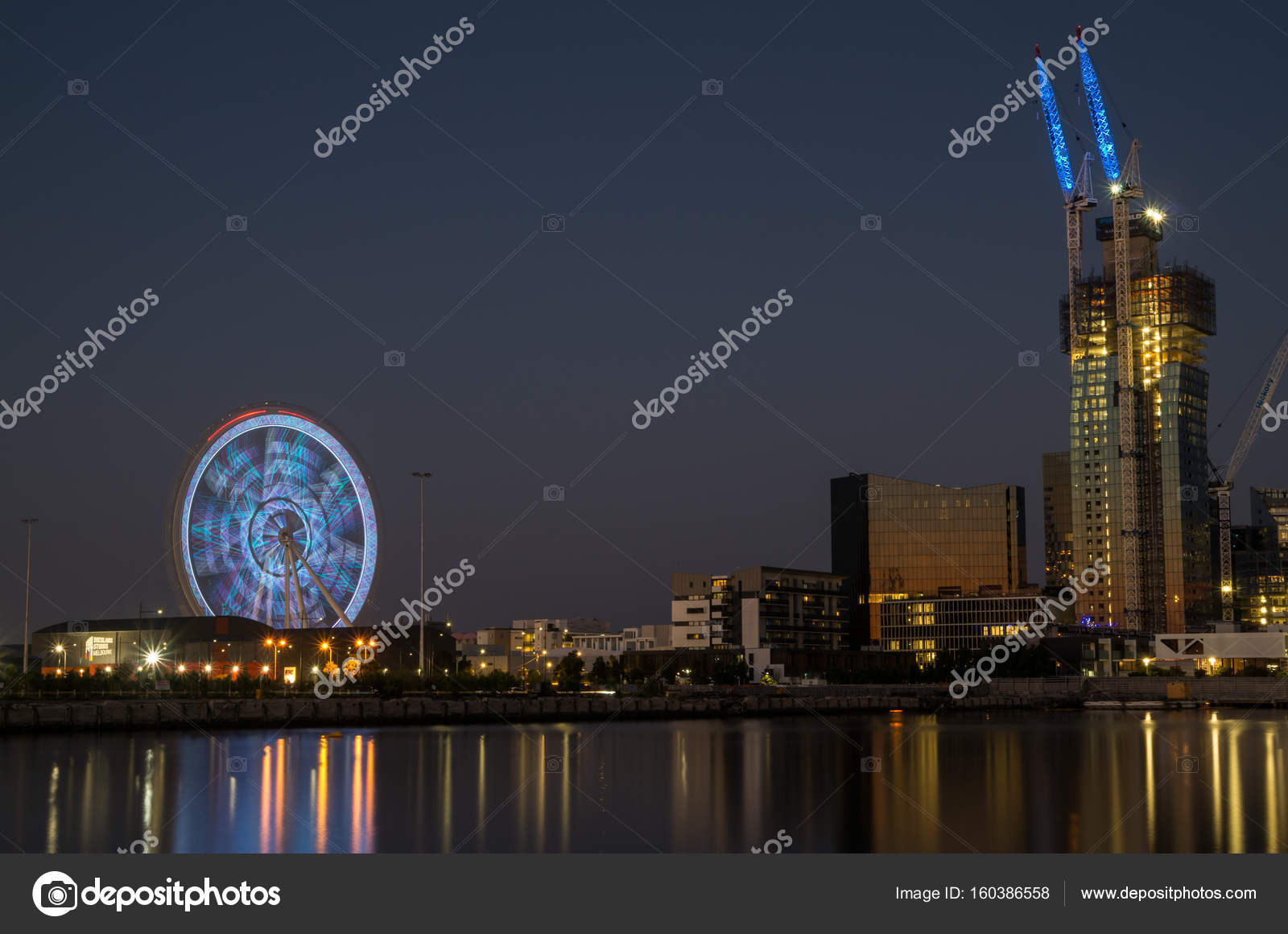
If you walk through Melbourne’s Docklands today, it’s hard to miss the giant, skeletal remains of a dream. It just sits there. The Melbourne Star Observation Wheel Docklands was supposed to be our version of the London Eye—a glittering, high-tech icon that would finally make people care about the waterfront. Instead, it became a bit of a local punchline. Honestly, it’s kinda sad to look at now.
The wheel hasn't turned since 2021. It’s a literal ghost in the skyline.
Most tourists wandering through District Docklands still look up and ask if it’s opening soon. The short answer? No. The long answer involves a messy cocktail of structural failures, bad timing, and a global pandemic that finally pulled the plug on the whole operation.
What actually went wrong with the Melbourne Star Observation Wheel Docklands?
It started with cracks. Real, literal cracks in the steel. Back in 2009, just weeks after the original "Southern Star" opened, Melbourne hit a record-breaking heatwave. The metal expanded, the structure groaned, and engineers found massive fractures in the bracing. They had to dismantle the whole thing. It was a PR disaster from day one.
Building a giant wheel in a city known for "four seasons in one day" is a bold move. The wind off Port Phillip Bay is no joke.
The wheel we see today is actually the second version. It was redesigned and rebuilt with a complex "star-within-a-star" geometry that was meant to handle the thermal expansion and high winds. It finally reopened in 2013, but the reputation was already bruised. People were nervous.
Then came COVID-19.
When the lockdowns hit Melbourne—some of the longest in the world—the tourism industry took a gut punch. The MB Star Properties company eventually announced they were liquidating. They cited the travel restrictions and the "constant uncertainty" as the final nail in the coffin. It wasn't just about the money; it was about the fact that nobody knew when the world would be "normal" again.
Is it ever coming back?
People keep whispering about a "new" owner. You'll hear rumors in the Docklands pubs that some billionaire is going to buy it and turn it into a giant neon light show or a revolving restaurant.
But here’s the reality: it’s expensive to keep a giant wheel from falling apart. Even when it isn't spinning, you need engineers. You need safety checks. You need to stop the salt air from eating the steel. The liquidators have been trying to find a buyer for years, but most investors look at the maintenance costs and run for the hills.
The land it sits on is valuable. The wheel itself? Maybe not so much.
Some urban planners argue it should be scrapped. They want the space for more housing or a proper park. Others think it’s a landmark that defines the Docklands silhouette, even if it's stationary. If you’ve ever seen it at sunset, you get it. It’s beautiful in a haunting, industrial sort of way.
The view you’re missing (and where to go instead)
When it was running, the view was actually pretty stellar. You weren't just looking at skyscrapers; you could see all the way to the You Yangs and the Dandenong Ranges. On a clear day, the 35-minute rotation felt like floating over a map of Victoria.
Since you can't hop in a cabin right now, you’ve got to find your height elsewhere.
- Eureka Skydeck (Melbourne Skydeck): This is the obvious one. It’s way higher and located in Southbank. It doesn't spin, but it has the "Edge"—a glass cube that slides out from the building. Terrifying, but great.
- Rooftop Bars: Head to Curtin House or Goldilocks. You get the city vibes without the 2009-era engineering trauma.
- The Port Melbourne Ferry: If you want that "on the water" feel that Docklands tries to sell, take the ferry to Williamstown. It’s cheaper and actually moves.
The Docklands problem
The Melbourne Star Observation Wheel Docklands was always fighting an uphill battle because of its location. Docklands has always struggled to feel "lived in." It’s a lot of concrete, glass, and wind tunnels.
The wheel was supposed to be the "anchor tenant" that brought the crowds. Without it, the District Docklands shopping center has had to pivot hard. They’ve added cinemas, "ArtVo" (a 3D trick-art gallery), and glow-in-the-dark golf. It’s becoming a destination for families rather than a global tourist hub.
Basically, the area is surviving, but the wheel is just a 120-meter tall reminder of what might have been.
What happens next for the site?
If you’re planning a trip to the Melbourne Star Observation Wheel Docklands, change your plans. Don't show up with a ticket expecting to ride.
The current state of play is "limbo." The structure is still there because it’s incredibly expensive to take down. It’s also a complex legal situation with the lease of the land. Until a developer comes in with enough cash to either fix it or flatten it, it remains the city's largest lawn ornament.
Actionable steps for your Docklands visit:
- Check the status before you go: Use official government tourism sites or recent Google Maps reviews. Don't trust old travel blogs from 2018.
- Visit for the photography: The wheel is actually a great backdrop for "urban decay" or architectural photography. Go at Blue Hour (just after sunset) for the best shots.
- Support the locals: The businesses at the base of the wheel are still open. If you’re in the area, grab a coffee or hit the shops—they need the foot traffic more than ever now that the big drawcard is dead.
- Explore NewQuay: Just a short walk from the wheel, the NewQuay promenade has some of the best public art in the city. It’s a better way to spend an hour than staring at a closed gate.
The Melbourne Star might be grounded, but the city around it keeps moving. It's a weird, metallic part of Melbourne's history now—a monument to ambition that didn't quite account for the reality of the 2020s.